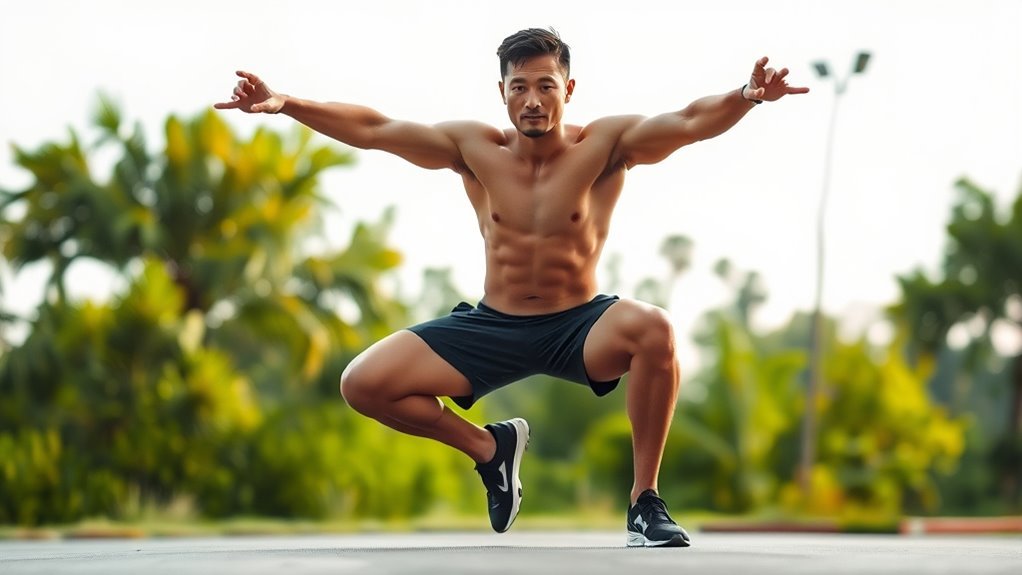
Are Pistol Squats Good for You: How to Perform Them Safely
Pistol squats are amazing for building your strength, balance, and mobility. They target multiple muscles at once and help improve joint stability, making them a fantastic exercise to add to your routine.
But, like any advanced move, they need to be done safely to get the best results without injury.
To perform pistol squats safely, start by engaging your core and keeping your knee aligned directly over your foot. Hinge your torso slightly forward—it helps with balance and control.
If you’re new to pistol squats, try assisted versions first to build strength. Don’t rush or force yourself to go too deep, as that can put unnecessary stress on your joints.
Mastering proper form is key. It not only reduces the risk of injury but also boosts your functional movement in daily activities.
Keep exploring pistol squats to unlock their full benefits and learn safe practice tips along the way.
Key Takeaways
– Pistol squats build strength, balance, and mobility by engaging multiple muscles and improving joint flexibility.
They’re a great way to challenge your body in different ways.
– Proper form includes hinging forward, engaging the core, and keeping the knee aligned over the foot.
This helps you stay safe and get the most out of the exercise.
– Use assisted variations or elevated surfaces to safely develop mobility and strength before attempting full pistol squats.
Taking it slow at first really pays off.
– Avoid forcing depth and keep the supporting heel grounded to prevent knee and joint injuries.
Listen to your body and don’t push too hard.
– Gradual progression with focus on technique reduces injury risk and enhances joint stability and functional movement.
Remember, steady progress is key for long-term benefits.
What Is a Pistol Squat and How to Do It Safely
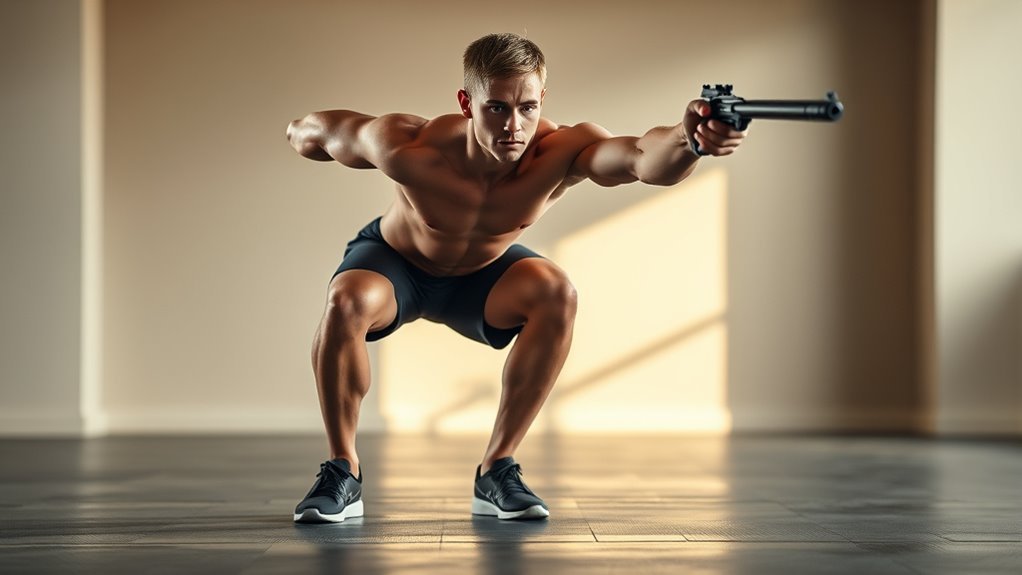
What exactly is a pistol squat, and how can you do it safely? Pistol squats are a single-leg squat where you extend one leg straight out while lowering your hips fully. Then, you press back up without your non-working foot touching the floor.
To master proper technique, hinge your torso slightly forward, engage your core, and keep your knee tracking over your foot. It’s important to focus on mobility work and strength training to improve your range of motion and knee stability.
Start with assisted pistol squats or use an elevated surface to build mobility and strength gradually. Always keep your supporting heel grounded and avoid forcing depth to protect your knees and lower back.
Benefits of Pistol Squats for Strength, Balance, and Mobility
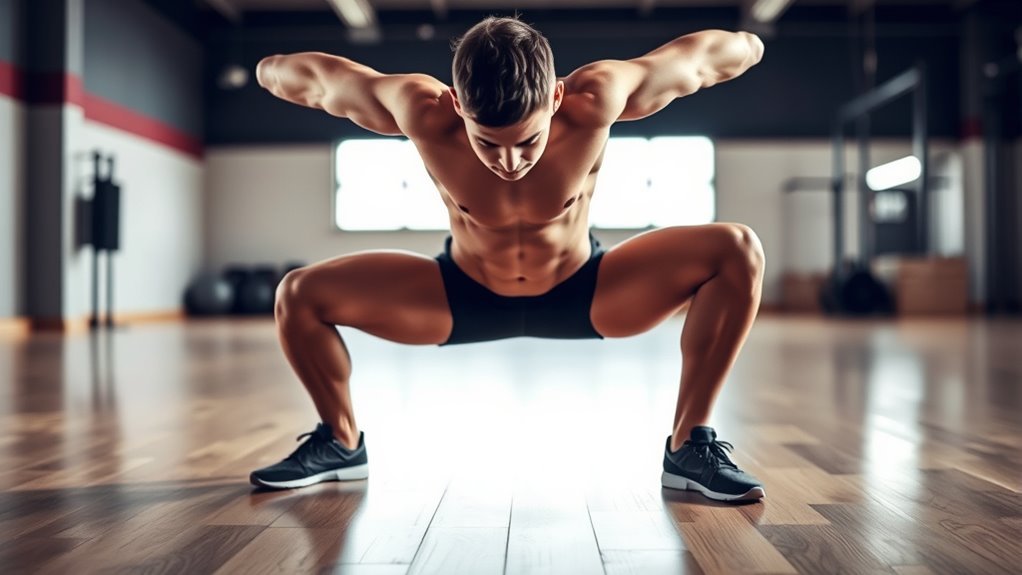
Because pistol squats engage multiple muscle groups simultaneously, they build significant strength in your quads, hamstrings, glutes, and core. These single-leg exercises challenge your balance and stability, improving proprioception and coordination.
By requiring full-range motion, pistol squats boost mobility in your hips, knees, and ankles, enhancing flexibility and joint health. As you practice regularly with proper form, you’ll notice better functional movement, making everyday tasks like climbing stairs or standing up easier.
Strengthening stabilizer muscles through pistol squats also reduces injury risk by improving joint stability. Incorporating pistol squats into your routine not only develops muscle groups effectively but also promotes a balanced, agile, and resilient body overall.
Frequently Asked Questions
Can an Average Person Do a Pistol Squat?
Yes, you can do a pistol squat with practice. Start with assisted versions using a chair or support, focus on improving your balance, ankle mobility, and leg strength, then gradually work toward the full movement safely over time.
How to Pistol Squat Safely?
Think of pistol squats like walking a tightrope—start slow with support, warm up your joints, keep your core tight, track your knee over toes, and never push through pain. Gradual progress keeps you safe and strong.
Should You Hold Your Foot in a Pistol Squat?
Yes, you should hold your foot during pistol squats if you’re new or lack ankle mobility. It helps with balance and control. As you get stronger, gradually release your foot to perform full, unassisted pistol squats.
Is It Impressive to Do a Pistol Squat?
Nailing a pistol squat is like balancing on a tightrope—it’s incredibly impressive. You’re not just showing strength; you’re proving your balance, flexibility, and dedication. People will definitely respect your skill and hard work when you do it.
Conclusion
So, are pistol squats good for you? Absolutely! They build strength, improve balance, and boost your mobility—all in one powerful move. But remember, safety comes first.
Start slow, focus on form, and don’t rush the process. Can you picture yourself confidently lowering and rising on one leg, feeling strong and steady?
With practice and patience, pistol squats can be a fantastic addition to your fitness routine. They challenge your muscles, enhance coordination, and empower you every step of the way.
Incorporating pistol squats into your workouts not only improves leg strength but also increases joint stability and overall body control. Just take it easy at first, listen to your body, and progress gradually. When done correctly, pistol squats are an excellent exercise for building functional strength and mobility safely. So go ahead, give them a try and enjoy the benefits of this dynamic single-leg move!