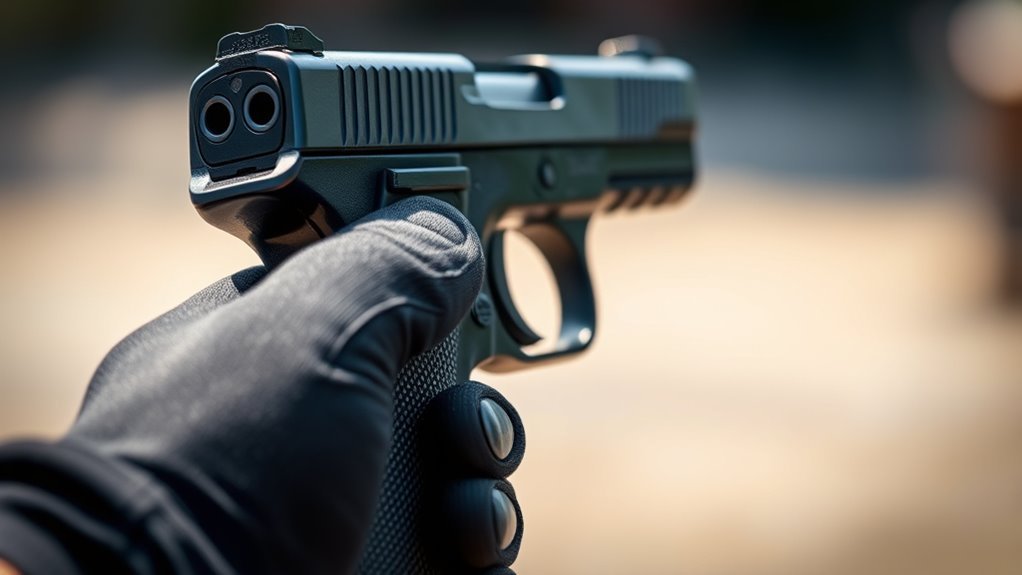
How to Use the Thumb Safety on a Pistol
To use your pistol’s thumb safety, start by pushing the safety lever upward with your thumb until you hear a click. This sound means it’s in the “safe” position, which prevents the hammer from releasing and keeps your firearm secure.
When you’re ready to fire, smoothly push the lever downward to the “fire” position. This allows the trigger to work properly.
Always make sure the safety fully engages or disengages before handling your pistol. This simple check helps ensure your firearm stays secure and operates reliably.
Understanding how to adjust and test your pistol’s thumb safety is key to safe and confident handling. Taking the time to get familiar with this feature will make a big difference in how you use your firearm.
Key Takeaways
- Engage the thumb safety by pushing the lever upward until it clicks. This ensures the firearm is in the safe position.
- To disengage the thumb safety, push the lever downward until it clicks into the fire position. Do this before shooting.
- Always confirm the firearm is unloaded and the safety is engaged before handling or making any adjustments.
- It’s a good idea to test the safety by pulling the trigger. This makes sure it physically blocks firing when engaged.
- Regularly check and maintain the thumb safety. This helps ensure it functions reliably and properly blocks the sear.
How to Use the Thumb Safety on Your Pistol
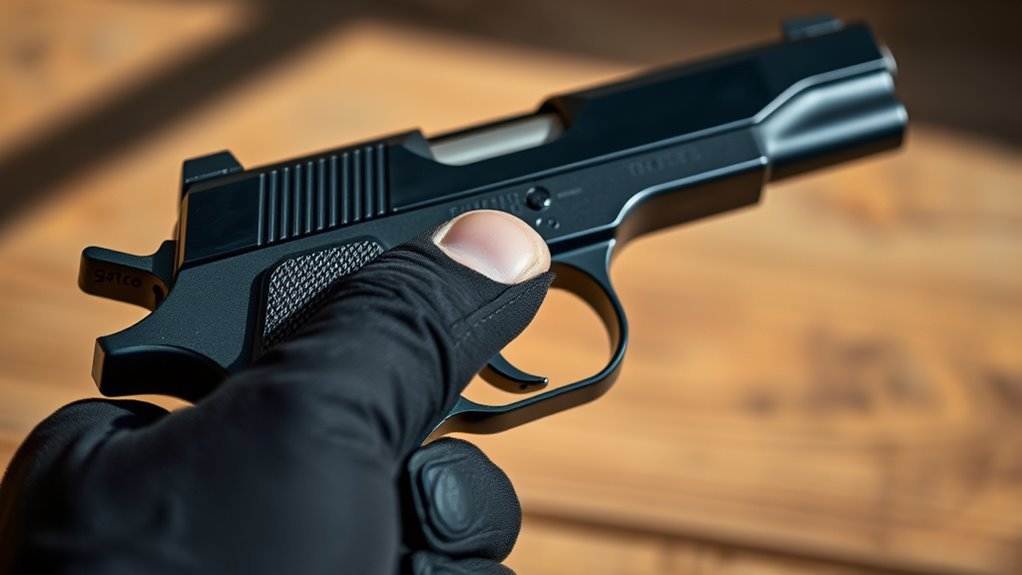
How exactly do you use the thumb safety on your pistol? To engage the thumb safety, push the safety lever upward with your thumb until you hear a click. That click means the manual safety is in the “safe” position.
This blocks the sear from releasing the hammer, so it keeps things safe. To disengage the safety, just push the lever downward until it clicks back into the “fire” position. This lets the trigger safety work and your firearm can fire.
Always make sure you hear that audible click and see the safety in the right position before you proceed. Using a smooth, sweeping thumb motion helps you operate the safety lever without messing up your grip or stance.
It’s a good idea to practice this during dry fire drills. Doing so builds muscle memory, which makes your handling safer and boosts your confidence when you’re under stress.
How to Adjust and Test Your Pistol’s Thumb Safety
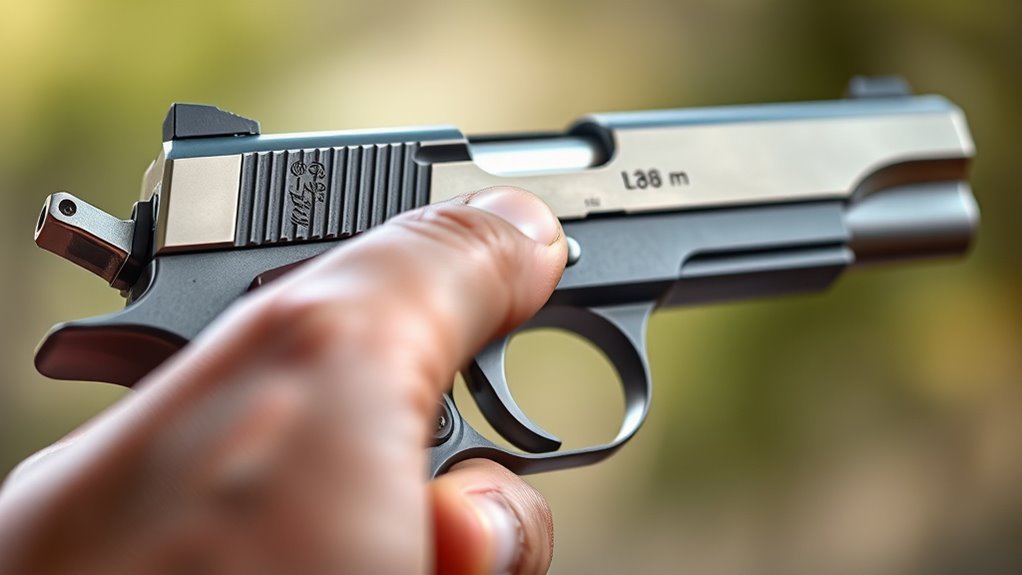
Before making any adjustments to your pistol’s thumb safety, always remove the firearm from its holster and confirm it’s completely unloaded. Start by performing a thorough safety check: engage the thumb safety by pushing it up to the “safe” position.
Make sure it physically blocks the sear or firing mechanism. While testing the safety, try pulling the trigger; it should be blocked and prevent the gun from firing.
Next, disengage the safety by pushing it down to the “fire” position. Check that the trigger moves freely and the gun functions properly.
If needed, go ahead and perform a safety adjustment to improve how the safety engages or how the trigger moves. After each adjustment, repeat the safety check to keep everything working reliably.
Consistent testing like this helps ensure your thumb safety works exactly as it should every time you use it.
Frequently Asked Questions
How Does a Thumb Safety Work on a Pistol?
A thumb safety works by physically blocking the firing mechanism when engaged. You flip the lever with your thumb to lock or deactivate the sear, preventing or allowing the hammer to fall and fire the pistol safely.
Is It Better to Have a Thumb Safety or Not?
Want extra security or faster access? It depends on you. If you value added safety and control, a thumb safety’s great. But if speed matters more, skipping it might suit you better—choose what fits your style.
What Does “Mexican Carry” Mean?
“Mexican carry” means you’re carrying a pistol without a holster, usually tucked in your waistband or pocket. It’s risky because the firearm isn’t secured, increasing chances of accidental discharge or losing the gun. Avoid it.
Where to Place Thumbs on a Pistol?
You place your strong hand thumb comfortably along the pistol frame, near the safety lever, without pressing too hard. Your support hand thumb should rest below or alongside the strong thumb for a secure, controlled grip.
Conclusion
Now that you’ve mastered the thumb safety, think of it as your pistol’s guardian angel—always ready to shield you from danger with just a flick of your thumb.
Like a steady lighthouse guiding ships through the night, it keeps you in control, ensuring every shot is deliberate and safe.
Trust this small but mighty switch to protect you, turning your pistol from a silent storm into a trusted ally at your side.
Using the thumb safety correctly is key to handling your pistol safely and confidently. It’s not just a feature; it’s your first line of defense.
When you engage the thumb safety, you’re preventing accidental firing, giving you peace of mind in any situation. So, always remember to use the thumb safety—it’s what keeps you and those around you safe.
In short, the thumb safety is an essential part of responsible pistol ownership. It helps maintain control and ensures every shot is intentional, making your pistol a reliable partner you can trust.