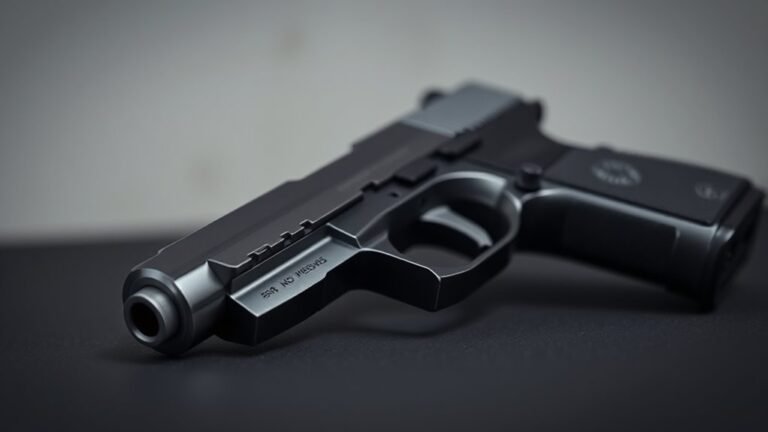

What Does Double Action Mean on a Pistol?
When you pull the trigger on a double-action pistol, you’re both cocking and releasing the hammer in one smooth motion. This means you don’t have to manually cock it before the first shot, making it quicker and easier to use.
Double-action pistols are great for those who want a fast and simple way to fire without extra steps.
The longer, heavier trigger pull acts as a safety feature, helping prevent accidental firing while handling. It adds an extra layer of control, especially if you’re carrying the pistol or using it in stressful situations.
If you want to understand how this enhances safety and control, keep exploring the features that make double-action pistols reliable.
Key Takeaways
- Double action means pulling the trigger both cocks and releases the hammer in one continuous motion. It eliminates the need to manually cock the hammer before firing the first shot.
- Double-action trigger pulls are longer and heavier, which actually provides a built-in safety feature. That heavier trigger pull helps reduce accidental discharges during handling or holstering.
- Some pistols switch to single-action mode after the first shot. This allows for lighter, more precise trigger pulls on follow-up shots.
What Does Double Action Mean on a Pistol?
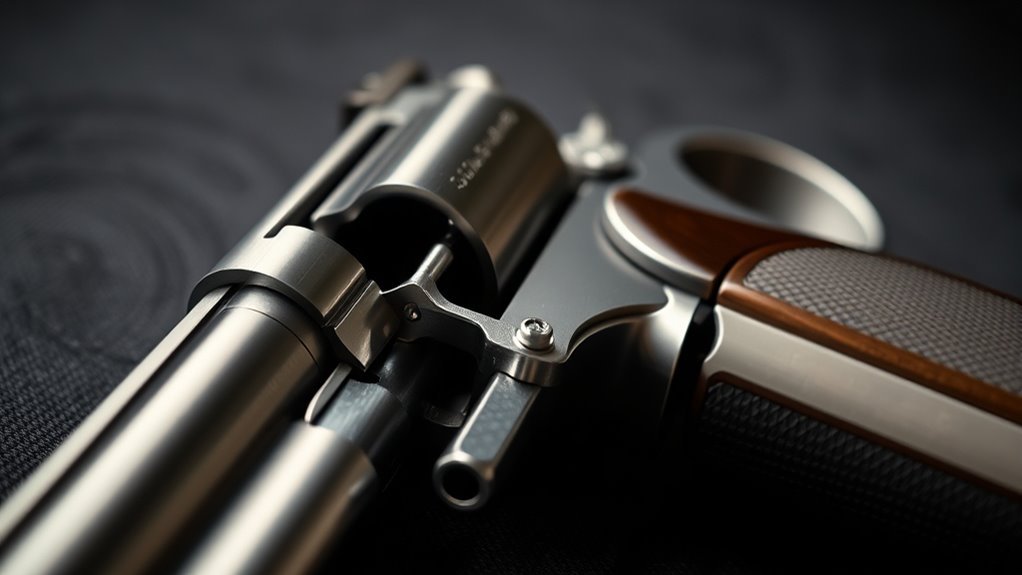
Although it might seem complex at first, double action on a pistol simply means that when you pull the trigger, it both cocks and releases the hammer or striker to fire the gun in one smooth motion. This double-action firing mechanism eliminates the need for manual cocking before your first shot, making the pistol quicker to use.
The trigger pull in double-action mode is longer and heavier, which acts as an important safety feature by reducing accidental discharges. After the first shot, many pistols allow the slide to cock the hammer automatically, letting you switch to single-action mode for lighter, more precise trigger pulls.
Understanding how the heavier trigger pull and firing mechanism work together helps you appreciate the functionality and readiness double-action pistols provide. It’s pretty neat once you get the hang of it!
Why Double Action Pistols Are Safer for Self-Defense
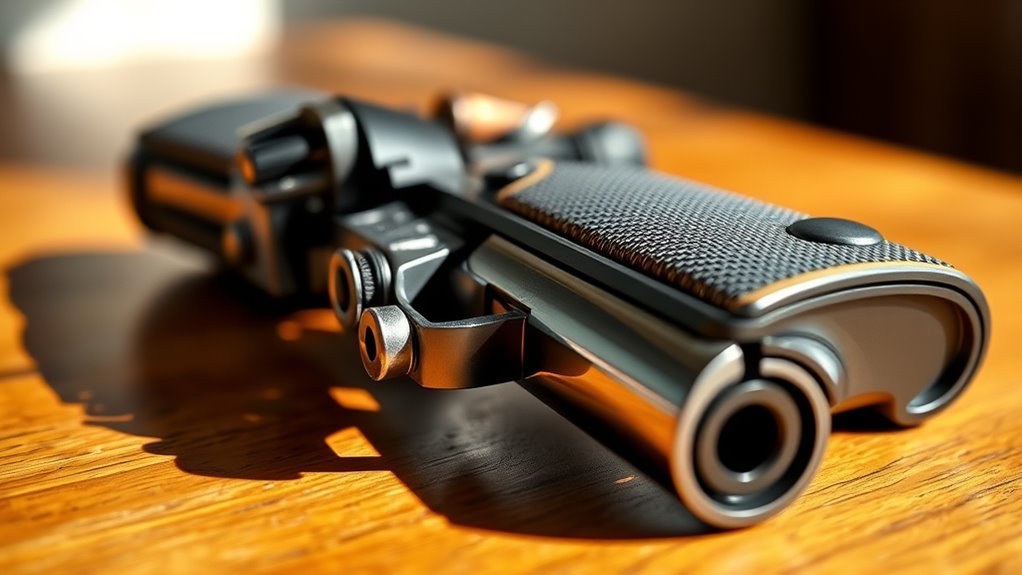
Understanding how double action pistols work helps explain why they offer enhanced safety for self-defense. The heavy trigger pull requires deliberate effort, reducing accidental discharge risks during handling or holstering.
Because many double action pistols are carried with the hammer down and a round chambered, you gain added security compared to lighter, single-action triggers.
Carrying double action pistols with the hammer down and a round chambered increases safety over lighter single-action triggers.
With double action, the longer trigger pull acts as a built-in safety, demanding intentional use—crucial in high-stress situations. This means you’re less likely to fire unintentionally, protecting both you and those around you.
Consider these safety benefits of double action pistols:
- A heavy trigger pull that prevents accidental discharge
- Safer holstering with reduced risk of unintentional firing
- Enhanced handling security for confident self-defense use
Frequently Asked Questions
What’s the Point of a Double Action Pistol?
The point of a double-action pistol is to let you fire quickly and safely without cocking the hammer manually. It combines readiness and safety by requiring a longer trigger pull for the first shot, reducing accidental discharges.
Which Is Better, a Single Action or Double Action Pistol?
Choosing between single and double action is like picking running shoes—you want speed or safety. You’ll prefer single action for quick, precise shots, but double action offers safer, more controlled firing, especially under stress.
Are Double-Action Pistols Safer?
Yes, double-action pistols can be safer because their heavier, longer trigger pull reduces accidental shots. But you still need proper training and discipline to handle them safely under stress or in critical situations.
Is a Glock a Single or Double-Action?
A Glock isn’t strictly single or double-action; it uses a consistent striker-fired trigger pull every time. You’ll feel the same trigger resistance with each shot, making it more like a double-action-like system.
Conclusion
Understanding double action on a pistol is like holding the reins of a powerful stallion—you’re in control, but it demands respect. Double action adds an extra layer of safety, making accidental shots less likely and giving you a deliberate trigger pull when it counts most.
When you choose a double action pistol for self-defense, you’re not just carrying a weapon; you’re wielding a guardian that keeps both you and those around you safer. The double action mechanism ensures that each trigger pull is intentional, helping prevent unintentional discharge.
In short, double action means added control and safety in your hands. Whether you’re a beginner or experienced shooter, understanding this feature can make a big difference in how you handle your pistol. It’s all about confidence and responsibility when it comes to self-defense.