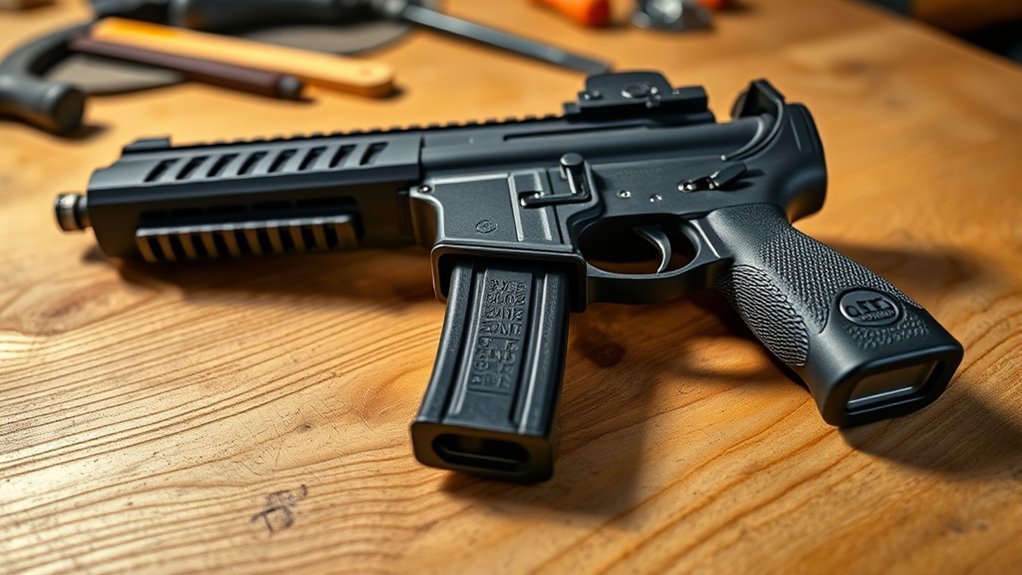
Can I Put a Stock on My AR Pistol Now?
You can put a stock on your AR pistol, but you have to follow strict ATF rules to stay legal. If your barrel is under 16 inches, adding a permanent stock will change your pistol’s classification to a short-barreled rifle (SBR).
That means you’ll need to file ATF Form 1, get approval, and pay a $200 tax stamp before attaching the stock. Skipping these steps isn’t worth the risk—it can lead to serious legal trouble.
So, if you’re thinking about putting a stock on your AR pistol, it’s important to understand the process and how to stay fully compliant with the law.
Keep reading to get all the details and avoid any headaches down the road.
Key Takeaways
- Attaching a stock to an AR pistol with a barrel under 16 inches reclassifies it as an SBR, which means you need ATF approval and a tax stamp.
- You have to file ATF Form 1 and get that approval before you permanently add a stock. Otherwise, you could be breaking the law.
- Instead of a stock, using a removable or non-permanent pistol brace can help keep your pistol’s legal classification intact.
- Another thing to consider is making sure the overall firearm length is over 26 inches if you want to avoid the SBR classification when adding a stock.
- Keep in mind, permanently attaching a stock without the proper registration can lead to serious criminal charges and losing your legal firearm status.
What You Need to Know About Putting a Stock on Your AR Pistol
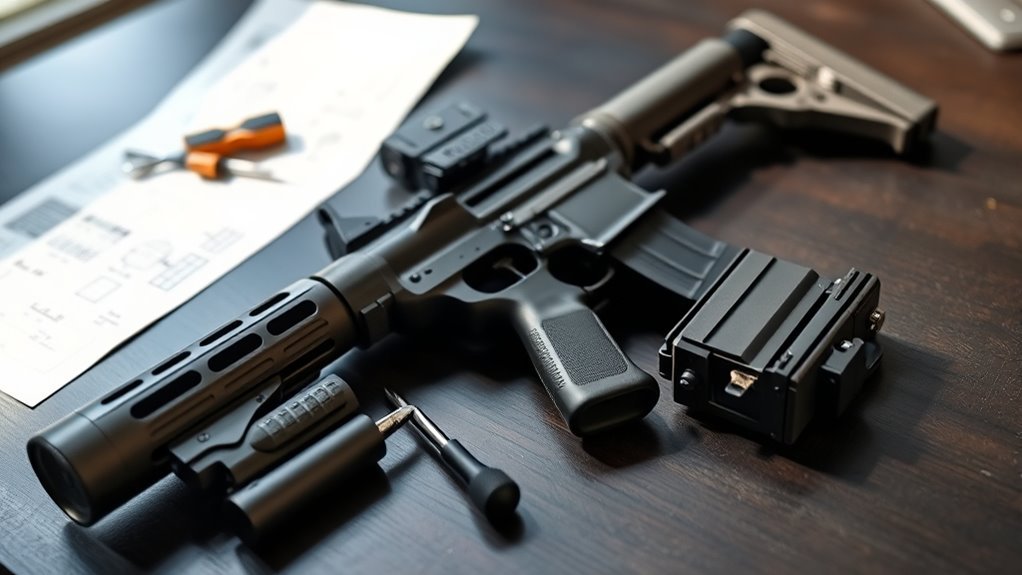
If you’re thinking about putting a stock on your AR pistol, you need to understand the legal implications first. ATF regulations are clear: attaching a stock to an AR pistol with a barrel under 16 inches can reclassify your firearm as a short-barreled rifle (SBR). That means you’d need to register it under the NFA and pay a $200 tax stamp.
The firearm classification changes depending on barrel length, overall length, and whether the stock is permanently fixed. Using a pistol brace instead of a stock often keeps you in legal compliance since braces aren’t considered stocks if removable or non-permanent.
However, permanently attaching a stock generally converts your AR pistol into an SBR. So, before making any modifications, review ATF rules carefully to avoid unintentional violations.
How to Keep Your AR Pistol Legal When Adding a Stock
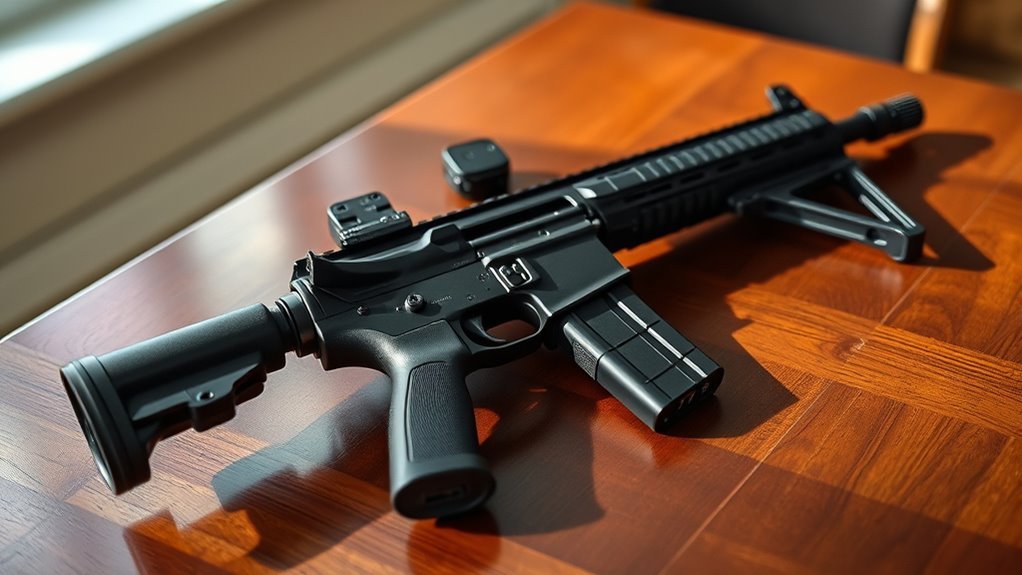
When you want to add a stock to your AR pistol, you have to follow some specific legal steps to keep it compliant. Without proper approval, adding a stock can reclassify your firearm as an SBR under ATF regulations.
So, to stay legal, you need to file ATF Form 1 and get approval before attaching the stock.
Alternatively, you can avoid attaching a stock altogether or permanently remove any stabilizing brace to maintain your AR pistol’s firearm classification. Also, make sure the overall length exceeds 26 inches to prevent SBR status.
Here are some things to consider to avoid trouble:
- File ATF Form 1 for compliance and peace of mind
- Follow legal steps to avoid criminal charges
- Keep your AR pistol’s classification clear and legal
Frequently Asked Questions
Is It Illegal to Put a Stock on an AR Pistol?
Yes, it’s illegal to put a stock on your AR pistol without proper ATF approval. Doing so converts it into a short-barreled rifle, requiring paperwork and tax stamps. Don’t risk felony charges; follow legal processes instead.
Can I Put a Regular Stock on My AR Pistol Now?
Yes, you can put a regular stock on your AR pistol if it has a barrel length of 16 inches or more and meets the 26-inch overall length. Otherwise, you’ll need ATF registration to avoid legal issues.
Can I Put a Stock on My AR-15 Pistol?
You can’t just slap a stock on your AR-15 pistol without paperwork—it’s like opening Pandora’s box. You’ll need to file ATF Form 1 and get a tax stamp to avoid breaking federal law and serious trouble.
Can I Put a Stock on My AR Pistol 2026?
Yes, you can put a stock on your AR pistol in 2026 if it’s registered as an SBR or has a 16-inch barrel or longer. Always double-check current laws before making modifications to stay legal.
Conclusion
Adding a stock to your AR pistol without following the rules is like walking a tightrope—you need balance and caution. To keep your AR pistol legal, make sure you understand the laws around barrel length and overall firearm classification.
Always check local and federal regulations before making any modifications. Laws can be tricky, and what’s allowed in one state might not be in another.
By staying informed and careful, you can enjoy your firearm safely and legally. Remember, understanding the legalities of adding a stock to your AR pistol is key to avoiding costly mistakes that could land you in trouble.
So, before you make any changes, do your homework. Keeping your AR pistol legal means knowing the rules on stocks, barrel lengths, and classifications. That way, you stay on the right side of the law and can confidently enjoy your firearm.