7 Steps to Master Using Pistol Sights
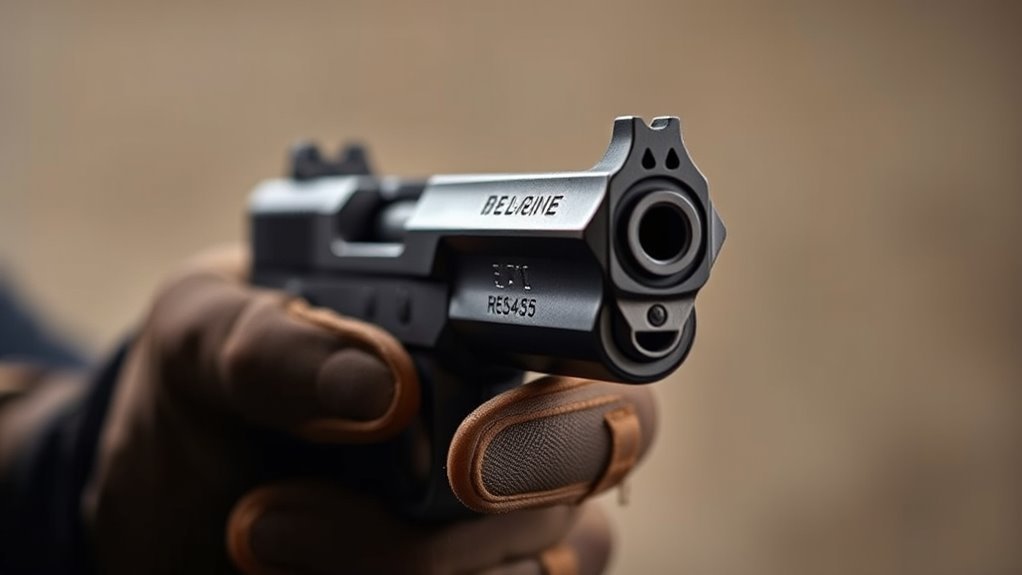
To master using pistol sights, start by aligning the front sight precisely within the rear sight notch. Make sure there’s equal light on both sides and the tops are level. This alignment is the foundation of accurate shooting.
Next, focus sharply on the front sight while keeping the target and rear sight blurry. This helps your eyes lock onto what really matters for a clean shot.
Find your dominant eye and adjust your stance so that it aligns naturally with the sights. This makes aiming feel more intuitive and steady.
Practice switching your sight picture smoothly between shots. Consistency comes from regular drills, so keep practicing to build muscle memory.
By following these steps, you’ll sharpen your aim and boost your shooting accuracy. And trust me, there’s always more to uncover for even better results. Keep at it, and you’ll see the difference!
Key Takeaways
- Align the front sight centered with equal light on both sides inside the rear sight notch before each shot.
- Focus your eye sharply on the front sight while keeping the target and rear sight slightly blurry.
- Level the top of the front sight with the rear sight’s top to maintain proper vertical alignment.
- Identify and use your dominant eye to improve sight alignment and visual focus during aiming.
- Practice consistent sight picture drills emphasizing “equal height, equal light” to build muscle memory and accuracy.
Align Front and Rear Sights Properly for Accuracy
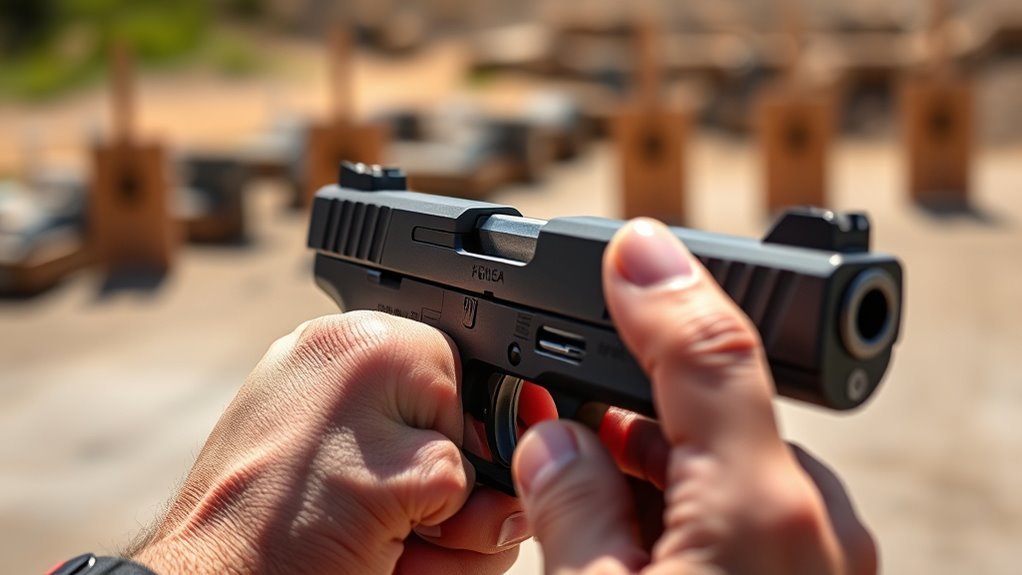
When you align the front sight properly within the rear sight notch, you guarantee greater accuracy. To achieve correct sight alignment, center the front sight with equal light on both sides inside the rear sight notch.
Make sure the top of the front sight is level with the top of the rear sight to maintain a proper sight picture. Avoid any angular or parallel shifts by double-checking that the front sight is directly in line with the rear sight’s center.
Follow the “equal height, equal light” rule before each shot to confirm alignment. Regularly practicing this at various distances helps build muscle memory, making your sight alignment instinctive and improving your shooting precision every time you aim.
Focus on the Front Sight to Improve Aim

Why does focusing on the front sight matter so much for improving your aim? When you focus on the front sight, you guarantee proper alignment, which is key to accuracy.
Your eye can’t clearly see the front sight, rear sight, and target all at once, so zeroing in on the front sight keeps your aim consistent. The rear sight and target will appear blurry, helping maintain the right focus during each shot.
Your eye can’t focus on front sight, rear sight, and target simultaneously, so prioritize the front sight for consistent aim.
- Prioritize the front sight to reduce aiming errors.
- Keep the target and rear sight slightly blurry for consistency.
- Build muscle memory by consistently focusing on the front sight.
- Improve accuracy in both practice and real-world situations.
Mastering this focus sharpens your accuracy and reinforces proper aiming habits. It really makes a difference when you’re out there shooting.
Master Your Pistol’s Standard Sight Picture
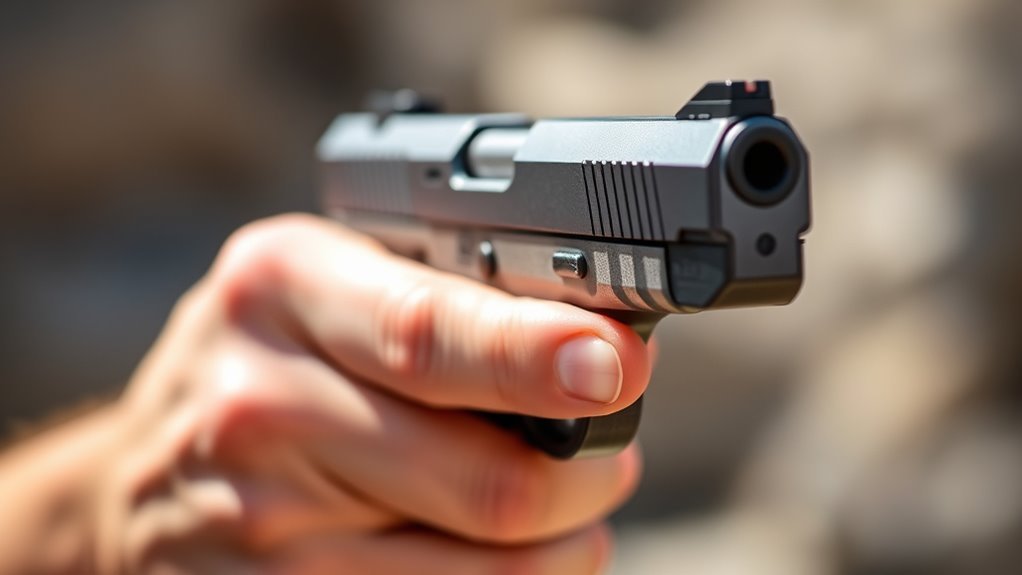
Mastering your pistol’s standard sight picture is essential to consistent accuracy, so you need to learn and practice the specific alignment recommended by your firearm’s manufacturer. Start by focusing on the front sight, ensuring it’s centered horizontally within the rear sight notch with equal light on both sides.
Make sure the front sight is level with the rear sight’s top before you place your aligned sights on the target. Your target focus should match the firearm’s standard hold, whether that’s center-mass or another point.
Consistently reviewing and reinforcing this sight alignment builds muscle memory, which makes your shots more reliable. By committing to your pistol’s proper sight picture, you’ll see a noticeable improvement in your aim and shooting consistency.
Fix Common Sight Alignment Mistakes
Although you might already know the basics of sight alignment, common mistakes like an off-center front sight or uneven height can throw off your accuracy. To fix these, focus on proper alignment and make timely corrections.
Here’s how to avoid common sight alignment mistakes:
- Verify the front sight is centered in the rear sight notch with equal light on both sides. This helps prevent angular errors.
- Keep the top of the front sight level with the rear sight’s top. Doing this avoids height discrepancies.
- Regularly check if the front sight appears skewed left or right. Then, adjust your aim accordingly.
- Practice slow, consistent sight picture drills emphasizing “equal height, equal light.” This will build muscle memory for proper alignment.
Find Your Dominant Eye and Adjust Your Aim
How do you guarantee your shots hit the mark? Start by finding your dominant eye, which plays a vital role in sight alignment and aiming.
Extend your arms, form a triangle with your hands, and focus on a distant object. Close one eye at a time; the eye that keeps the object centered is your dominant eye.
If your dominant eye is opposite your shooting hand, you’re cross dominant. This may require adjusting your stance or training.
To improve visual focus and sight alignment, close or squint your non-dominant eye while aiming. Adjust your head and body so your dominant eye lines up perfectly with the pistol sights.
This alignment sharpens your visual focus, helping you aim more accurately every time you pull the trigger.
Practice Switching Sight Pictures Smoothly
When you practice switching sight pictures smoothly, you build the muscle memory needed to adapt quickly during real shooting scenarios. Mastering the progression between sight pictures, like from center-mass to cover-up hold, sharpens your adaptability and speed.
Use dry fire drills to rehearse these changes safely. Focus on maintaining proper sight alignment throughout each shift.
Timed exercises simulate pressure, pushing you to switch quickly and accurately. Don’t forget to review your firearm’s recommended sight pictures to ensure your technique stays on point.
- Practice transitioning between different sight pictures regularly
- Use dry fire drills to improve smoothness and muscle memory
- Maintain consistent sight alignment during every shift
- Incorporate timed drills to build speed and pressure handling
Build Consistency With Regular Sight Alignment Drills
Mastering smooth sight picture changes sets the foundation, but building consistent sight alignment takes your accuracy to the next level. Focus on aligning the front sight perfectly—keep its top level with the rear sight and centered in the notch every time.
Consistent sight alignment sharpens accuracy—keep the front sight level and centered with the rear sight every time.
Use dry fire drills at close range to develop muscle memory without the distraction of recoil. These drills help you lock in proper sight alignment, making your shots more precise.
During live fire, practice slow, deliberate repetitions to reinforce good habits and avoid mistakes. Record your shots and analyze any errors to fine-tune your alignment.
Gradually increase shooting distances to maintain consistency under varied conditions. Regular sight alignment drills ensure your front sight stays true, boosting your overall shooting reliability.
Frequently Asked Questions
What Is the 3-3-3 Rule in Self-Defense?
The 3-3-3 rule in self-defense means you should react within three seconds, assess the threat within three minutes, and escape within three hours. It helps you stay quick, aware, and focused during high-stress situations.
What Is the Basic Rule for Sight Adjustment Pistol?
Did you know over 70% of shooters miss due to improper sight alignment? The basic rule is to move your front sight in the direction you want your shots to go—small adjustments keep your aim precise and effective.
What Distance Should a Pistol Be Zeroed At?
You should zero your pistol between 10 and 15 yards, depending on your shooting needs. Zeroing at 25 yards offers versatility, but for self-defense and quick engagement, shorter distances like 7 yards work best.
How to Properly Aim With Open Sights?
Imagine you’re lining up on a bullseye at the range. You focus sharply on the front sight, center it in the rear notch, and align it with your target. Keep your hold steady, and you’ll consistently hit your mark.
Conclusion
Now that you know the seven steps to master pistol sights, are you ready to put them into action? By aligning your sights properly and focusing on the front sight, you’ll start seeing improvements in your accuracy. Practicing regularly is key to making steady progress.
Remember, consistency is everything when it comes to mastering pistol sights. Fixing common mistakes early on will make a huge difference in your shooting performance. So, keep practicing and trust your skills.
With dedication and the right techniques, your aim will become sharper every time you shoot. Stick to these steps, and you’ll master pistol sights faster than you expected. Keep at it, and watch your accuracy improve step by step.