How to Fire a Pistol in 5 Simple Steps
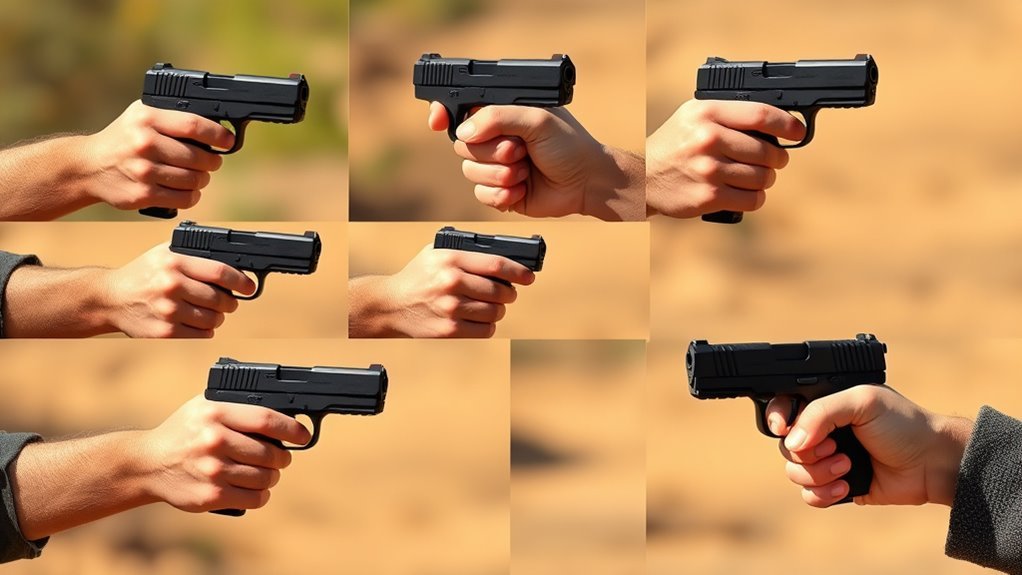
To fire a pistol effectively, you need to start with a solid grip. Hold it high on the beaver tail for better control, and keep your wrists straight with your elbows slightly bent. This stance helps you manage recoil and maintain accuracy.
Next, position your feet shoulder-width apart and bend your knees slightly. Bring the pistol up to eye level so you can clearly see your target. Focusing sharply on aligning the sights with the target is key to hitting your mark.
When you’re ready, press the trigger smoothly using the pad of your finger. Avoid jerking or pulling—it’s all about a steady, controlled squeeze. After the shot, reset the trigger while keeping your grip and sight alignment steady. This prepares you for follow-up shots.
Keep practicing these simple steps, and you’ll quickly improve your pistol shooting skills. It’s all about consistency and control!
Key Takeaways
- Grip the pistol high on the beaver tail with both hands for firm, controlled handling and to prevent slippage.
- Stand with feet shoulder-width apart, knees slightly bent, and align shoulders and hips toward the target for stability.
- Focus on the front sight, aligning it flush and centered with the rear sight for precise aiming.
- Apply steady, straight-back pressure on the trigger pad without jerking or anticipating the shot.
- Release the trigger gently to feel the reset, maintain grip and sight alignment, then prepare smoothly for follow-up shots.
Hold a Pistol for Maximum Control
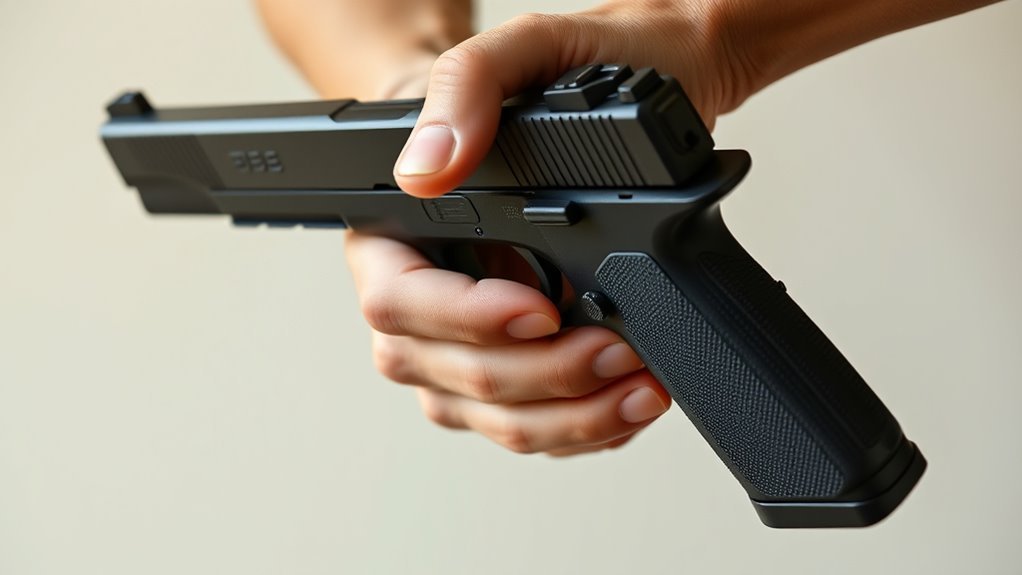
How do you guarantee maximum control when holding a pistol? Start by gripping the pistol high into the beaver tail or tang to prevent slippage and assure solid control.
Use your non-dominant hand fingers to support the grooves of your dominant hand, adding essential stability to your hold. Maintain a firm yet relaxed grip—too tight, and you risk fatigue; too loose, and you invite limp wristing, which can cause malfunctions.
Keep your wrists straight and elbows slightly bent to absorb recoil effectively and maintain accuracy. Consistency is key, so hold the pistol the same way every time.
This builds muscle memory, making your grip more natural and improving control shot after shot. With proper grip and stability, you’ll shoot more confidently and accurately.
Position Your Body for a Stable Pistol Shooting Stance
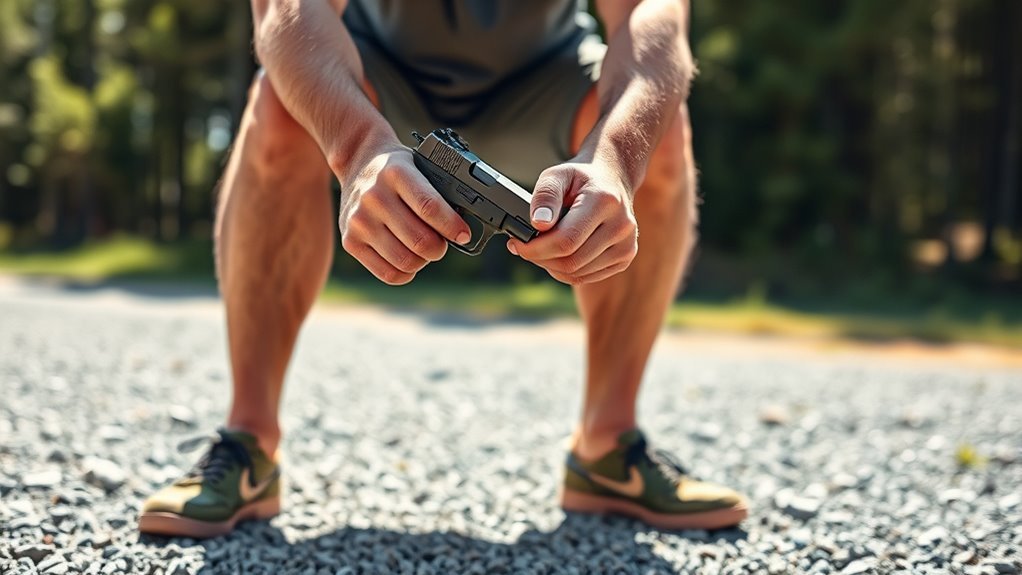
Once you’ve secured a solid grip on your pistol, your body’s position plays a big role in maintaining stability and control. Start by standing with your feet shoulder-width apart, placing your dominant foot slightly back to create a stable stance.
A solid grip combined with a stable, balanced stance is key to pistol control and accuracy.
Bend your knees just a bit and keep your body upright to maintain a natural, balanced posture. Square your shoulders to the target, aligning your hips and torso for better stability.
Keep your elbows slightly bent and relaxed to absorb recoil, helping you maintain control during firing. With a firm, high grip, bring your pistol up to eye level while keeping your body steady and centered.
This stance and posture provide the foundation for a stable pistol shooting experience. It’s all about finding that balance so you can shoot confidently and accurately.
Align Your Pistol Sights for Precise Aiming
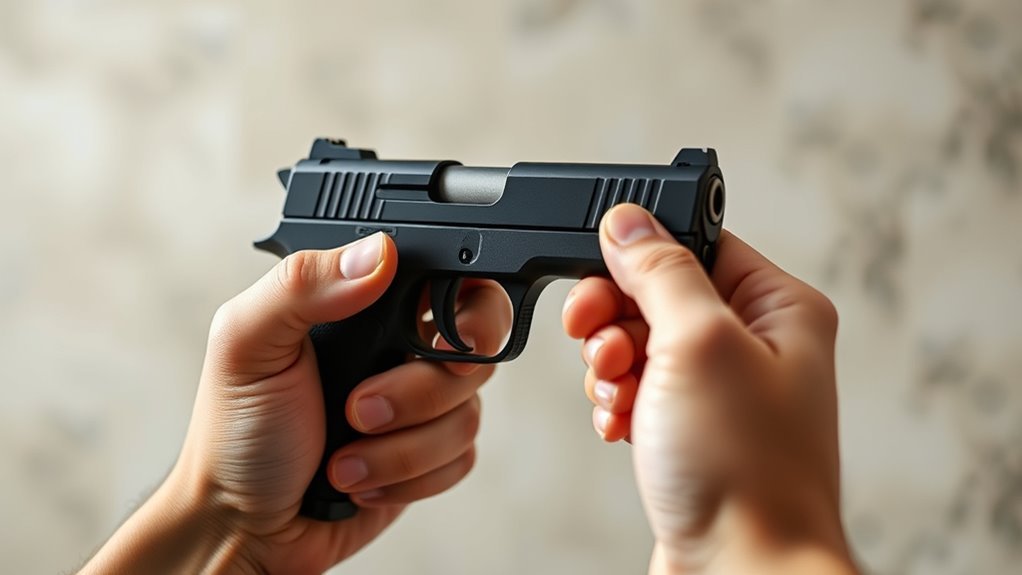
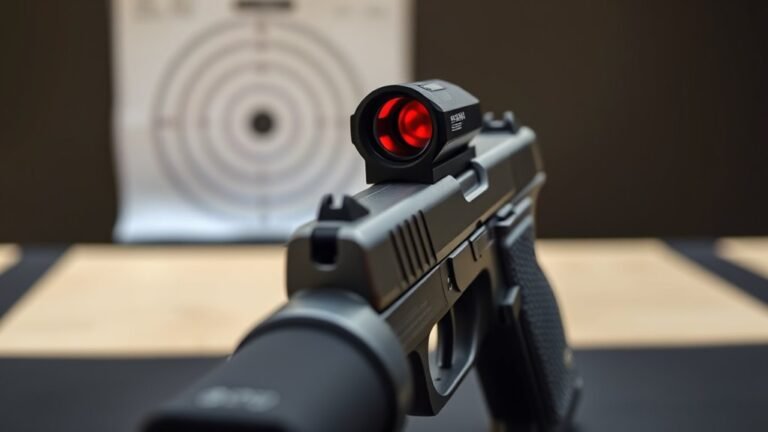
Although your body and grip set the foundation, aligning your pistol sights correctly is essential for precise aiming. Focus on the front sight, making it sharp and clear, while the target remains slightly blurred.
Line up the front sight post so it’s flush with the top of the rear sight and centered within the sight notch. Confirm the front sight is horizontally aligned with the rear sight, with equal light on both sides if using iron sights.
This consistent sight picture helps you develop muscle memory and improves accuracy. Before pressing the trigger, verify that your sights are steady and properly aligned to ensure the shot hits where you intend.
Mastering this alignment sets you up for precise shooting every time. It might take some practice, but once you get it down, your accuracy will really improve.
Press the Pistol Trigger Smoothly Without Anticipation
When you press the trigger, you need to apply steady, straight-back pressure using the pad of your finger. Avoid any sudden jerks or anticipation that can throw off your shot.
Focus on a smooth trigger pull by pressing directly through the trigger wall without rushing or forcing it. Keep your grip firm and your stance steady to maintain control during the trigger press.
Maintain a firm grip and steady stance for a controlled, smooth trigger pull without rushing.
Visualize these key points:
- Feeling the trigger wall as you steadily increase pressure
- Using the fleshy pad of your finger, not the tip or whole finger
- Pressing straight back, avoiding any sideways or jerky movements
Practicing dry firing helps you develop muscle memory for a smooth trigger pull. This way, you’ll avoid flinching or anticipation when firing live rounds.
Reset the Trigger and Prepare Your Pistol for Follow-Up Shots
To guarantee accurate follow-up shots, you need to gently release pressure on the trigger until you feel the reset. This is usually marked by a slight click or a tactile bump.
This trigger reset lets you prepare for your next shot without disturbing your grip or sight alignment. Keep your pistol firmly gripped and maintain the sight picture on the target as you control recoil by driving the gun back during the recoil cycle.
Press the trigger straight back to the wall at the reset point, but make sure you don’t rush this step. Waiting for the full trigger reset before pulling again is essential for consistent accuracy and smooth follow-up shots.
Always check your sights remain properly aligned before each shot to keep your precision sharp. It’s all about staying steady and focused with every pull of the trigger.
Frequently Asked Questions
What Type of Ammunition Is Safest for Beginners?
You’ll find .22 LR ammunition safest for beginners because it has low recoil and noise, making it easier to handle. It’s affordable too, letting you practice more without feeling overwhelmed or uncomfortable during your first shooting experiences.
How Do I Clean and Maintain My Pistol?
Think of your pistol as a loyal steed; you clean and oil it regularly, wiping away powder residue and grime. Disassemble carefully, brush each part, lubricate moving components, then reassemble. This keeps it reliable and ready for action.
What Safety Gear Should I Wear While Shooting?
You should wear eye protection to guard against debris and ear protection to prevent hearing damage. Gloves can improve grip and comfort, while a hat helps shield your face. Always prioritize safety gear when shooting.
How Do I Store My Pistol Securely at Home?
You should store your pistol in a locked safe or secure gun cabinet, unloaded with the magazine removed. Use a trigger lock for extra safety, and keep ammunition stored separately to prevent unauthorized access.
What Are Common Legal Requirements for Pistol Ownership?
You don’t need a secret handshake, but you’ll have to pass background checks, register your pistol, and follow age limits. Oh, and don’t forget to store it safely—because the FBI isn’t just collecting stamps.
Conclusion
Now that you’ve mastered these five simple steps, you’re ready to fire your pistol with confidence and control. Remember, just like a knight steadies his lance before charging into battle, steady your stance and focus on smooth trigger pulls.
Consistent practice will turn these basics into second nature, helping you shoot accurately and safely every time. Keep your cool, stay prepared, and your skills will sharpen with every shot you take.
Firing a pistol takes patience and attention to detail, but with these fundamentals, you’re well on your way. Stay safe, keep practicing, and soon firing your pistol will feel natural and precise. You’ve got this!