How You Can Safely Dry Fire a Pistol
To safely dry fire a pistol, you first want to remove the magazine and then thoroughly check the chamber to make sure it’s completely unloaded. Lock the slide back and use a flashlight to inspect any hard-to-see areas. This step is crucial to avoid any accidental discharge.
Next, set up a clutter-free zone for your practice. Keep live ammo well away from your dry fire area to prevent mix-ups.
Using snap caps is a great idea—they help protect your firearm’s internals during dry firing.
Always follow the manufacturer’s safety steps and double-check everything before each session. Keep these basics in mind, and you’ll build a solid foundation for safe and effective dry fire practice. It’s all about being cautious and consistent to improve your skills safely.
Key Takeaways
- Always remove the magazine and visually check the chamber to confirm the pistol is completely unloaded before dry firing.
- Create a clutter-free area with a solid backstop and keep live ammunition away from the practice zone.
- Use snap caps or dummy rounds to protect the firing pin and internal components during dry fire exercises.
- Follow manufacturer safety instructions and double-check all safety steps before each dry fire session.
- Maintain an organized, distraction-free environment and regularly inspect the firearm for safe dry fire practice.
How to Verify Your Pistol Is Unloaded for Dry Fire
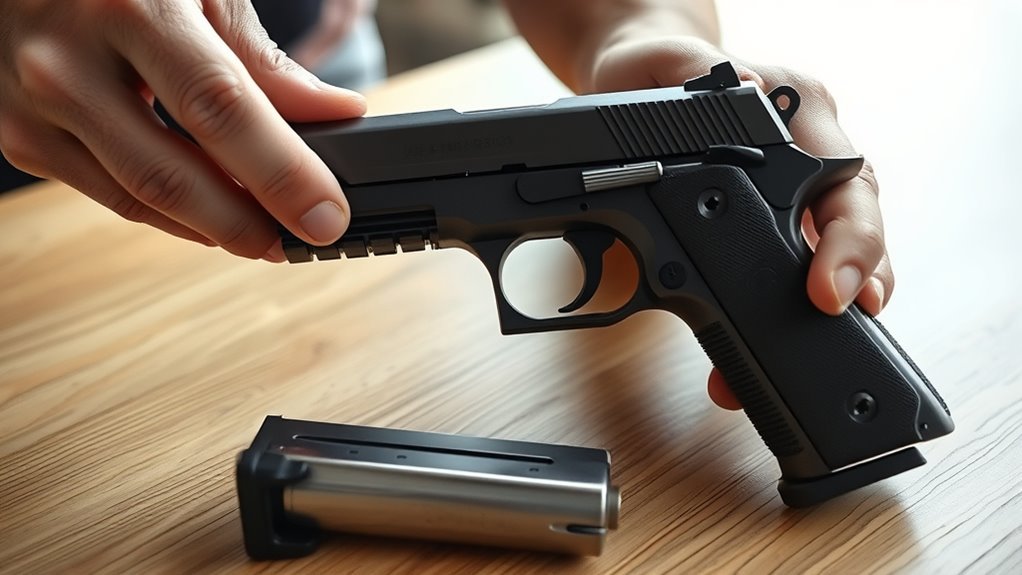
Before you begin dry firing, make sure you remove the magazine and check the chamber thoroughly. To verify your pistol is unloaded, perform a careful inspection of the chamber and magazine well.
Visually confirm the chamber is clear of any ammunition, and physically check by locking the slide back to ensure the chamber empty status. Using a flashlight can help illuminate hard-to-see areas, making sure the firearm is completely clear.
Always follow the firearm manufacturer’s safety instructions to double-check that your pistol is truly unloaded before dry firing. Taking these steps helps you maintain safety, preventing accidental discharge and ensuring your dry fire practice is secure and effective.
Never skip this essential check for your firearm’s safety and your peace of mind. It’s a simple step that makes all the difference.
How to Set Up a Safe Dry Fire Environment and Use Snap Caps
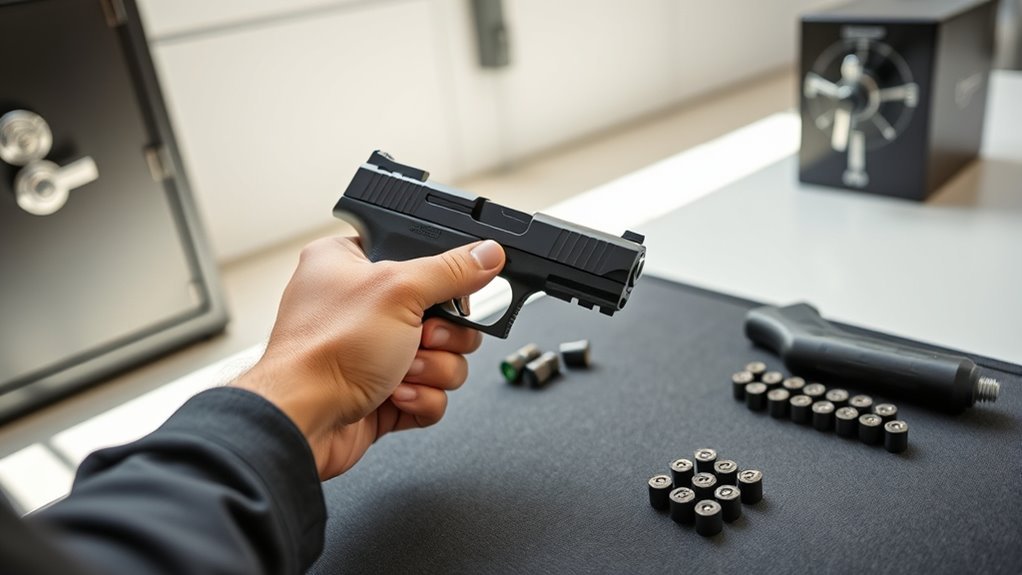
Once you’ve confirmed your pistol is completely unloaded, it’s important to create a safe environment for your dry fire practice. A safe dry fire setup safeguards your firearm’s internal components and guarantees dry fire safety.
Creating a safe dry fire environment protects your firearm and ensures effective, risk-free practice.
Use snap caps or dummy rounds as training tools to prevent damage to the firing pin during trigger control practice. Establish a clutter-free dry fire zone to avoid distractions and maintain focus.
- Conduct a thorough firearm inspection to verify the unloaded firearm status before each session.
- Use snap caps or dummy rounds to protect internal components during dry fire.
- Set up a solid backstop in your dry fire zone to catch any accidental discharges.
- Keep live ammunition well away from your practice area to maintain safety.
Frequently Asked Questions
Does Dry Firing Improve Aim?
Yes, dry firing improves your aim by letting you practice sight alignment and trigger control repeatedly without recoil. You’ll build muscle memory, steady your aim, and enhance accuracy, making your shooting more precise and consistent over time.
What Guns Cannot Be Dry Fired?
Before smartphones, you’d know that rimfire pistols, vintage guns, and some revolvers can’t be dry fired safely. You shouldn’t dry fire these without snap caps or guidance, or you risk damaging firing pins and springs.
Can You Damage a Glock by Dry Firing?
You generally won’t damage a modern Glock by dry firing, but it’s smart to use snap caps to protect the firing pin. Repeated dry firing without protection can eventually cause wear or damage over time.
Is It Bad to Dry Fire a New Gun?
Dry firing a new gun isn’t a ticking time bomb if you handle it right. You shouldn’t hurt your pistol if you use snap caps and follow the manual. Always treat it gently to keep it reliable and safe.
Conclusion
Now that you know how to verify your pistol is unloaded and set up a safe dry fire environment using snap caps, you’re ready to practice with confidence. Remember, patience and caution are your best allies—dry firing isn’t just shooting without bullets; it’s sharpening your skills in a safe, controlled way.
Treat every session like planting seeds; with care and consistency, your marksmanship will grow stronger each time you train. Dry firing is a valuable technique that helps improve your trigger control, sight alignment, and overall handling without the risks of live ammunition.
By incorporating safe dry fire practices regularly, you build muscle memory and increase your shooting proficiency. So, stay focused, be safe, and keep practicing—your accuracy and confidence will thank you!