What Makes an AR a Pistol or Rifle?
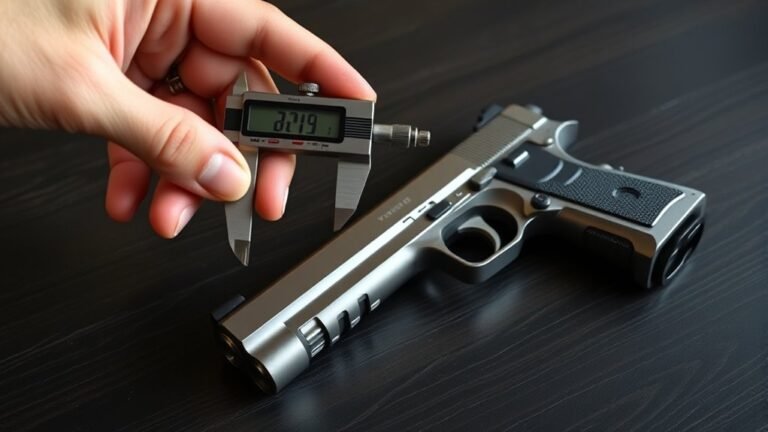
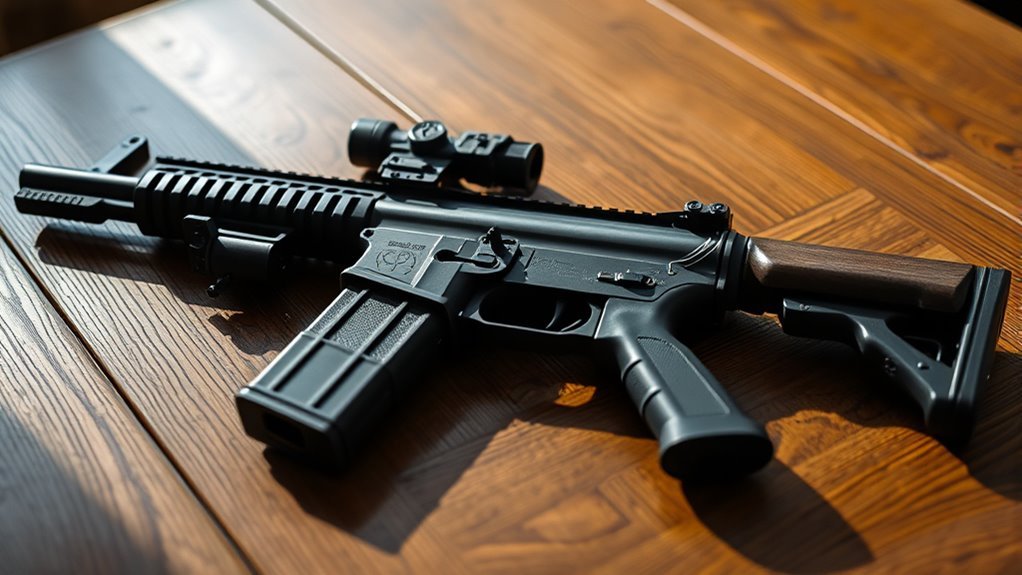
You classify your AR as a pistol or rifle based on barrel length, overall size, and whether it has a stabilizing brace or stock. These features are key to understanding your firearm’s legal status and how you can use it.
If the barrel is 16 inches or longer and the overall length is 26 inches or more, it’s a rifle.
Shorter barrels and overall lengths mean it’s a pistol, especially with a stabilizing brace instead of a stock.
Attaching a stock to a short barrel usually makes it a short-barreled rifle requiring special registration.
Keep exploring to understand how these details impact your firearm’s status and compliance.
Key Takeaways
- An AR with a barrel length of 16 inches or more and overall length of 26 inches or more is classified as a rifle.
- On the other hand, if the barrel is shorter than 16 inches and the overall length is under 26 inches, it’s classified as a pistol.
- Using a stabilizing brace instead of a stock keeps the AR classified as a pistol, even if the barrel is shorter.
- But if you attach a stock to an AR with a short barrel, it becomes a short-barreled rifle, which means you need to register it with the ATF.
- So, length measurements and what you attach—stock or brace—are super important for how your firearm is legally classified and to make sure you’re following the rules.
Barrel and Overall Length: Defining AR Pistol vs. Rifle Classification
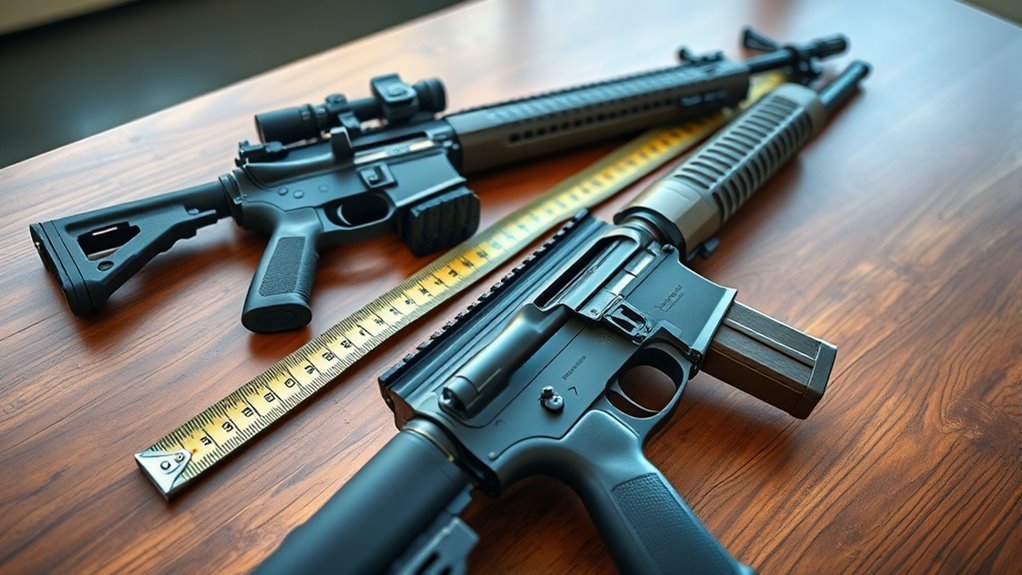
When you’re deciding if an AR is a pistol or a rifle, the barrel and overall length are key factors. An AR rifle requires a barrel length of at least 16 inches and an overall length of 26 inches or more to be legally classified as a rifle.
If the barrel length is shorter than 16 inches and the overall length falls under 26 inches, the firearm is classified as an AR pistol. This classification hinges on the barrel and overall length, which includes the barrel plus any attachments.
Many AR pistols use a stabilizing brace instead of a stock to maintain their legal status while having a shorter barrel. Understanding these length measurements helps you determine the firearm’s classification and comply with legal definitions.
Stocks vs. Braces: How They Affect Your AR’s Legal Classification
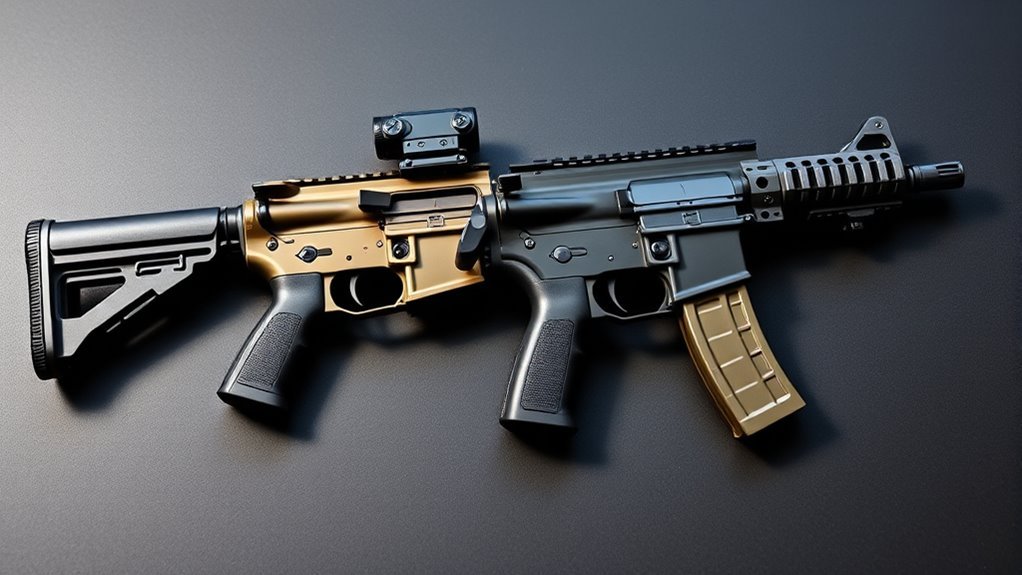
Although barrel length plays a major role in AR classification, the type of rear support you attach considerably impacts your firearm’s legal status. When you attach a stock to your AR, it typically falls under rifle classification, especially if the barrel length is 16 inches or more.
Using a stabilizing brace instead lets you keep the AR in a pistol configuration, provided the overall length and barrel length meet legal requirements. If your AR has a barrel shorter than 16 inches and you use a stock, it becomes a short-barreled rifle, requiring ATF registration.
Understanding ATF regulations on stocks versus braces is essential to avoid legal violations. Choosing the right rear support affects not only handling but also how your AR is legally defined. So, it’s really important to know the difference before making your choice.
Frequently Asked Questions
What Qualifies an AR as a Pistol?
An AR qualifies as a pistol if you keep its barrel under 16 inches, overall length below 26 inches, use a pistol lower receiver, and avoid attaching a fixed stock, opting instead for a stabilizing brace.
Are AR-15 Pistols Illegal Now?
You’re holding freedom’s symbol, and no, AR-15 pistols aren’t illegal now. Just make sure you follow federal rules, use a pistol brace, and check your state laws to keep your rights intact and safe.
Can You Legally Turn an AR Pistol Into a Rifle?
Yes, you can legally turn an AR pistol into a rifle by attaching a fixed stock and ensuring the barrel is at least 16 inches, making the overall length 26 inches or longer while following ATF regulations.
Is the AR-15 a Pistol or a Rifle?
About 70% of AR-15s are rifles. Whether yours is a pistol or rifle depends on barrel length and stock type. If it has a barrel under 16 inches and no stock, it’s usually a pistol.
Conclusion
Now that you know barrel length and whether your AR has a stock or brace determine if it’s a pistol or rifle, you’re better equipped to make the right choice.
For example, imagine you want a compact AR for home defense—you’d likely choose an AR pistol with a brace for easier maneuverability and legal compliance.
Understanding these differences helps you stay within the law while tailoring your AR to your needs. Knowing if your AR is classified as a pistol or rifle impacts how you can use it and what regulations apply.
So, whether you’re thinking about barrel length, stock type, or braces, these details are key to making the right decision. By keeping these factors in mind, you ensure your AR fits your lifestyle and stays compliant with the law.