How to Sight a Pistol in 10 Essential Steps
To sight your pistol accurately, start by ensuring safety—always unload and clear the firearm before handling it. Don’t forget to wear eye and ear protection, and set up a stable stance to keep steady. These safety steps are essential to get a solid foundation for sighting your pistol.
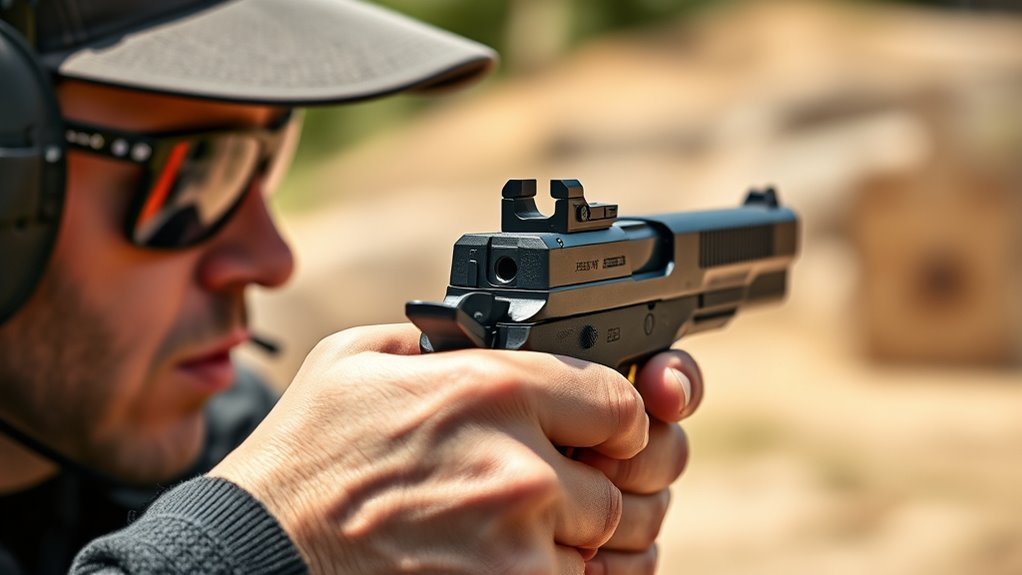
Next, identify your dominant eye and keep both eyes open to improve focus. Concentrate sharply on the front sight, making sure it’s evenly aligned within the rear sight. This alignment is key to hitting your target consistently.
Use a smooth, consistent trigger press while managing recoil by driving the gun back on target. After each shot, reset the trigger carefully before firing again.
Mastering these steps boosts your accuracy, and there’s more to help you refine every shot.
Key Takeaways
- Ensure the pistol is unloaded, wear protection, and set a stable shooting position before beginning sighting. Safety first, always.
- Focus sharply on the front sight, keeping the rear sight slightly blurred and aligned evenly with the front post. This helps with accuracy.
- Use both eyes open and aim with your dominant eye to improve depth perception and sight alignment. It might feel strange at first, but it really works.
- Press the trigger smoothly straight back, avoiding jerks, and reset fully to maintain consistent sight picture. A steady trigger pull is key.
- Practice dry firing and live shooting at varying distances to refine sight alignment and build muscle memory. The more you practice, the better you get!
Prepare Your Pistol and Range Safely
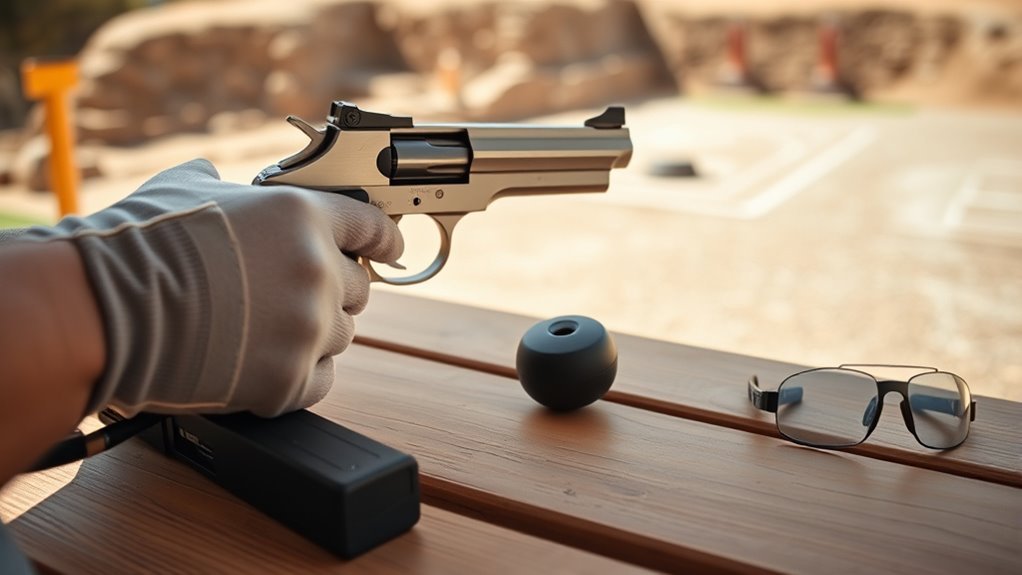
Before you begin sighting your pistol, always make certain it’s unloaded and the chamber is clear to prevent accidents. You’ll want to wear proper eye and ear protection to keep yourself safe during range time.
Check your pistol closely—whether it’s equipped with traditional sights or a Red Dot—to verify everything’s clean and functioning well. Next, set up a stable shooting position that feels comfortable and steady.
Confirm that your target is placed at the correct distance for sighting. Also, double-check your ammunition to make sure it’s suitable for your firearm to avoid any malfunctions.
Taking these safety and preparation steps seriously helps you focus on accurate sighting without distractions or risks. It’s all about being safe and prepared so you can enjoy your range time.
Master the Basics of Sight Alignment
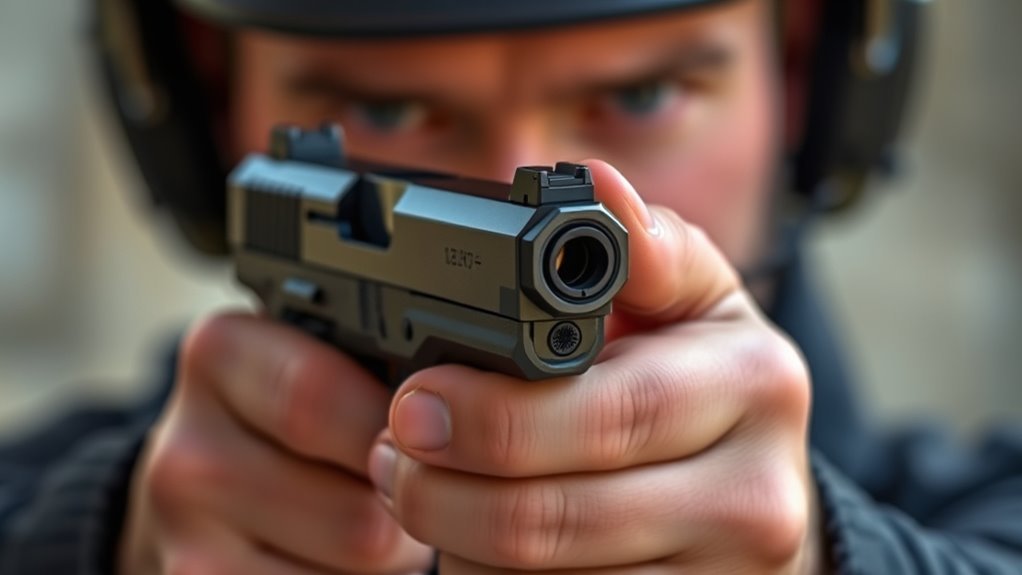
To master sight alignment, focus sharply on the front sight while keeping the rear aperture slightly blurry. Align the front post evenly within the rear sight’s opening, ensuring everything is level and centered.
It really helps to use both eyes open. This way, you maintain better awareness and keep a consistent sight picture. Give it a try, and you’ll notice the difference!
Front Sight Focus
One of the most vital steps in sighting a pistol is mastering your focus on the front sight post. You want the front sight sharp and clear, while the rear sight stays slightly blurred.
Keep the front sight centered in the rear sight notch, making sure there’s equal light on both sides for proper alignment. Always focus on the front sight, not the target, to boost your accuracy at any range.
Make sure the top of the front sight lines up level with the rear sight’s top, creating a straight, aligned picture. Practice holding that steady focus during shooting to build muscle memory and precision.
This consistent front sight focus is essential to improving your overall shooting performance. Stick with it, and you’ll see your accuracy get better every time you shoot.
Align Rear Aperture
Maintaining a sharp focus on the front sight post sets the stage for properly aligning the rear aperture. To master this essential step, you’ll need to:
- Center the rear sight aperture over the front sight post, ensuring equal light on both sides.
- Keep the front sight post flush within the rear aperture without tilting or misalignment.
- Focus your dominant eye on the front sight, allowing the rear aperture to appear slightly blurry.
- Verify the top of the front sight is level with the top of the rear aperture, maintaining a consistent sight picture.
Try practicing these steps at different distances. It really helps develop a natural, repeatable sight alignment habit.
Proper rear aperture alignment sharpens your accuracy and sets a solid foundation for effective pistol shooting. Keep at it, and you’ll see the difference!
Use Both Eyes
Using both eyes open while aiming can dramatically improve your shooting accuracy and situational awareness. This technique enhances depth perception and keeps you aware of your surroundings.
First, identify your dominant eye to assure consistent aiming. Keep your focus on the front sight post, not the target.
Align the rear sight so its top edges are level with the front sight, centering the front post in the rear aperture. Always verify that the sights are flush and properly aligned before each shot.
| Feeling | Reason |
|---|---|
| Confidence | Clear, precise sight alignment |
| Control | Better depth perception |
| Awareness | Maintain full field of view |
| Focus | Concentrate on front sight |
| Preparedness | Verify sights before shooting |
Identify Your Dominant Eye for Better Sight Alignment

To sight your pistol accurately, you need to figure out which eye is dominant by testing how each eye lines up with a distant object. It’s a simple test but makes a big difference.
If you happen to have crossover dominance or even equal dominance, don’t worry. Practicing with both eyes open can really boost your versatility.
Once you know which eye is dominant, adjust your aim to rely on that eye. This will help you get better sight alignment and improve your accuracy.
Determine Eye Dominance
Before you start sighting your pistol, you need to identify your dominant eye, as it plays a crucial role in achieving accurate alignment. Your dominant eye provides the clearest sight picture, helping you aim naturally and consistently.
Here’s how to determine which eye is dominant:
- Form a small triangle with your hands around a distant object and focus on it with both eyes open.
- Close one eye at a time; the eye that keeps the object centered is your dominant eye.
- Alternatively, try the Miles test: extend your arms, center a distant object, then close each eye separately.
- The eye that sees the object aligned without shifting is your dominant eye.
Knowing this helps you align your sights more confidently for improved shooting accuracy. It’s a simple step that can make a big difference!
Both Eyes Open Technique
Once you’ve identified your dominant eye, keeping both eyes open while aiming can really boost your sight alignment and target acquisition. When you shoot with both eyes open, let your non-dominant eye stay relaxed and focused on the target.
This helps you keep a proper sight picture while also improving your situational awareness. Using your dominant eye cuts down on parallax errors, making aiming feel more natural, especially at close to medium ranges.
It also lines up perfectly with red dot or iron sights, so your aim becomes more instinctive. Practicing this technique helps you pick up targets faster and stay aware of what’s going on around you.
Adjust Aim Accordingly
Identifying your dominant eye plays a vital role in adjusting your aim for better sight alignment. Knowing which eye leads helps you maintain consistent sight pictures and improves your shot accuracy.
To identify and use your dominant eye effectively, start by closing one eye and focusing on a distant object, then switch. The eye that keeps a clear, steady focus is your dominant eye.
Use your dominant eye to align the pistol sights while keeping both eyes open. This way, you stay aware of your surroundings.
Adjust your grip and head position to match your dominant eye. Doing this reduces strain and ensures a natural sight picture.
Consistent use of your dominant eye leads to better sight alignment and more precise shot placement every time you shoot. Give it a try—you’ll notice the difference!
Focus on the Front Sight, Not the Target
Although it might feel natural to focus on the target, you need to keep your eyes locked on the front sight when aiming your pistol. Make sure the front sight post stays sharp and clear, while the rear sight aperture becomes slightly blurry.
This focus helps you properly align the front sight with the rear sight and the target, improving your shot accuracy. If you try to see the target clearly instead, you risk common aiming errors by neglecting the front sight.
Even at close range, where some rely on point shooting, precision demands your attention remain on the front sight. By maintaining this focus, you enhance your control and consistency, making each shot more reliable and accurate.
Keep Both Eyes Open for Better Accuracy
Focusing on the front sight sharpens your aim, but keeping both eyes open takes your accuracy even further. When you keep both eyes open, you improve depth perception and maintain better situational awareness.
This simple habit also reduces eye strain, helping you acquire targets faster and with greater precision. It’s a small change that makes a big difference.
Here’s why you should keep both eyes open:
- Enhances depth perception and situational awareness.
- Reduces eye strain, enabling quicker target acquisition.
- Expands peripheral vision to monitor surroundings.
- Prevents misalignment caused by closing one eye.
Get a Solid Grip and Stance
When you get a solid grip and stance, you gain better control over your pistol and improve your shot consistency. Start by gripping high into the beaver tail or tang for maximum leverage.
Support your strong hand fingers in the grooves to boost stability. Keep your grip firm but relaxed to avoid limp wristing and manage recoil effectively.
Square your body to the target with a slight bend in your elbows for balance. Bring the pistol up to eye level, aligning your head straight with the sights to aim accurately.
| Grip Tips | Stance Tips |
|---|---|
| High grip on beaver tail/tang | Square body to target |
| Fingers in strong hand grooves | Slight bend in elbows |
| Firm but relaxed grip | Pistol at eye level, head aligned |
Practice Smooth Trigger Press for Accurate Sighting
To sight your pistol accurately, you need to master smooth trigger control. Focus on pressing the trigger straight back with the pad of your finger.
Avoid any jerks or slaps that throw off your aim. This steady, consistent movement helps you maintain proper sight alignment for every shot.
Trigger Control Basics
Although mastering sight alignment is essential, your shots won’t be accurate unless you press the trigger smoothly and deliberately. Proper trigger control guarantees consistent shot placement and improves your overall accuracy.
Focus on these key basics:
- Press the trigger straight back using the pad of your finger to avoid lateral movement that can throw off your shot.
- Defeat the trigger’s slack at the reset point, making sure it fully resets before your next press for precise sighting.
- Be mindful of the trigger pull weight, usually between 4.5 to 6 pounds. Adjust your pressure for a clean, controlled break.
- Avoid rushing; develop a steady, deliberate trigger press rather than jerking or slapping the trigger.
Master these steps to enhance your shooting accuracy and sight control. You’ll see the difference it makes!
Avoiding Trigger Jerks
Since trigger jerks can ruin your shot placement, you need to practice pressing the trigger slowly and smoothly through the trigger wall. Focus on applying even pressure with the pad of your finger, not the tip or edge, to prevent unintended pistol movement.
Use dry fire exercises to develop a controlled, jerk-free trigger press, paying close attention to the trigger’s feel and sound. Recognize and defeat trigger slack at the wall by maintaining steady pressure without sudden pulls.
After each shot, reset the trigger gently and deliberately, keeping a smooth, continuous press. This consistent, smooth trigger control helps you maintain accurate sight alignment and shot placement, making your sighting process more precise and reliable.
Drive the Gun Back on Target to Manage Recoil
When you fire your pistol, driving it smoothly straight back onto the target during recoil helps keep your sights aligned and ready for the next shot. Managing recoil effectively improves your shot placement and speeds up target reacquisition.
To do this right, focus on these key points:
- Apply consistent grip pressure and keep your support hand stable to control recoil.
- Use the natural motion of the gun returning to the target to help reset your sights.
- Practice dry firing regularly to develop a feel for the recoil and smooth realignment.
- Time your follow-through so you drive the gun back on target immediately after the shot.
It might take a bit of practice, but once you get the hang of it, your shooting will feel a lot smoother and more controlled. Keep at it!
Reset Your Trigger and Get Back on Target
To keep your shots consistent, you need to reset your trigger smoothly and return your sights to the target before firing again. After each shot, gently release and reestablish the trigger to the wall without letting the audible click distract you.
Maintain the same trigger pressure and feel for the trigger’s wall to guarantee your resets are consistent. Before firing again, verify the front sight remains aligned with the rear sight.
Avoid rushing the reset; take your time to come back to the wall and confirm sight alignment. Practicing slow, deliberate trigger resets during dry fires will build the muscle memory needed for quick, reliable resets during live fire.
This process keeps you precise and ready for the next accurate shot. Just remember, smooth and steady wins the day.
Practice and Refine Your Sight Picture for Accuracy
Although mastering trigger control is essential, honing your sight picture plays an equally important role in shooting accuracy. To sharpen this skill, focus on consistently aligning the front sight post within the rear sight valley and keeping them flush at the top before each shot.
Concentrate on the front sight, not the target, to maintain a steady, centered sight picture. Use dry fire drills to build muscle memory for quick, accurate alignment without live rounds.
Also, practice slow, deliberate shooting at different distances to improve your ability to acquire and hold the sight picture under varying conditions.
- Align front sight post flush within rear sight valley each shot.
- Focus on front sight, not target, for precision.
- Use dry fire drills to develop muscle memory.
- Shoot slowly at varying distances to refine sight acquisition.
Frequently Asked Questions
How Often Should I Clean My Pistol to Maintain Sight Accuracy?
You should clean your pistol after every shooting session to maintain sight accuracy. Dirt and residue can affect performance, so regular cleaning keeps your sights clear and reliable, ensuring consistent and precise shooting every time you use it.
Can Environmental Conditions Affect Sighting My Pistol?
Absolutely, environmental conditions can affect your pistol’s sighting. Imagine fog blurring your vision or bright sunlight causing glare—these factors can throw off your aim, so you’ll need to adjust your sights and stance accordingly.
What Type of Ammunition Is Best for Sighting Practice?
You’ll want to use full metal jacket (FMJ) rounds for sighting practice since they’re affordable, reliable, and produce consistent velocity. They help you focus on accuracy without worrying about excessive recoil or inconsistent performance.
How Do I Adjust Sights on Different Pistol Models?
Adjusting sights on pistols varies like tuning instruments; you’ll use screws or dials. For Glock, turn the rear sight; for 1911s, loosen screws and shift. Always check your manual and test-fire after adjustments.
Is It Necessary to Use Eye Protection While Sighting?
Yes, you should always wear eye protection while sighting to shield your eyes from debris, powder residue, or accidental ricochets. It’s a simple step that keeps you safe and prevents potential injuries during shooting.
Conclusion
If you don’t master these sighting steps, your shots might wander like lost puppies in a thunderstorm! But nail them, and you’ll hit bullseye so consistently it’ll seem like your pistol’s got a mind of its own.
Keep your eyes sharp, your trigger smooth, and your focus locked—practice these essentials until they’re second nature. Soon, you’ll be shooting with such precision, even legends will want your secrets!
Keep at it, and watch your skills skyrocket! Mastering how to sight a pistol is key to improving accuracy and confidence. By following these 10 essential steps, you’ll develop the muscle memory and focus needed for consistent, precise shooting. Remember, practice makes perfect, so stay patient and committed. Before long, your pistol sighting skills will be on point, making every shot count.