What Is a Compensated Pistol and How to Use It
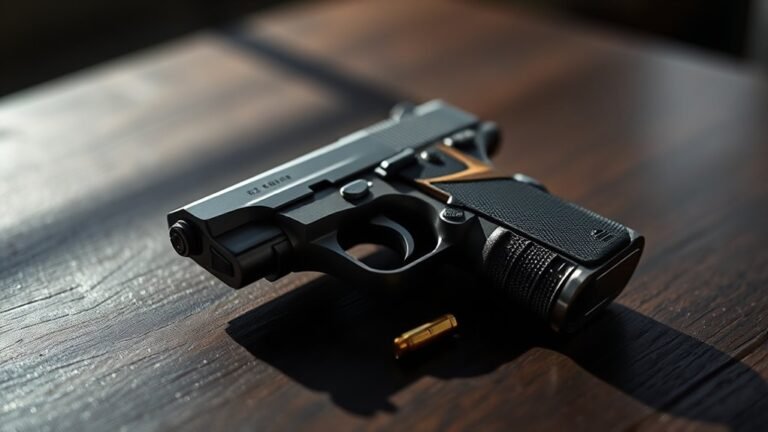
A compensated pistol uses ports or cutouts to vent gases upward, reducing muzzle rise and recoil. This feature helps you keep better control of your shots, especially when firing rapidly.
By minimizing the gun’s upward movement, you can shoot faster and more accurately.
To get the most from a compensated pistol, focus on your grip, stance, and trigger control. These fundamentals improve sight alignment and allow for quicker follow-up shots.
Also, make sure to keep the compensator clean for reliable performance.
With proper technique and maintenance, you’ll notice enhanced comfort and better shot placement.
There’s plenty more to explore about mastering a compensated pistol effectively, so keep practicing and learning!
Key Takeaways
- A compensated pistol uses ports or cutouts to vent gases upward, reducing muzzle rise and recoil for better shooting control. This means you can keep your shots more on target.
- Redirected gases help stabilize the muzzle, allowing faster and more accurate follow-up shots during rapid fire. It’s like giving your shooting a little extra help.
- Proper grip, stance, and trigger control really make a difference. They help you get the most out of the compensator’s recoil reduction.
- Regular cleaning and testing different ammo loads are important too. This keeps the compensator working smoothly and reliably.
- Using a compensated pistol not only makes shooting more comfortable but also improves muzzle control. Plus, it supports better shot placement overall.
What’s a Compensated Pistol and How Does It Help?
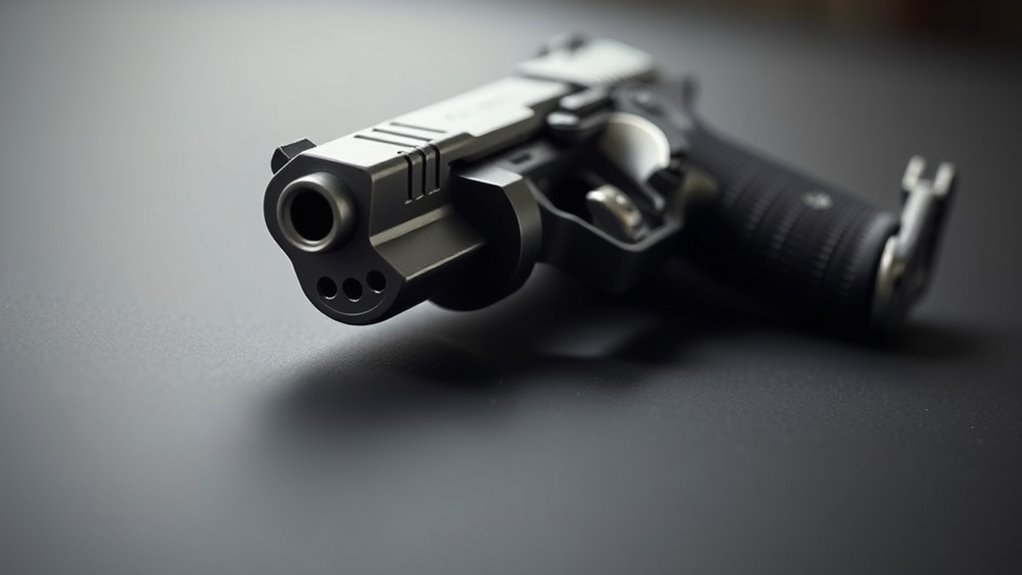
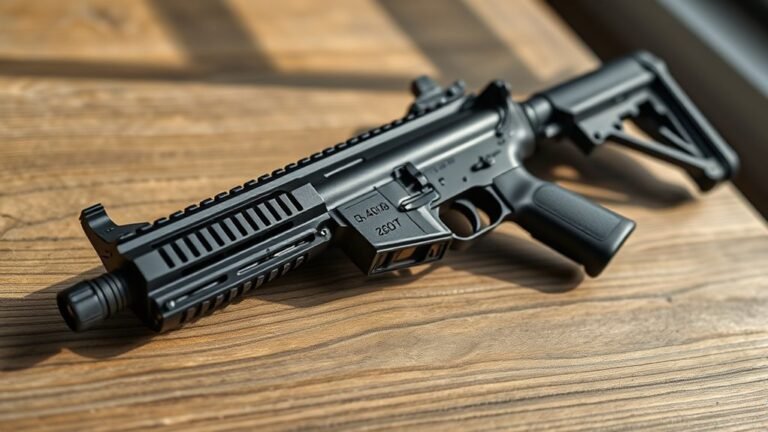
How does a compensated pistol improve your shooting experience? A compensated pistol uses a compensator with ports or cutouts that vent gases upward, directly reducing muzzle rise and aiding in recoil reduction.
When you fire, these redirected gases counteract the natural upward force, helping stabilize the muzzle. This muzzle control means you’ll feel less recoil impact on your hands and wrists, making shooting more comfortable.
It also allows you to maintain better muzzle stabilization during rapid firing, so your follow-up shots are faster and more accurate. The compensator can be built into the slide or attached externally, working alongside recoil springs to manage recoil efficiently.
Tips to Shoot Better With a Compensated Pistol
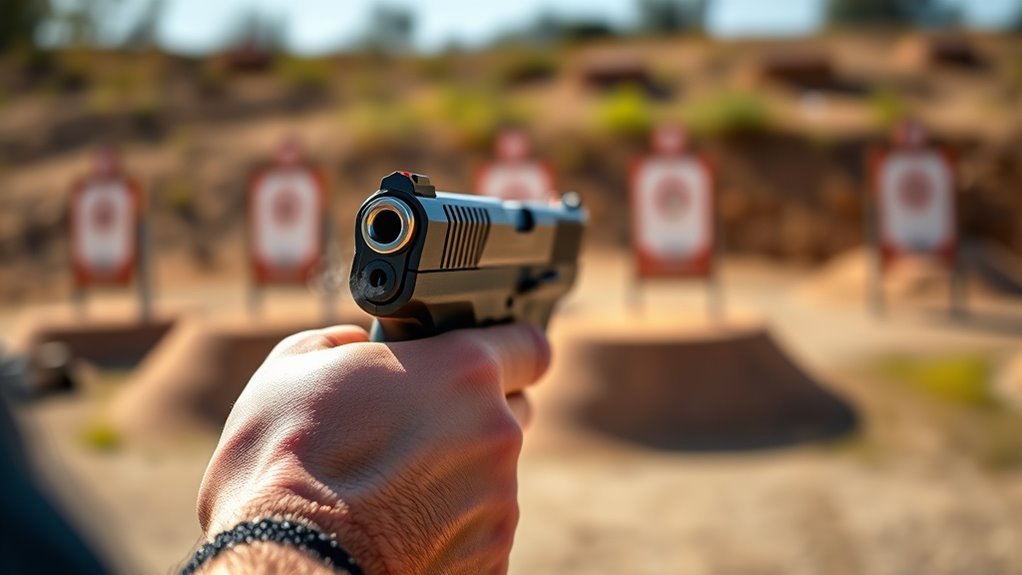
Although a compensated pistol reduces recoil and muzzle rise, you still need to master your grip and stance to fully benefit from its advantages. Focus on grip technique and trigger control to enhance recoil management and aiming stability.
The reduced muzzle flip lets you maintain sight alignment and sight picture for quicker follow-up shots. Develop a consistent shooting rhythm to improve shot placement.
Also, test different ammo loads and clean your compensator regularly to guarantee reliability. It’s all about keeping everything running smooth so you can shoot better every time.
Frequently Asked Questions
Is a Compensated Pistol Worth It?
Yes, a compensated pistol’s worth depends on your priorities. If you want faster, more accurate follow-up shots and don’t mind extra weight or maintenance, it’s a smart upgrade, especially for competition or tactical use.
How Much Louder Is a Compensated Pistol?
Imagine a sharp crack echoing slightly louder—compensated pistols can be 2-4 decibels louder than regular ones. You’ll hear gases venting upward, so always wear proper hearing protection to keep your ears safe.
What Are the Disadvantages of a Pistol Compensator?
You’ll face louder noise, increased muzzle flash, and more debris buildup requiring frequent cleaning. Compensators add weight and length, complicating concealment and holster compatibility. Plus, poor tuning might cause jams or malfunctions during firing.
Who Makes the Best Compensated Pistol?
You’ll find Springfield Armory, Walther, and Sig Sauer make some of the best compensated pistols. For aftermarket options, Griffin Armament and Legion Precision offer excellent choices, while ZEV Technologies excels in recoil control for home defense.
Conclusion
Think of a compensated pistol as a skilled dancer, gracefully guiding your shots through the chaos of recoil. Just like a dancer uses balance and rhythm to stay poised, this pistol channels gases to keep your aim steady.
When you learn to move with it instead of against it, your shooting becomes smoother and more precise. Embrace the dance, and you’ll find your confidence—and accuracy—rising with every pull of the trigger.
Using a compensated pistol effectively means understanding how it reduces muzzle rise and felt recoil. This helps you maintain better control and faster follow-up shots, which is key in both sport shooting and self-defense. So, get comfortable with the way it handles, and you’ll notice your shooting performance improving significantly. In short, a compensated pistol isn’t just a tool—it’s your partner in achieving greater accuracy and consistency every time you shoot.