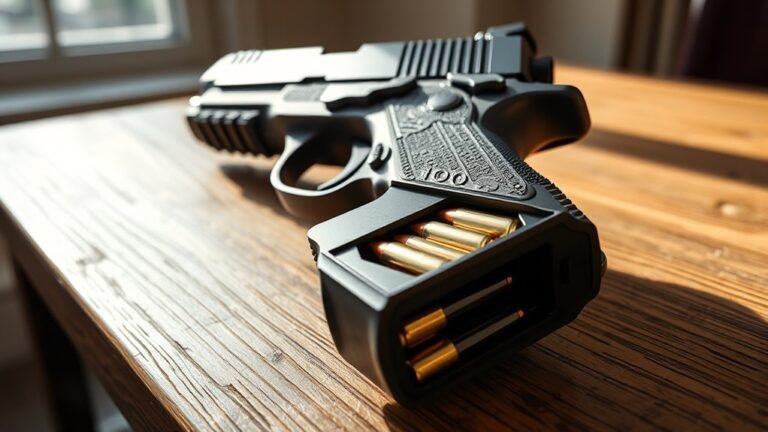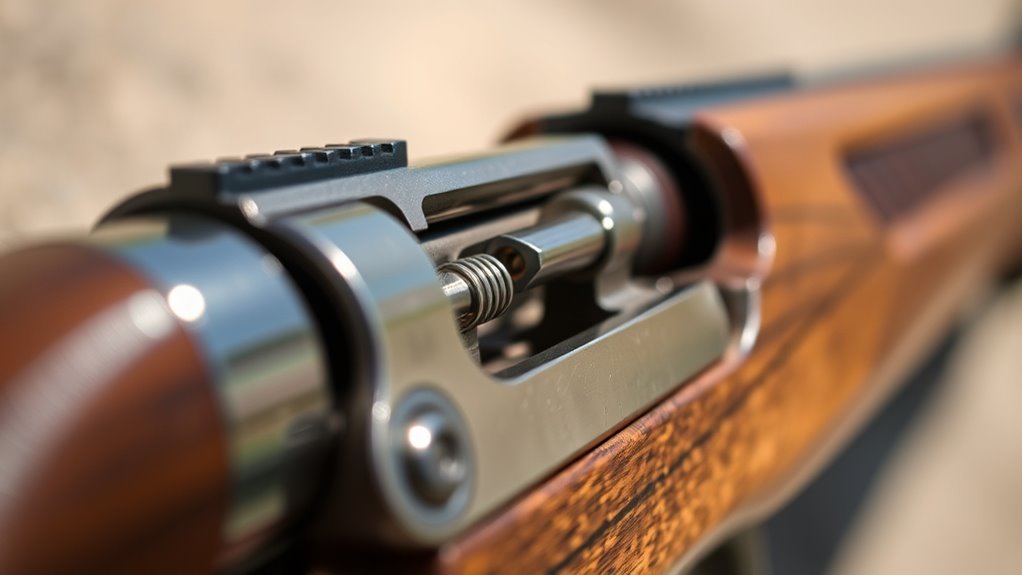
What Does the Action in a Rifle Do?
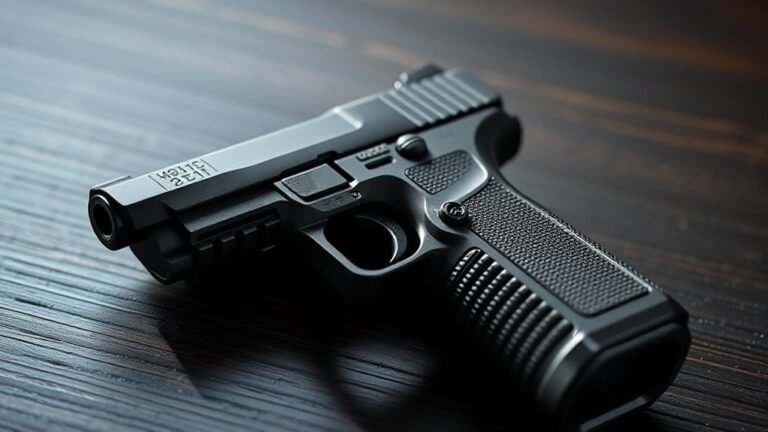
The action in your rifle is what makes everything happen when you’re ready to shoot. It handles loading a cartridge into the chamber and locking it securely for safe firing. Basically, it’s the heart of your rifle’s operation, managing how each round is fed and fired smoothly.
When you operate the bolt handle, it cycles fresh rounds into place, ejects the spent cases, and resets the firing mechanism. This cycle keeps your rifle ready to shoot quickly and reliably every time you pull the trigger.
Understanding how your rifle’s action works can really help you appreciate the mechanics behind that reliable, rapid shooting performance. It’s what makes shooting both efficient and safe, round after round.
How the Rifle Action Operates
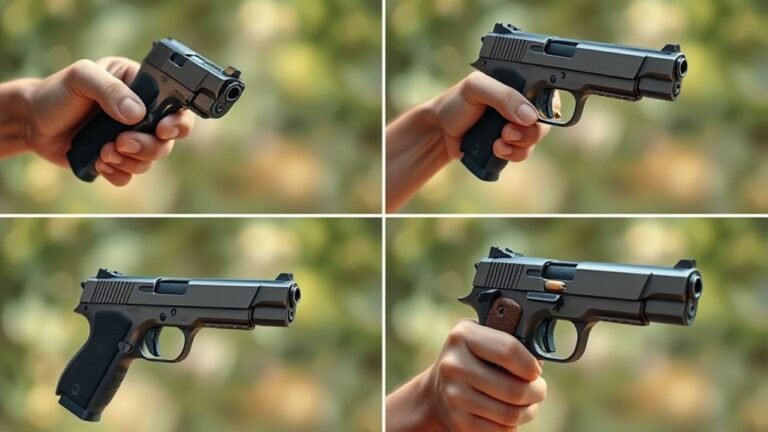
How does a rifle action work to prepare your firearm for firing? The action’s job is to load a cartridge into the chamber, setting your rifle up for the shot. When you operate the bolt handle, you cycle the bolt, which moves a fresh cartridge into the chamber and locks it securely.
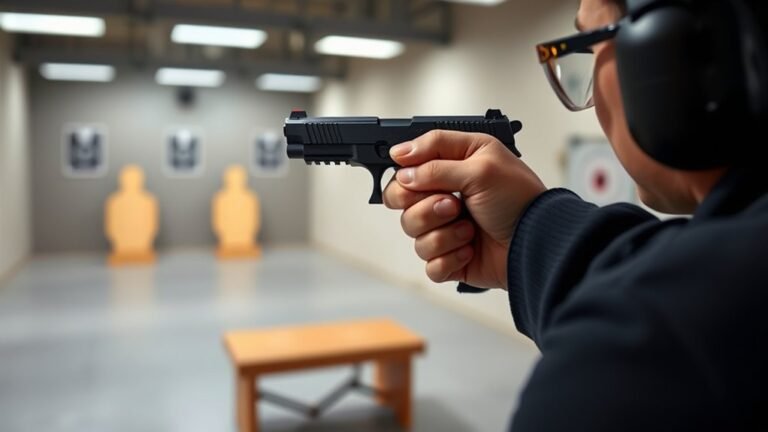
Pulling the trigger releases the firing pin, striking the primer and igniting the round. After firing, the action ejects the spent cartridge case automatically or manually, depending on your rifle type, and prepares to load the next round.
This cycle repeats each time you operate the bolt handle or pull the trigger. The rifle action ensures everything runs smoothly, safely, and efficiently throughout every cycle, making your firearm ready to perform when you need it.
Types of Rifle Actions and Their Functions
Why do different rifle actions matter to you as a shooter? The type of action affects how quickly and efficiently you can load a round, fire, and prepare for the next shot.
Bolt actions, a common type of manually operated action, require you to cycle the action by lifting and pulling the bolt to open and close the chamber. This ejects the spent cartridge and chambers a new one.
Repeating firearms, including lever and pump actions, let you fire multiple rounds without reloading after each shot by using magazines or cylinders. These actions work together within an action rifle to balance speed, reliability, and ease of use.
Understanding how each action rifle functions helps you choose the right one based on your shooting needs and preferences. It’s all about finding what fits you best.
Conclusion
Now that you know how a rifle’s action works, you can appreciate the precision behind every shot. It’s not just about pulling the trigger—it’s the action cycling smoothly that guarantees reliability and safety.
You might’ve heard that semi-automatic actions are less dependable than bolt-actions, but that’s not always true. Modern designs prove both can be incredibly trustworthy.
Understanding this helps you respect the craftsmanship and trust your rifle when it matters most. The action in a rifle plays a crucial role in feeding, firing, and ejecting cartridges, making it the heart of the firearm’s operation. So next time you take a shot, remember the action is what keeps everything running safely and smoothly.