How to Adjust Pistol Sights in 3 Simple Steps
To adjust your pistol sights in three simple steps, start by analyzing your shot groupings. Check if your shots stray left, right, high, or low. This helps you understand how to correct your aim and improve accuracy.
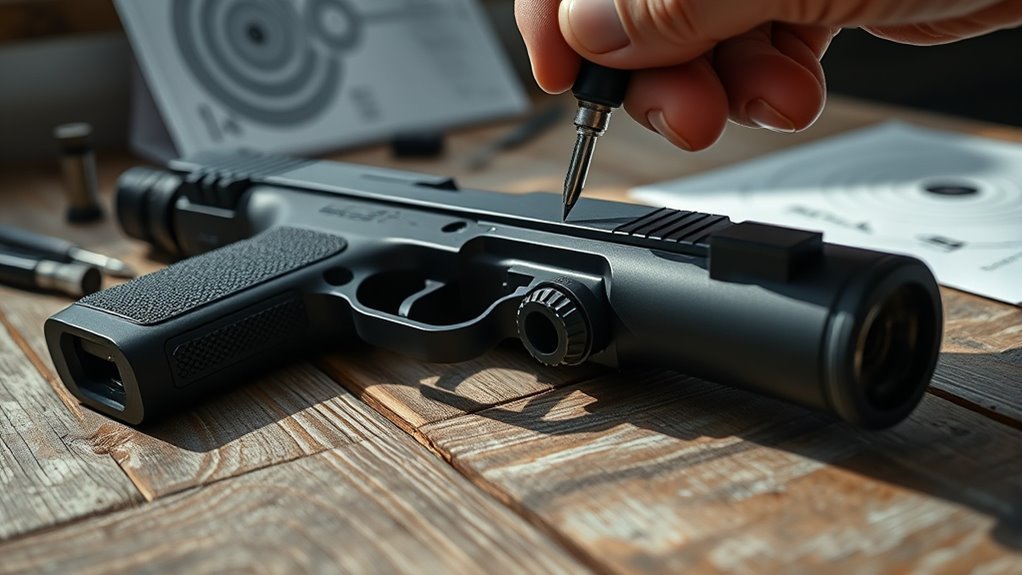
Next, grab the right tools like a sight pusher or a punch and hammer. Carefully move the rear sight to adjust windage or file down the front sight to change elevation. Take your time with this step—it’s all about precision.
Finally, test fire at a consistent distance. Make small adjustments and keep repeating the process until your groups center perfectly on the target.
With practice, you’ll fine-tune your skills and boost your shooting accuracy. Keep at it, and soon you’ll see consistent improvements!
Key Takeaways
- Analyze shot groupings to see if your shots are hitting left, right, high, or low compared to the center of the target. This helps you know what kind of adjustments you need to make.
- Use a punch or a sight pusher tool to carefully adjust the rear sights for windage (left or right) and the front sights for elevation (up or down).
- Make small, incremental adjustments. Then, test fire from the same distance each time to check if your sights are properly aligned.
- Once you’re happy with the alignment, secure the sights with thread locker. This keeps them from moving when you fire.
- Keep testing and fine-tuning until your shot groups are tight and centered right where you want them.
Analyze Shot Groupings to Identify Pistol Sight Adjustment Needs
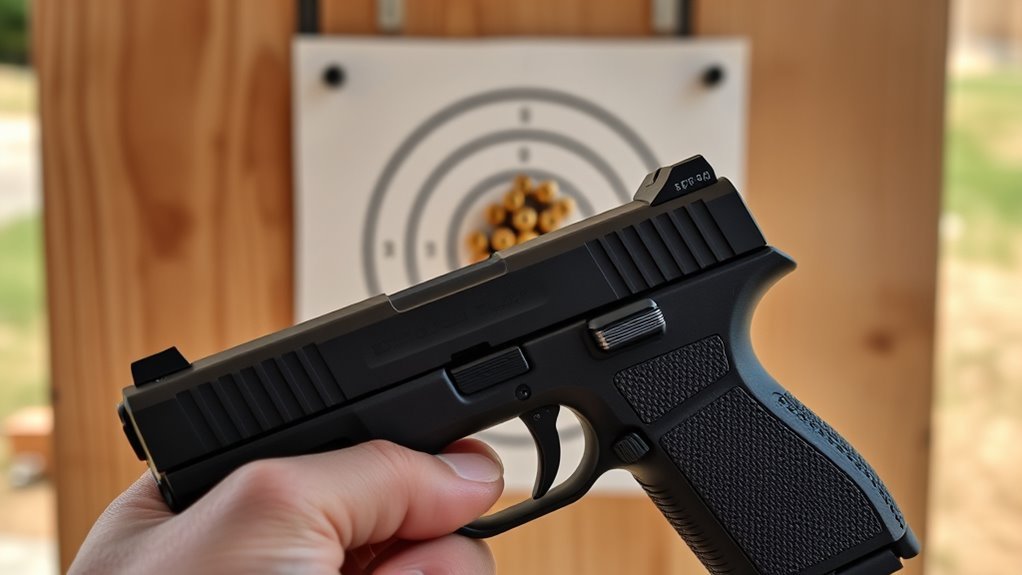
When you analyze shot groupings, you’ll look for consistent patterns where your bullets land relative to the target center. By comparing impact points to the aiming point, you can determine if your shots consistently stray left, right, high, or low.
Analyzing shot groupings reveals patterns showing if your bullets stray left, right, high, or low from the target center.
For example, impacts left of center mean you need sight adjustments to move the group right. If shots hit low, a vertical adjustment is necessary, either by raising the rear sights or shortening the front sight.
Measuring how far your shot group deviates at a known distance helps you calculate precise sight corrections. Tracking multiple shot groupings over time lets you identify whether you need to adjust for windage or elevation.
Understanding the role of the front sight versus rear sights guides you in making accurate corrections. It’s all about noticing the details and tweaking your sights to get those tight, centered groups.
Select and Use Tools to Safely Remove and Adjust Pistol Sights
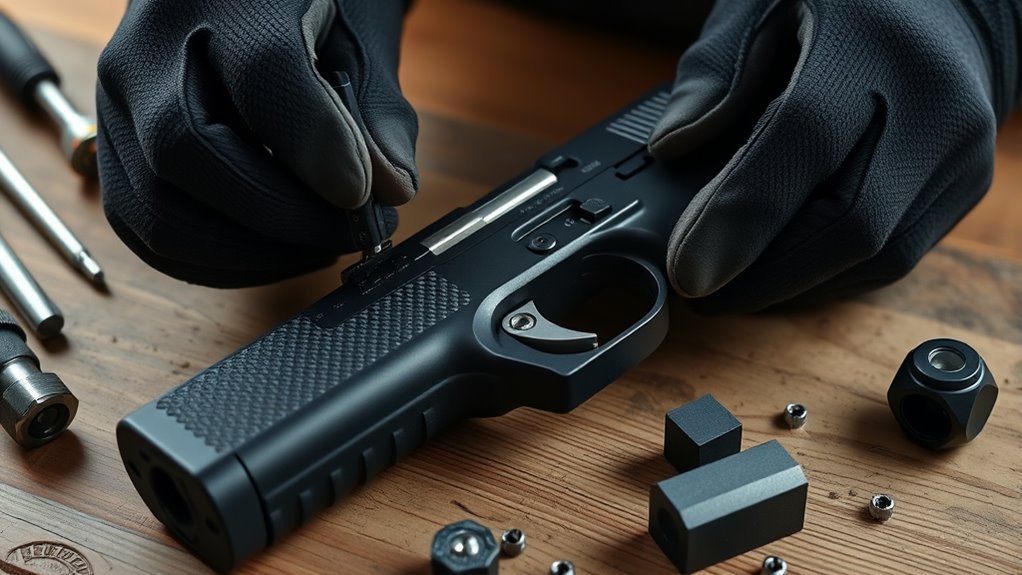
Although sight adjustments can improve your shooting accuracy, you’ll need the right tools to remove and adjust pistol sights safely without damaging your firearm. Start by verifying your handgun is unloaded and pointed safely.
For sight removal, use a plastic or nylon punch and a hammer to gently drift out dovetail sights without marring the slide. When adjusting fixed sights, a sight pusher tool is ideal for precise, controlled movements without hammering or prying.
Keep these tools in mind:
- Sight pusher: For smooth, damage-free sight adjustments
- Punch and hammer: To carefully remove dovetail sights
- Thread locker: To secure sights and prevent movement during recoil
Using the right tool ensures safe sight removal and adjustment. It really makes the whole process easier and keeps your firearm in great shape.
Test Fire and Adjust Your Pistol Sights for Consistent Accuracy
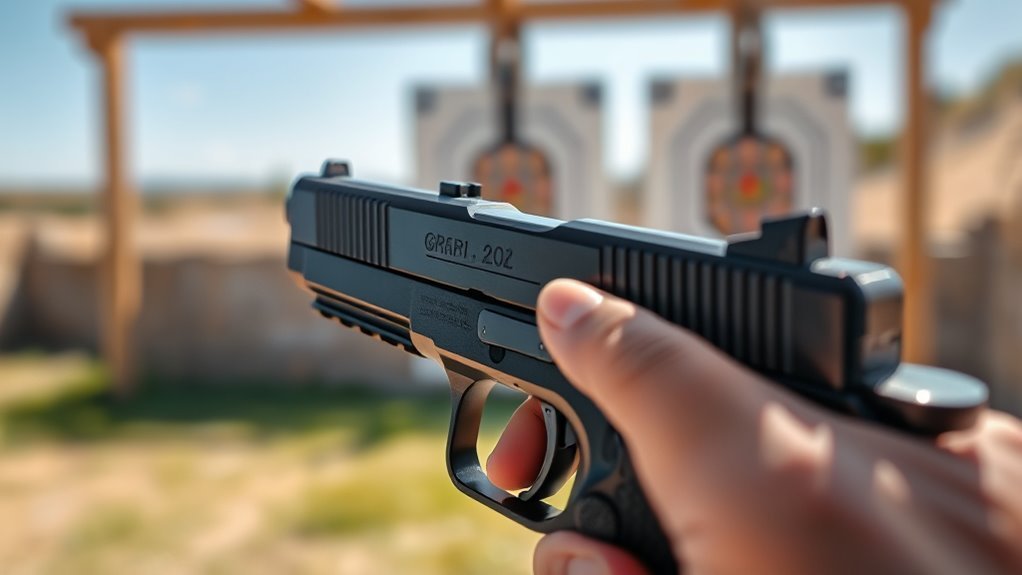
How do you know if your pistol sights are properly aligned? Start by test firing at a consistent distance, like 15 or 20 yards.
Observe where your shots land compared to your point of aim. Measure any deviations in direction or elevation to guide your sight adjustment.
If shots stray left or right, use a sight tool to drift the rear sight accordingly. For elevation changes, consider filing or replacing the front sight.
Remember, the sight radius—the distance between your front and rear sight—affects precision, so even small tweaks matter.
Make incremental adjustments, test fire again, and check for improved accuracy. Repeat until your shot groups consistently hit your target, ensuring your pistol sights are perfectly aligned for reliable shooting.
Frequently Asked Questions
Which Way to Adjust Pistol Sights?
You adjust pistol sights by moving them in the direction you want your shots to go. Shift the rear sight right to move shots right, or lower the front sight to bring shots down for precise aiming.
What Is the Formula for Adjusting Iron Sights?
You calculate sight adjustment by multiplying the impact deviation (in inches) by the ratio of your sight radius to the target distance in inches. This tells you how much to move the sights for accurate zeroing.
What Distance Should a Pistol Be Zeroed At?
You should zero your pistol at 20 to 25 yards for general accuracy, or 15 yards if it’s for self-defense. Pick a distance that matches your typical shooting range to guarantee consistent, reliable sight alignment.
How to Properly Aim With Peep Sights?
You center the front sight in the peep, focus on the front sight, and steady the pistol. You bring it up to your eye, keep the sight picture clear, and quickly acquire your target for precise aiming.
Conclusion
So, now that you’ve mastered the ancient art of staring at tiny dots and twisting tiny screws, congrats—you’re basically a gunsmith!
Just remember, if your shots still look like a toddler’s doodles, maybe it’s not the sights… maybe it’s you. But hey, keep adjusting, testing, and blaming the sights.
After all, who needs perfect aim when you’ve got style and a pistol that *almost* shoots straight? Happy sighting! Adjusting pistol sights takes patience, but with these simple steps, you’ll improve your accuracy over time. Keep practicing, stay confident, and remember: the key to better shooting lies in consistent sight adjustment and testing.