How to Tell the Difference Between AR Pistol vs AR Rifle
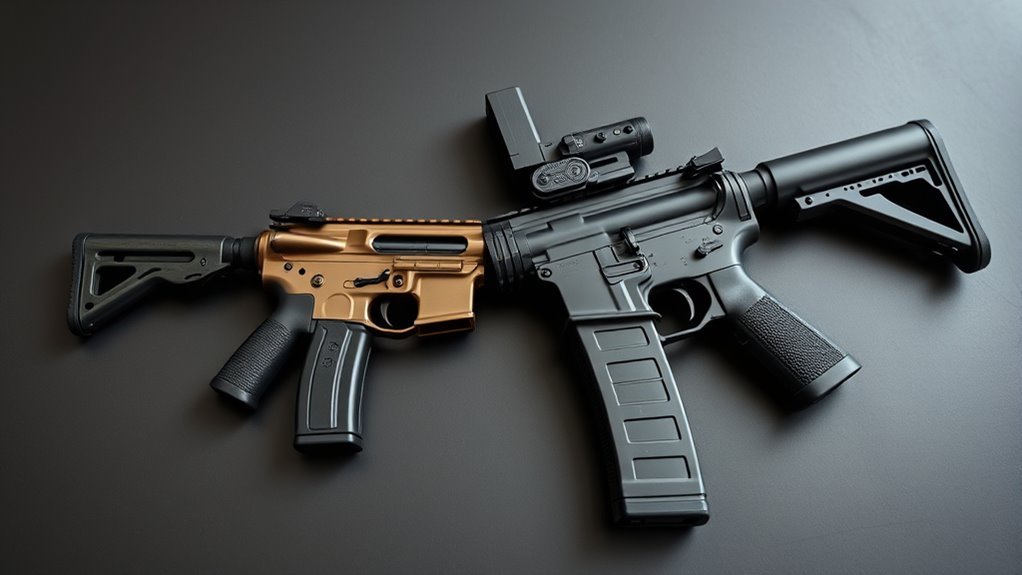
You can tell an AR pistol from an AR rifle by checking its barrel length and whether it has a shoulder stock. AR pistols have barrels under 16 inches and use a stabilizing brace instead of a stock. This makes them shorter than 26 inches overall.
On the other hand, AR rifles have barrels that are 16 inches or longer and come with a shoulder stock. They are generally over 26 inches long. These differences aren’t just about size—they affect how you handle the firearm and how it’s legally classified.
Understanding these features is key if you want to know how regulations and usage vary between AR pistols and AR rifles. Keep exploring, and you’ll get a clearer picture of what sets them apart.
Key Takeaways
- AR pistols have barrels shorter than 16 inches and lack a shoulder stock. They often use a stabilizing brace instead.
- AR rifles feature barrels 16 inches or longer and include a shoulder stock for two-handed firing stability.
- Overall length under 26 inches usually means you’re looking at an AR pistol. If it’s over 26 inches, it’s likely an AR rifle.
- Keep in mind, using a stabilizing brace as a shoulder stock on an AR pistol can legally reclassify it as an AR rifle or even an SBR.
- So, the legal distinctions really come down to barrel length, whether there’s a shoulder stock, and how braces are used — all important to avoid stricter regulations.
Identifying AR Pistols vs. AR Rifles: Key Design Differences
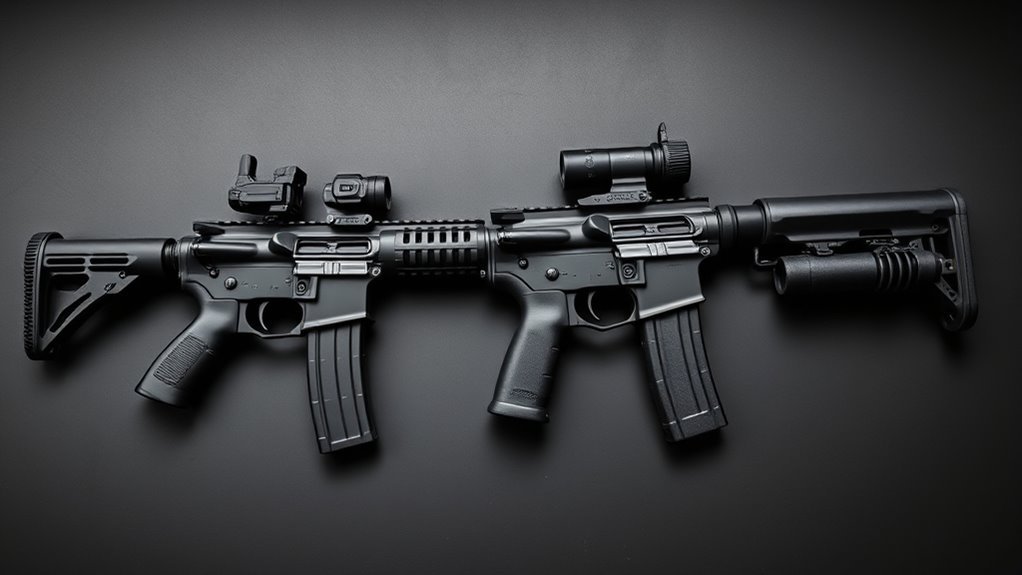
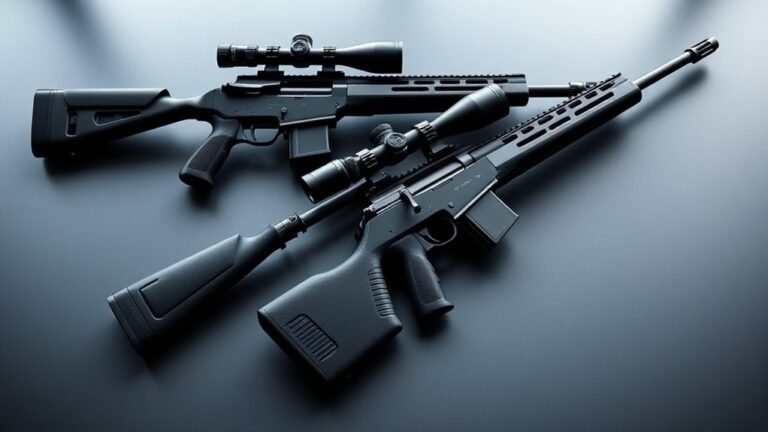
Although AR pistols and AR rifles share many design elements, you can tell them apart by focusing on a few key features. An AR pistol has a barrel length shorter than 16 inches and an overall length under 26 inches. It lacks a shoulder stock and often uses a pistol brace, making its profile ideal for concealed carry or close-quarters use.
In contrast, AR rifles feature rifle-length barrels of 16 inches or more, a shoulder stock for stability, and an overall length exceeding 26 inches. While the gas system may be similar, the presence of a shoulder stock or pistol brace and differences in barrel and overall length define their profiles.
AR pistols are designed or redesigned for one-handed use, whereas AR rifles support two-handed firing, distinguishing the short barreled rifle from the pistol variant. So, when you’re checking one out, just keep an eye on those features—they’ll tell you what you’re dealing with.
Legal Classification and Restrictions of AR Pistols and Rifles
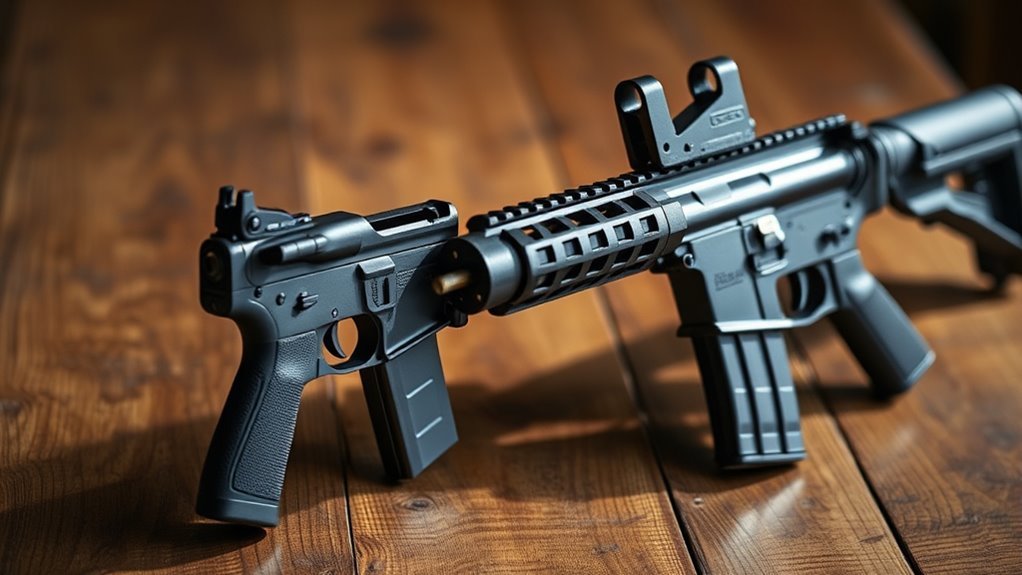
Understanding the physical differences between AR pistols and AR rifles helps you recognize how the law treats each. An AR pistol has a barrel length under 16 inches and lacks a shoulder stock, while an AR rifle features a barrel 16 inches or longer with a shoulder stock.
Legal classification hinges on barrel length and overall length—rifles must be at least 26 inches overall. Federal ATF regulations require a $200 tax stamp and approval to own a short barrel rifle (SBR), which is a rifle with a barrel under 16 inches.
Using a stabilizing brace on an AR pistol is legal when used correctly. But, if it’s used like a shoulder stock, your firearm might be reclassified as an AR rifle, triggering stricter firearm restrictions. So, it’s important to know how you’re handling it.
Frequently Asked Questions
Is My AR a Pistol or Rifle?
You can tell if your AR is a pistol or rifle by checking its barrel length and stock. If it’s under 16 inches with a stabilizing brace, it’s a pistol; 16 inches or more with a shoulder stock means it’s a rifle.
What Makes an AR Pistol Different From a Rifle?
You might think they’re the same, but an AR pistol lacks a shoulder stock and has a barrel under 16 inches, making it one-handed. An AR rifle has a longer barrel and a stock meant for shoulder firing.
What Does a Legal AR Pistol Look Like?
A legal AR pistol has a barrel under 16 inches, no shoulder stock, and an overall length under 26 inches. You’ll see a pistol brace instead, making it look compact yet functional without a traditional rifle stock.
How Do I Tell What Caliber My AR Is?
Like reading a map, you’ll find your AR’s caliber stamped on the barrel or receiver. If it’s faded, check the manual or use a cartridge gauge to match the chamber, ensuring you pick the right ammo every time.
Conclusion
Now that you know the key differences between AR pistols and AR rifles, you can easily identify each based on design and legal classification. Remember, AR pistols usually have shorter barrels and no stocks, while rifles feature longer barrels and shoulder stocks.
Notably, over 60% of AR-style firearms sold in the U.S. are pistols, highlighting their growing popularity. This trend shows how many people appreciate the compactness and versatility of AR pistols.
With this knowledge, you’ll make smarter, safer choices whether buying, using, or discussing these firearms. Understanding the distinctions between AR pistols and AR rifles is crucial for compliance with laws and making informed decisions. So next time you see an AR-style firearm, you’ll know exactly what you’re looking at!