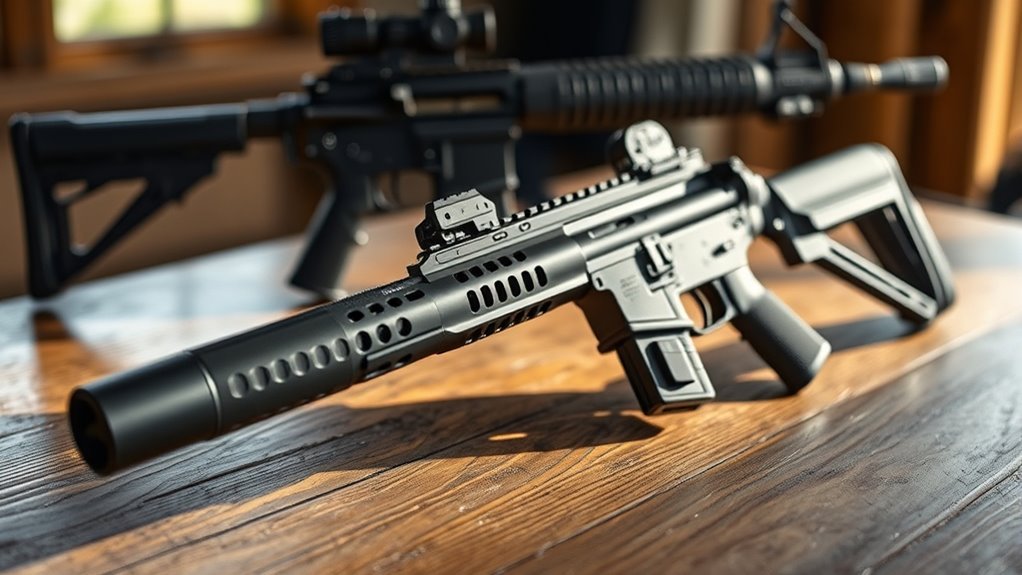
What Is an SBR Rifle and How Does It Differ From Other Rifles?
An SBR, or short-barreled rifle, is a type of firearm with a barrel shorter than 16 inches or an overall length less than 26 inches. This makes it much more compact compared to standard rifles, which can be a big advantage in close quarters or tight spaces.
You’ll notice it feels easier to handle and maneuver, especially if you’re moving around indoors or in dense environments.
But keep in mind, owning an SBR comes with strict legal requirements. You have to register the rifle with the ATF and pay a $200 tax stamp before you can legally own one.
Besides the size and the laws, SBRs have unique features and regulations that make them stand out from other rifles. If you’re thinking about getting one, it’s worth exploring these differences in more detail.
Understanding Short-Barreled Rifles: Definition and Legal Framework
Although short-barreled rifles (SBRs) might look like standard rifles, the ATF defines them specifically as rifles with barrels shorter than 16 inches or overall lengths under 26 inches. To determine barrel length, the ATF measures from the muzzle to the breechface, while overall length is measured along the firearm’s centerline.
Under the National Firearms Act, SBRs face strict regulation, requiring you to register the firearm and obtain a $200 tax stamp before legal ownership. The process involves submitting ATF Form 1 or Form 4, paying the tax, and waiting for approval, which can take from 30 days to over six months.
Understanding these precise measurements and regulations is vital to comply with the law when dealing with a short-barreled rifle. So, if you’re thinking about owning one, make sure you know the rules inside and out to avoid any legal trouble.
Key Differences Between SBRs and Other Rifles
When you compare short-barreled rifles (SBRs) to standard rifles, the most noticeable difference lies in their size and legal status. Here are four key distinctions you’ll want to know:
First up, Barrel and Overall Length: SBRs have a barrel length under 16 inches or an overall length below 26 inches. This is quite different from typical rifles, which are generally longer.
SBRs feature barrels under 16 inches or total lengths less than 26 inches, unlike standard rifles.
Next, Legal Requirements: SBRs fall under the National Firearms Act (NFA). That means you need to register the firearm and pay a $200 tax stamp to the Federal Government.
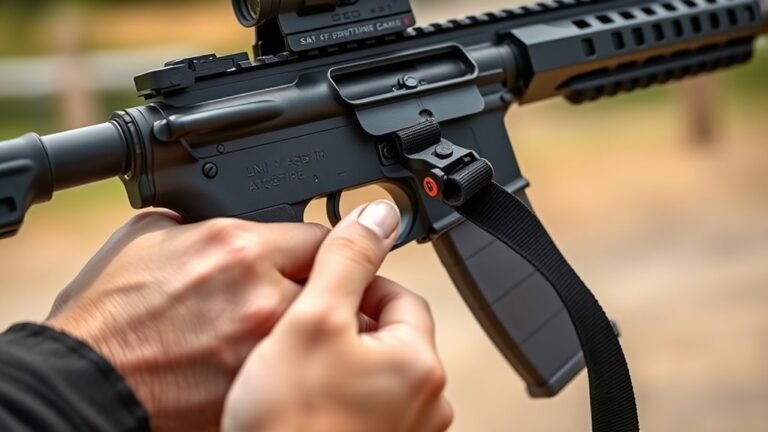
Then, there are Features to consider. Many SBRs use stabilizing braces or pistol braces, while standard rifles usually come with fixed stocks. This changes how you might handle or carry the firearm.
Finally, Regulation Differences: SBRs face stricter controls due to their NFA classification. Meanwhile, pistols and rifles have varied rules, especially when it comes to muzzle devices and configurations.
Knowing these points makes it easier to navigate the legal and functional differences between an SBR and other rifles. It’s always good to be informed!
Conclusion
Think of an SBR as a sports car in the world of rifles—compact, agile, and built for quick maneuvers where bigger vehicles struggle. Just like that sports car needs special paperwork to hit the road, owning an SBR requires managing legal rules.
Understanding these differences helps you appreciate how an SBR offers unique advantages without losing the power and precision you expect from any rifle. It’s all about mastering control in a smaller, sharper package.
An SBR rifle stands out because of its shorter barrel length, making it more maneuverable in tight spaces compared to standard rifles. This compact design doesn’t sacrifice accuracy or firepower, which is why many enthusiasts prefer it for tactical situations or home defense.
So, when you think about an SBR rifle, remember it’s not just a smaller gun—it’s a specialized firearm that blends portability with effectiveness. Knowing these key differences helps you see why SBRs are a popular choice for those who want the best of both worlds: rifle power and compact convenience.