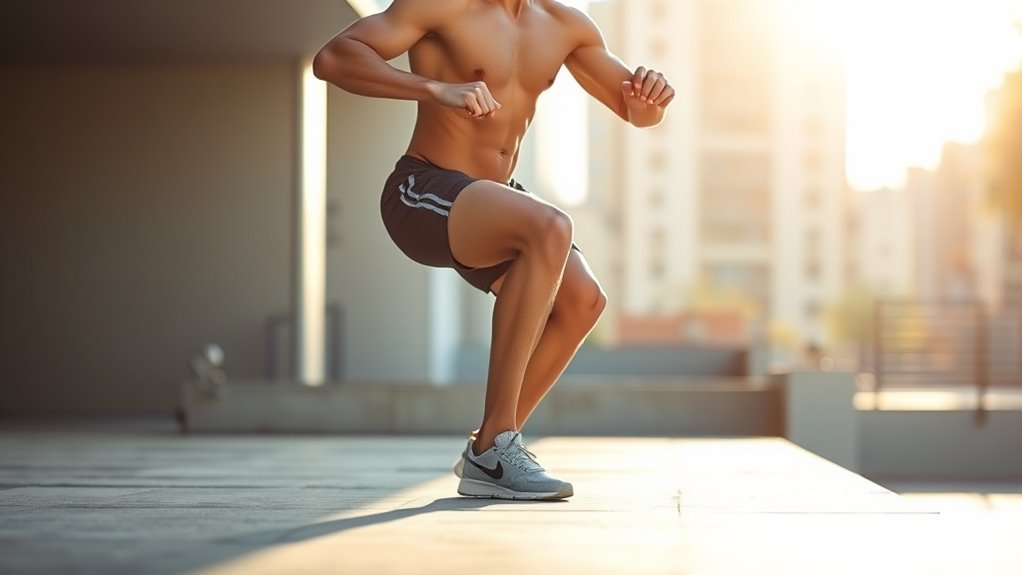
What’s a Pistol Squat?
A pistol squat is a challenging single-leg squat exercise where you lower yourself deeply while extending the other leg straight out in front of you. This move is great for building strength, balance, and joint mobility all at once.
It really targets your quads, glutes, hamstrings, and core muscles.
What’s cool about pistol squats is that they help highlight and correct muscle imbalances between your legs, which improves your overall body control.
But before you jump into it, you’ll want to prepare with some mobility and strength exercises to keep things safe and effective.
Keep exploring this move to master the technique and enjoy all the benefits it offers.
Key Takeaways
- A pistol squat is a challenging single-leg squat where you extend one leg forward while squatting deeply on the other. It’s a great move to really focus on one side of your body.
- This exercise targets your quadriceps, glutes, hamstrings, and core muscles, helping build strength and stability on just one leg. It’s pretty effective for working those muscles hard.
- Plus, pistol squats help improve your balance and joint flexibility. They also make it easier to spot any muscle imbalances between your legs.
- To master a pistol squat, you’ll need good ankle and hip mobility. Strength and controlled movement are key too, so it takes some practice.
- Overall, pistol squats boost your functional fitness by combining mobility, balance, and strength all in one smooth move. It’s a solid addition to any workout routine.
What Is a Pistol Squat and Why It Matters
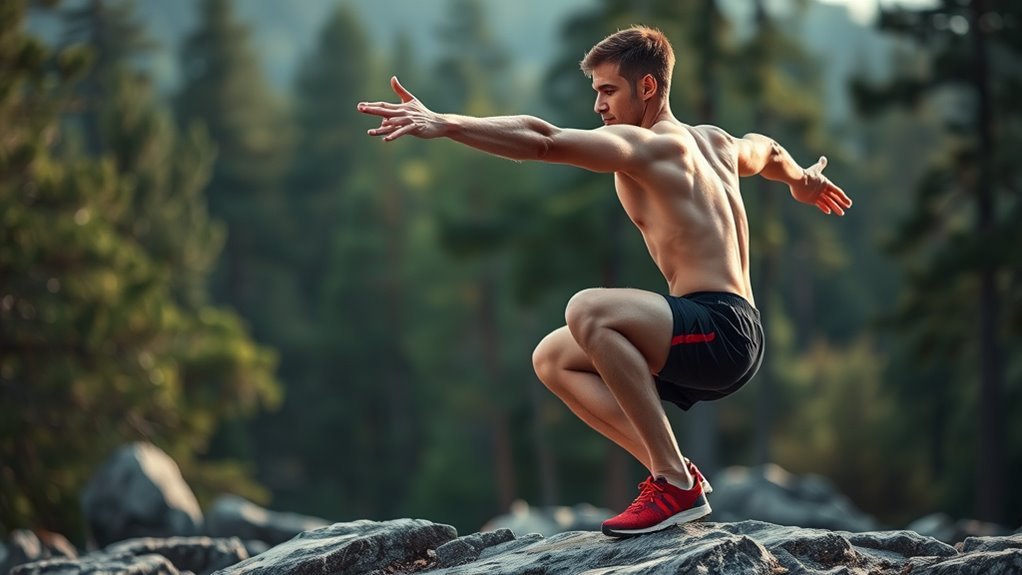
What makes a pistol squat stand out in your workout routine? It’s a challenging single-leg exercise that demands you lower into a deep squat while extending the other leg forward.
This unilateral movement targets your quadriceps, glutes, hamstrings, and core, building impressive strength and stability on one side at a time. As you master it, you’ll notice improved balance and joint flexibility across your ankles, hips, and knees.
Because it requires precise control, the pistol squat also highlights and helps correct muscle imbalances between your legs. Its combination of mobility, balance, and strength makes it a valuable addition for anyone looking to enhance functional fitness and overall joint health.
Requiring precise control, the pistol squat reveals and corrects muscle imbalances while boosting mobility, balance, and strength.
The pistol squat truly tests and develops your body’s coordination and control. It’s a move that challenges you but also brings noticeable improvements in how your body works every day.
How to Prepare Your Body: Mobility, Strength, and Safety Tips
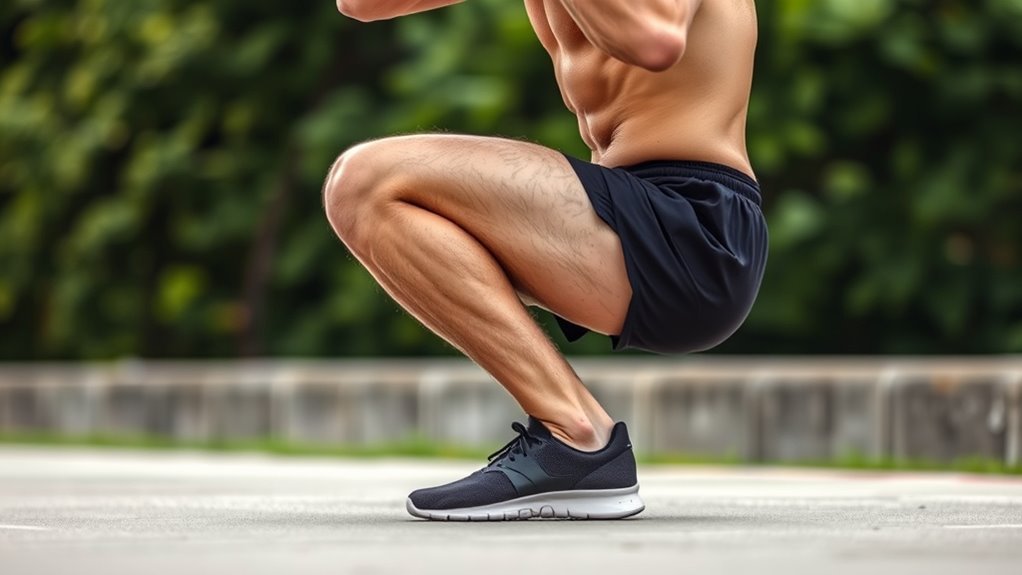
Mastering the pistol squat requires more than just strength—it demands targeted mobility and careful preparation. Start by testing your ankle dorsiflexion; place your toes 4-5 inches from a wall and aim to touch your knee to the wall without lifting your heel. Limited mobility here can hinder your form.
Improve hip mobility and flexibility with pigeon and frog stretches, holding each for 15-30 seconds. Warm up your joints with ankle rotations and kneeling leans to boost joint readiness.
Build strength and stability through glute bridges and planks, emphasizing core activation. Prioritize a safe progression, focusing on form and gradual increases in difficulty.
This approach ensures balanced mobility, strength, and safety, setting you up for successful pistol squats.
Frequently Asked Questions
Can an Average Person Do a Pistol Squat?
Yes, you can do a pistol squat with consistent practice. Focus on building your strength, balance, and mobility gradually. Use regressions like assisted squats, and stay dedicated—most people improve enough to master it over time.
What Does It Mean if You Can Pistol Squat?
If you can pistol squat, you’re basically a one-leg wizard, showing off strong, balanced muscles and flexible joints. You’ve nailed control, coordination, and stability, proving your body works like a well-oiled machine under pressure.
Is a Pistol Squat the Hardest Squat?
Yes, you’ll find pistol squats among the hardest because they demand exceptional balance, mobility, and unilateral strength. You’ll need solid core stability and coordination, making them tougher than traditional squats, especially as you progress.
What Is the Pistol Squat Good For?
You probably won’t find a simpler way to challenge your balance, strength, and coordination than a pistol squat. It’s great for fixing muscle imbalances, improving joint mobility, and boosting athletic performance—all while making you work hard!
Conclusion
Now that you know what a pistol squat is and why it matters, you’re ready to prepare your body with mobility, strength, and safety in mind. You’ll build balance as you build strength, and you’ll gain control as you gain confidence.
So don’t rush—take your time, train smart, and watch your legs grow stronger while your limits grow smaller. Pistol squats are challenging but rewarding, helping you develop single-leg strength, stability, and flexibility all at once.
Remember, mastering a pistol squat takes patience and practice. Keep focusing on proper form and gradually increase your reps as your muscles get stronger. You’ve got this, one squat at a time!