How to Grip a Pistol in 5 Essential Steps
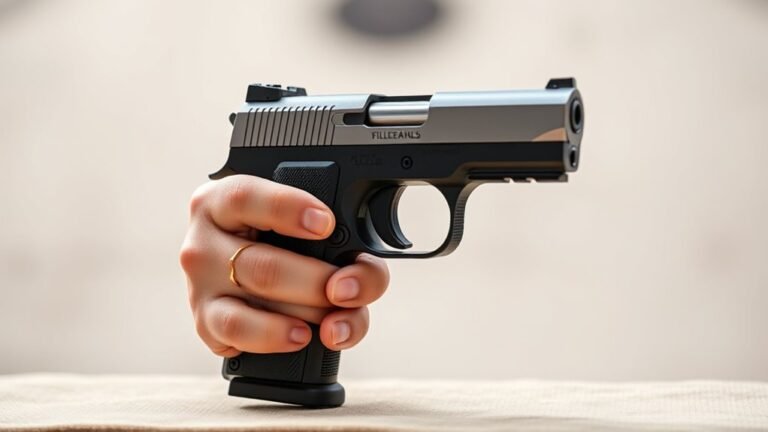
To grip a pistol correctly, you need to start with your dominant hand and wrist aligned straight with your forearm. Position your hand high on the backstrap to help absorb recoil effectively. This setup is crucial for maintaining control when firing.
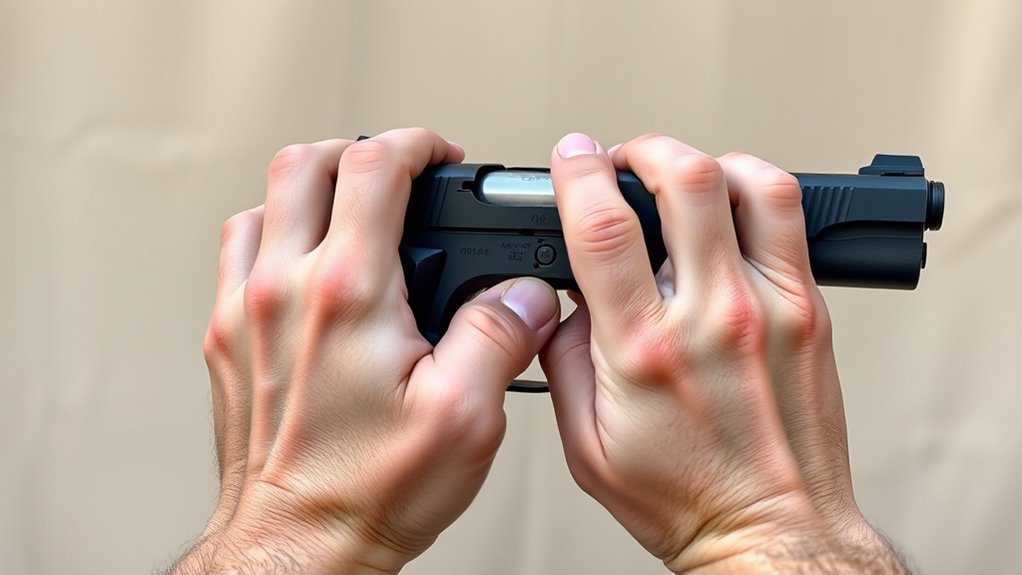
Next, wrap your support hand firmly around the front of the pistol. Make sure there are no gaps between your hands, and keep your thumbs aligned to add stability. This grip reduces movement and helps you stay on target.
Lock your wrists at a slight downward angle to create a solid foundation. Apply balanced pressure—firm enough to control recoil but not so tight that it makes pulling the trigger difficult.
Mastering these basics will improve your control and accuracy markedly. Keep practicing these essential steps, and you’ll notice your shooting skills getting better.
Stick around to learn finer details that can further enhance your grip and overall performance with a pistol.
Get Your Hand and Wrist Aligned
Before you fire, get your hand and wrist properly aligned to maximize control and minimize recoil impact. Position the web of your dominant hand high on the backstrap to ensure ideal recoil absorption.
Keep your wrist alignment straight with your forearm, avoiding any bends that reduce stability. Apply firm, consistent grip pressure while maintaining your wrist in a natural position—locked but comfortable.
Slightly cant your support wrist forward to create a stable platform without losing proper hand contact on the grip. Align your thumbs parallel or slightly forward along the frame; this promotes stability and reinforces proper hand contact.
Position Your Dominant Hand High on the Grip
Getting your hand and wrist aligned sets the stage for placing your dominant hand correctly on the grip. Position your dominant hand high on the backstrap, making sure the web of your hand presses firmly into the highest part of the grip.
This hand placement improves recoil absorption by keeping the webbing between your thumb and index finger as high as possible. Rest your thumb along the frame’s side, and wrap your fingers securely around the grip.
Aligning your hand so the grip’s bevel matches your wrist’s natural angle enhances control and reduces strain. This proper pistol grip creates a solid, stable foundation that supports the support hand’s placement, maximizing overall stability and control during shooting.
Place Your Support Hand Correctly
When you place your support hand correctly, it covers the grip with fingers wrapping firmly around the front of your dominant hand, enhancing stability and control. Proper placement of the support hand involves positioning the heel firmly against the bottom of the grip to ensure maximum contact.
This eliminates gaps, allowing even pressure across both hands, which improves recoil control. Keep your support hand fingers wrapped securely around your dominant hand’s fingers, creating a unified grip that stabilizes your hold.
Position your support thumb along the side of the pistol frame or slightly crossing over your dominant thumb for added control. By focusing on these details, your grip becomes more stable, helping you manage recoil and maintain consistent aim with greater confidence.
Set the Proper Wrist Angle
Although it may seem subtle, setting the proper wrist angle is essential for controlling recoil and maintaining accuracy. You want to keep your wrists locked and straight, avoiding limp wristing that can cause malfunctions.
Maintain a slight downward cant to align the barrel with your forearm. This helps enhance recoil management and grip control.
Keep a slight downward wrist cant to align barrel and forearm for improved recoil control and stability.
Be cautious not to overdo wrist cants, as excessive tilt reduces stability and accuracy. Your support hand plays a key role by applying forward pressure, helping stabilize this wrist angle during firing.
Regularly checking your hand position during dry fire exercises builds muscle memory for consistent alignment. By mastering wrist angle and alignment, you improve grip control and ensure better shot placement every time you pull the trigger.
Apply Balanced Grip Pressure
Since a proper grip directly affects your control and accuracy, you need to apply firm, consistent pressure across your entire hand. Focus on distributing grip pressure evenly between your palm and fingers to maintain control without adding unnecessary hand tension.
Use enough grip strength to prevent slippage during recoil—often called a “crush grip”—but avoid gripping so tightly that it hinders smooth trigger control. Achieving a balanced grip is essential; it reduces muzzle flip and helps you maintain control during recoil.
Regularly evaluate your grip pressure during practice to find the right balance between firm control and comfort. This proper grip ensures you manage recoil effectively while keeping trigger control precise, maximizing your shooting performance with consistent, even pressure.
Conclusion
Mastering these five essential steps will dramatically improve your pistol control and accuracy. Did you know that shooters who maintain proper grip pressure reduce recoil impact by up to 40%?
By aligning your hand and wrist, positioning your dominant hand high, and placing your support hand correctly, you set the foundation for a solid grip. Then, setting the right wrist angle and balancing your grip pressure ensures better stability.
You’ll shoot more confidently and consistently once you integrate these techniques. Keep practicing these steps to make every shot count and enhance your pistol handling skills. Proper grip is key to improving accuracy and controlling recoil effectively. So, remember these essential pistol grip tips and watch your shooting performance soar!