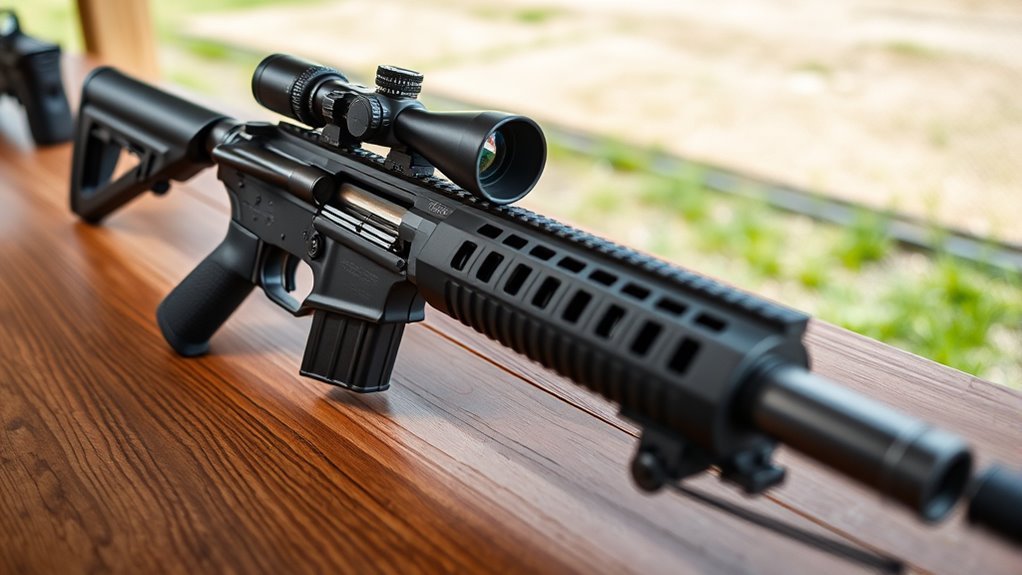
What Is a Carbine Rifle and How Does It Differ From a Rifle?
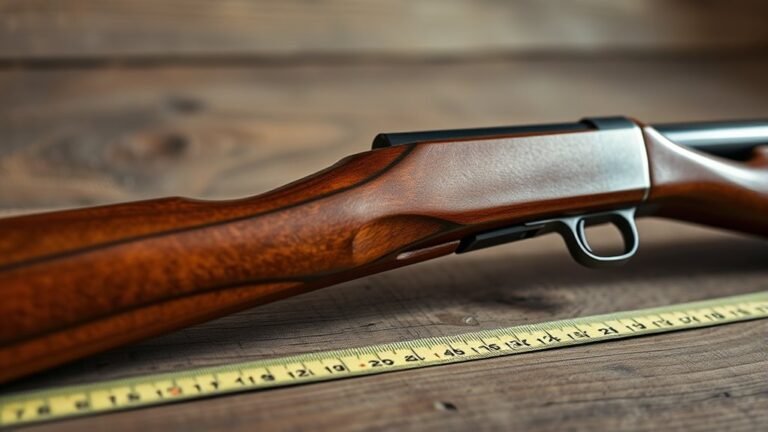
A carbine rifle is basically a shorter, lighter version of a standard rifle. It’s designed for easier handling and better mobility, especially in tight spaces or when you’re on horseback.
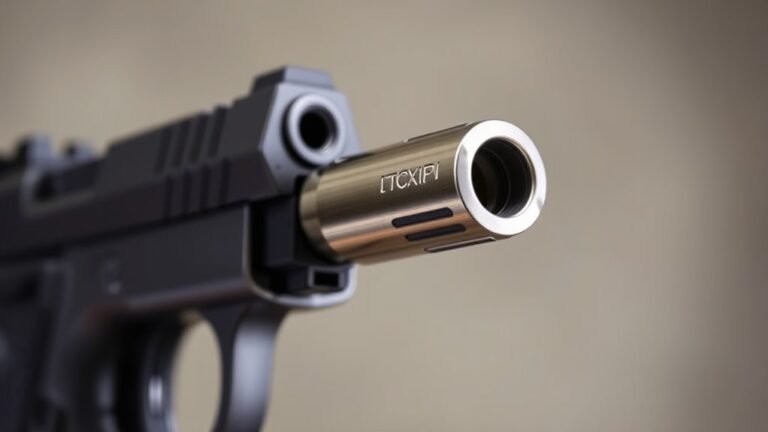
Typically, its barrel is under 20 inches, which does lower the muzzle velocity compared to full-length rifles.
But that shorter barrel also makes it easier to quickly acquire your target.
Carbines usually fire intermediate cartridges, while traditional rifles use full-power rounds meant for long-range accuracy.
So, if you’re wondering when and why you’d pick a carbine over a rifle, it really comes down to the situation and what you need.
There’s actually a lot more to explore about their history and design that can help clarify these differences even further.
Defining Characteristics and Historical Background of Carbines
Although carbines have evolved over centuries, they’re fundamentally shortened rifles with barrels typically under 20 inches. They were originally made for cavalry and mounted troops who needed a more portable firearm.
You’ll find that the carbine’s shorter barrel length makes it easier to handle compared to full-sized rifles, especially in tight situations.
The historical background of carbines traces back to the 16th century, evolving from shorter muskets and the carbine arquebus used by mounted soldiers. The term “carbine” itself comes from the French “carabinier,” riflemen armed with these shorter firearms.
Over time, firearm design shifted to meet demands for portability without sacrificing too much power. This made carbines a preferred choice for cavalry.
This balance between size and function sets carbines apart from traditional rifles.
Practical Differences Between Carbines and Rifles
Carbines and rifles serve distinct roles based on their design differences, especially when you consider how their size and barrel length affect performance. Carbines feature short barrels, usually between 16 and 20 inches, enhancing maneuverability and handling in close quarters and tactical use.
Full-sized rifles, with longer barrels, deliver higher muzzle velocity and better long-range accuracy. Both can share calibers, but carbines often use intermediate cartridges, while rifles fire full-power rounds.
Carbines excel in quick target acquisition and mobility due to their compact size. Rifles provide greater stability and precision for extended-range engagements.
Short barrels in carbines reduce muzzle velocity, impacting long-distance effectiveness. Understanding these practical differences helps you choose the right firearm for your specific needs.
Conclusion
When you look closer, you’ll see that a carbine isn’t just a shorter rifle—it’s designed for mobility and quick handling without sacrificing too much firepower. While some think carbines are weaker, they actually strike a balance between power and convenience.
So, whether you’re maneuvering tight spaces or needing faster response, understanding this difference helps you choose the right tool for the job. It’s not about less firepower, but smarter use. Knowing what makes a carbine rifle distinct from a traditional rifle allows you to appreciate its role in various situations, especially where speed and agility are key.
In short, a carbine rifle offers the advantage of compactness and ease of use without significantly compromising performance. This makes it an ideal choice for close-quarters combat, tactical operations, or any scenario where quick handling matters. Understanding these differences ensures you pick the right firearm for your needs, combining effectiveness with practicality.