How to Aim a Pistol in 7 Easy Steps
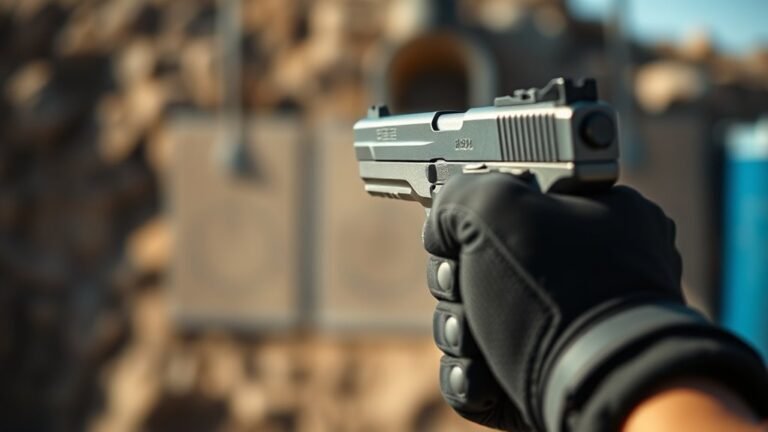
To aim a pistol in seven easy steps, start by gripping it firmly with your dominant hand and support hand for stability. This ensures you have control and reduces recoil impact.
Next, adopt a balanced, natural stance with your feet shoulder-width apart. It helps keep your body steady and ready for accurate shooting.
Align your front and rear sights properly. Focus sharply on the front sight while keeping the target slightly blurred. This technique improves precision.
Use the center mass hold for better target acquisition. Control your trigger pull smoothly to avoid jerking the pistol off target.
Finally, practice steady breath control to reduce movement. Stick with these basics, and you’ll build solid aiming skills before long. With consistent practice, aiming your pistol will become second nature.
Establish a Proper Handgun Grip
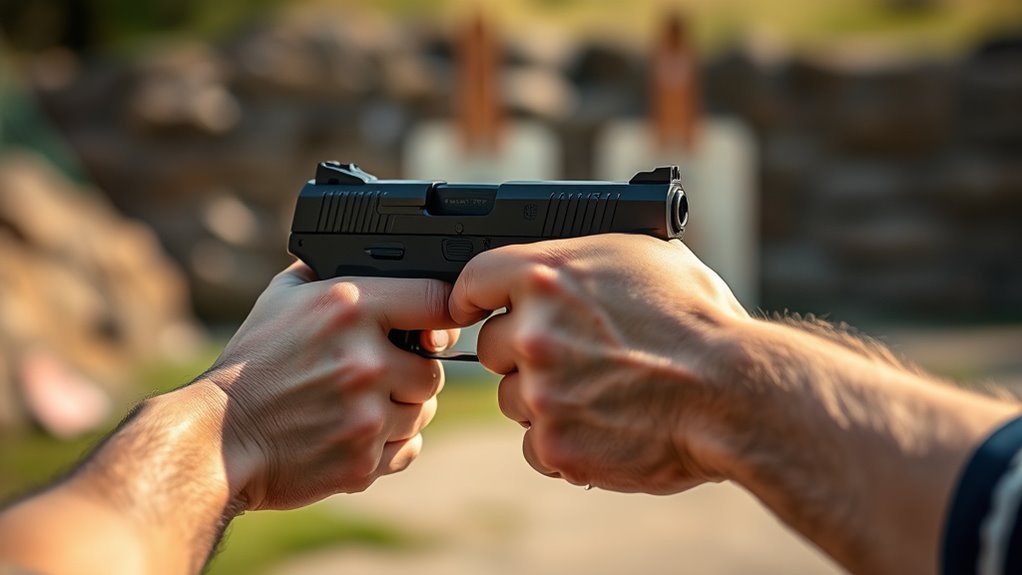
Before you take aim, you need to establish a proper handgun grip. Start by using your dominant hand to firmly grip the pistol, placing the web of your hand high on the backstrap for better control.
Begin with a firm dominant hand grip, positioning the web high on the backstrap for optimal control.
Wrap your fingers around the grip, keeping your index finger outside the trigger guard until you’re ready to shoot. Next, bring your support hand high on the grip, filling any gaps and applying even pressure to stabilize the firearm.
Keep your grip relaxed but firm to reduce tremors and manage recoil effectively. Consistently practicing your grip pressure helps develop muscle memory, so every shot feels stable and repeatable.
Mastering this grip is essential for accuracy and control before moving on to aiming techniques.
Adopt a Stable Shooting Stance
To aim accurately, you need a comfortable, athletic stance that keeps you balanced and ready. Position your feet shoulder-width apart with your dominant foot slightly back to help absorb recoil naturally.
Lean forward just enough to stay in control without losing stability. This way, you’ll be steady and prepared for the shot.
Comfortable Athletic Position
When you adopt a comfortable athletic position, you create a stable foundation that enhances your shooting accuracy and control. Start by placing your feet shoulder-width apart, with toes slightly pointing outward to improve balance.
Keep your knees slightly bent; this stance helps absorb movement and keeps you steady. Position your body perpendicular or at a slight angle to the target, which supports better aiming and balance.
Make sure to distribute your weight evenly across both feet, giving you a firm base. Find a stance that feels natural and comfortable, allowing you to breathe smoothly and move effortlessly without losing control.
This comfortable athletic position is key to maintaining stability and improving your overall pistol aiming skills. It really makes a difference when you’re out there practicing or competing.
Recoil Absorption Techniques
Building on a stable athletic position, you can better manage the pistol’s recoil by adopting specific absorption techniques. Start by positioning your feet shoulder-width apart to create a balanced base.
Slightly bend your knees and lean forward at the hips, which helps distribute the recoil forces evenly. Keep your arms extended but relaxed, allowing some flexibility to absorb the impact without unnecessary muscle tension.
Grip your pistol firmly but not rigidly to maintain control and prevent slippage during firing. Don’t forget to practice controlled exhalation; proper breathing stabilizes your stance and reduces the recoil’s effect.
Align Your Sights Correctly
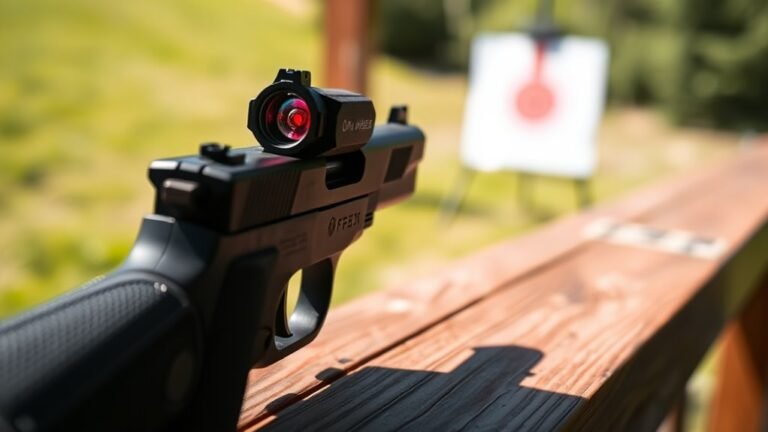
Although it may seem simple, aligning your sights correctly is crucial for accurate shooting. You want the front sight centered perfectly within the rear sight notch, with equal light on both sides.
Make sure the top edges of the front sight and rear sight are level horizontally. This alignment forms your sight picture, so confirm it’s stable and consistent before firing.
Focus on the front sight while keeping the rear sight and target slightly blurred to maintain proper sight alignment.
| Step | What to Check | Why It Matters |
|---|---|---|
| Center Front Sight | Front sight centered in notch | Ensures correct horizontal alignment |
| Equal Light | Equal light on both sides | Avoids angular shift errors |
| Level Top Edges | Front and rear sights level | Maintains proper vertical alignment |
| Stable Sight Picture | Consistent sight picture | Improves shot accuracy |
| Focus | Front sight clear, rear blurred | Keeps alignment precise |
Focus on the Front Sight
You need to keep your eyes locked on the front sight, making sure it stays sharp and clear while the target blurs slightly. This focus helps maintain proper alignment and prevents distractions that can throw off your shot.
Don’t let your gaze wander to the target or rear sight if you want consistent accuracy. Keeping that front sight in focus is key to hitting your mark every time.
Front Sight Clarity
A sharp focus on the front sight is essential for accurate pistol aiming. You need to keep the front sight sharp and clear while the target and rear sight blur into the background.
This clarity ensures proper sight alignment and helps you judge the sight picture precisely. It allows small adjustments before you shoot. When you focus on the front sight, the rear sight and target naturally become fuzzy, which enhances your precision.
To maintain front sight clarity, try to:
- Fix your eyes squarely on the front sight’s edges
- Ignore the target’s detail and rear sight’s shape
- Practice focusing on the front sight regularly
- Build muscle memory for consistent aim
Keeping the front sight clear improves your shot accuracy markedly. It really makes a difference when you’re aiming.
Maintaining Proper Focus
When aiming a pistol, keeping your focus sharply on the front sight is essential for maintaining proper alignment and hitting your target accurately. You want to focus on the front to ensure the sights line up perfectly and avoid shifting your focus to the target or rear sight, which can cause misalignment and missed shots.
By maintaining clear, focused vision on the front sight, you can quickly detect and correct any sight alignment errors. Practice keeping the front sight crisp and clear, even if the target appears slightly blurred.
Using proper eye focus techniques to focus on the front will improve your aiming consistency and overall shooting accuracy. This approach helps you become a more precise and confident shooter.
Avoid Target Distraction
Maintaining your focus on the front sight means resisting the natural urge to look at the target or rear sight. This can easily disrupt your aim.
Avoiding target distraction is essential for accurate shooting. When you keep your eyes fixed on the front sight, your brain naturally aligns the sights properly, making your shot more precise.
Blurring the target and rear sight ensures the front sight remains the sharpest point, enhancing stability.
To help you visualize this:
- Front sight crystal clear, with target and rear sight slightly blurred
- Eyes locked on the small notch of the front sight
- Steady hands holding the pistol, minimizing movement
- A sharp front sight aligned perfectly with the target
Focus on the front sight to reduce aiming errors and improve control. It really helps keep your shot steady and on point.
Use the Center Mass Hold for Aiming
Why focus on the center mass hold for aiming? When pistol shooting, the first step is to make sure your sights align with the center of your target’s front, usually the chest area.
This method is more reliable than the six o’clock hold, especially on the shooting range or in real scenarios. Using the center mass hold simplifies shooting by reducing variables like distance and target size. It also improves your shot consistency.
| Aspect | Center Mass Hold |
|---|---|
| Aim Point | Top of sights at center chest |
| Advantage | Higher hit probability |
| Flexibility | Works in varied shooting situations |
| Muscle Memory | Builds for faster, accurate shots |
Stick with this hold to improve your pistol shooting skills effectively. You’ll notice quicker, more confident shots over time.
Control Your Trigger Pull Smoothly
Mastering your aim with the center mass hold sets a solid foundation, but controlling your trigger pull smoothly is what turns aim into a clean shot. Use the pad of your index finger to apply steady, gradual pressure on the trigger. Avoid any jerking or sudden movement.
Take a deep breath, exhale slowly, and gently press the trigger during your natural respiratory pause. Increase pressure gradually until you feel the shot break. This ensures consistency and control.
- Apply pressure evenly with your fingertip
- Avoid squeezing too fast or abruptly
- Feel the trigger break before the shot fires
- Practice dry firing to build smooth control
A smooth trigger pull prevents sight misalignment and keeps your shots accurate every time. It’s all about staying calm and steady.
Practice Breath Control and Steadiness
Even if your aim is solid, your shot can still suffer without proper breath control and steadiness. Start by inhaling slowly to fill your lungs completely, then exhale gradually to reduce body movement before aiming.
Maintaining a steady, controlled breath minimizes chest and hand tremors, helping keep your sight picture stable. Practice holding your breath briefly at the natural respiratory pause—that moment after exhaling—to stabilize your aim further.
Avoid shallow or rapid breathing, as it causes shifts that reduce accuracy. Consistent breath control develops steadiness, leading to more precise and repeatable shots.
Conclusion
By mastering your grip, stance, sight alignment, and breath control, you not only improve your aim but also build confidence with every shot. It’s no coincidence that steady hands and focused eyes go hand in hand—both demand practice and patience.
So, keep practicing these seven steps. You’ll find that aiming a pistol becomes second nature, turning precision from a challenge into a natural, reliable skill you can trust. Remember, aiming a pistol well isn’t just about hitting the target; it’s about consistency and control.
With dedication to these fundamentals, your shooting skills will improve steadily. Whether you’re a beginner or looking to refine your technique, these easy steps will guide you toward accurate, confident pistol aiming every time. Keep at it, and soon you’ll see real progress!