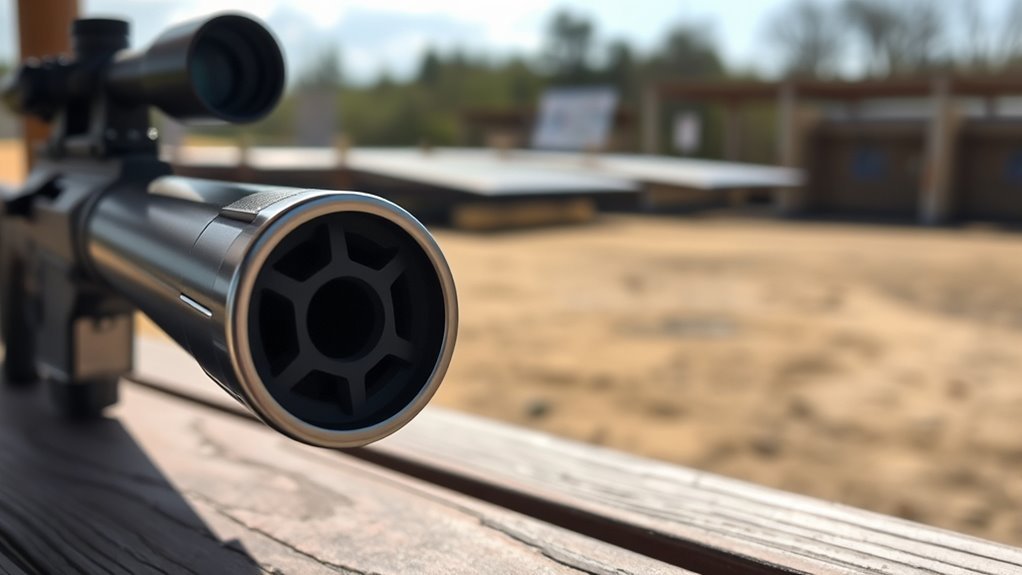
What Does a Muzzle Brake Do on a Rifle?
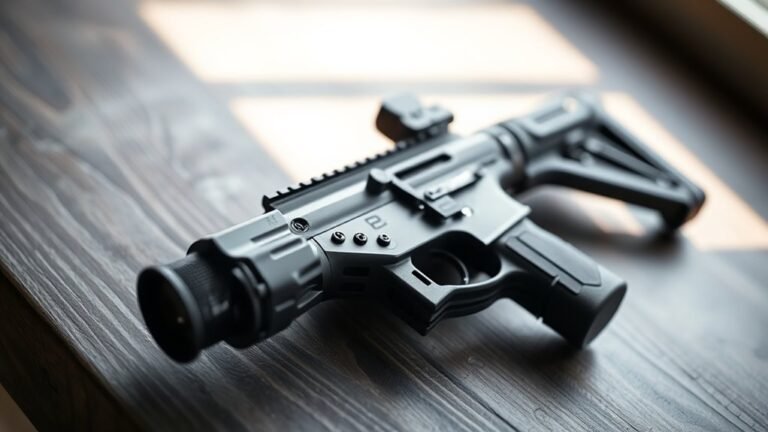
A muzzle brake on your rifle redirects gases to reduce recoil and muzzle rise, so you experience less kickback and stay on target easier.
This means you’ll enjoy steadier aim, quicker follow-up shots, and increased shooting comfort.
However, it can make your rifle louder and add some weight.
If you want to master how muzzle brakes improve your shooting stability and learn about the trade-offs, there’s more to uncover ahead.
How Muzzle Brakes Reduce Recoil and Muzzle Rise
When you fire a rifle, the gases escaping the barrel push backward, creating recoil and causing the muzzle to rise. Muzzle brakes tackle this by redirecting gases through strategically placed ports and an effective baffle design.
This venting controls gas expansion, producing a backward and downward force that counters the rifle’s rearward recoil. As a result, you experience considerably less felt recoil and reduced muzzle movement.
Redirected gases create forces that reduce recoil and muzzle rise for steadier shooting.
The redirection also diminishes muzzle blast and controls muzzle rise, keeping your aim steadier. By reducing recoil by up to 84%, muzzle brakes make shooting more comfortable and manageable.
This stability helps you maintain sight alignment, enabling quicker, more accurate follow-up shots without the rifle jumping off target after each shot. It just makes the whole shooting experience smoother and more enjoyable.
Advantages and Disadvantages of Using Muzzle Brakes
Why consider a muzzle brake for your rifle? This muzzle device offers significant recoil reduction, improving shooter comfort and recoil mitigation by redirecting muzzle gases sideways or upward. You’ll notice less kick, making follow-up shots easier and enhancing firearm handling.
However, there are trade-offs. The gas redirecting increases noise levels by 20-30 decibels, so you must wear proper hearing protection. The loud blast can also disturb others nearby.
Additionally, the added weight and length may affect your rifle’s balance and handling. Installation safety is vital—having a skilled gunsmith fit the muzzle brake guarantees best performance and prevents damage.
Weighing these advantages and disadvantages helps you decide if a muzzle brake suits your shooting needs.
Conclusion
When you use a muzzle brake on your rifle, you can reduce recoil by up to 50%, making your shots more comfortable and accurate. This means less flinching and faster follow-up shots.
However, remember that while muzzle brakes help control muzzle rise, they can increase noise and blast for you and those nearby. It’s something to keep in mind if you’re shooting in close quarters or with others.
So, weigh these pros and cons carefully. If you want better control and quicker follow-ups, a muzzle brake might be just what you need. But if noise and blast bother you or your shooting environment, you might want to think twice. Ultimately, whether a muzzle brake fits your shooting style and needs depends on balancing recoil reduction with the extra noise and blast it creates.