How Does an Air Rifle Work?
When you fire an air rifle, you first cock it to compress a power source like a spring, gas ram, or compressed air reservoir. This stored energy is what propels the pellet.
Pulling the trigger releases that energy, pushing a piston forward and forcing air to shoot the pellet through the rifled barrel for accuracy.
Different powerplants can change how smooth or consistent each shot feels. Curious about how each part works together? Or wondering about the types of air rifles available? Keep exploring the inner workings of air rifles to get the full picture. It’s pretty fascinating once you dive in!
Types of Air Rifles and Their Powerplants
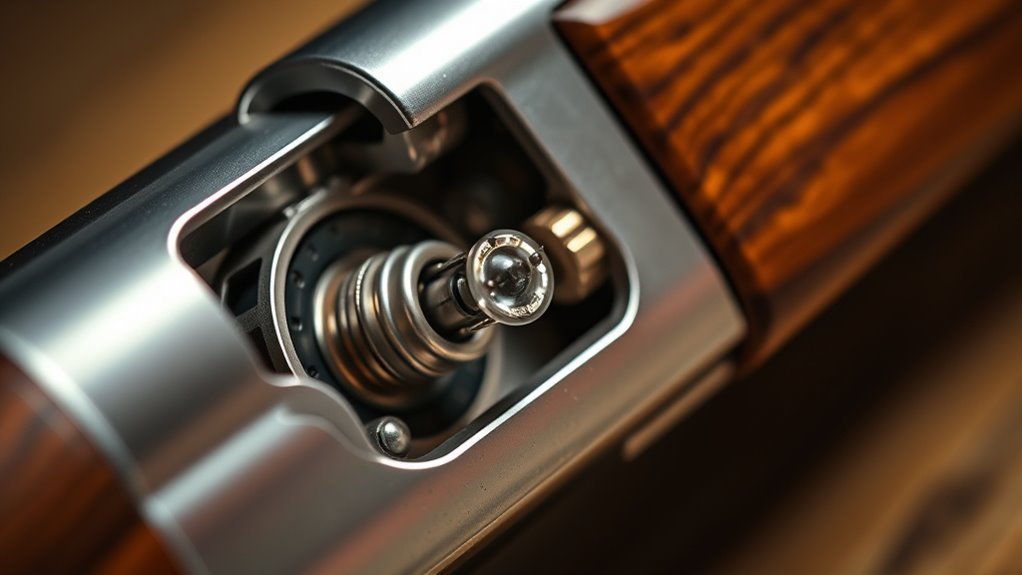
Although air rifles come in various designs, their powerplants determine how they propel pellets. You’ll find spring piston rifles use a coiled metal spring and piston to compress air internally when cocked, releasing energy with each shot.
PCP rifles rely on an internal reservoir filled with compressed air from external sources like pumps, offering consistent power through their pneumatic system. Gas ram rifles replace metal springs with sealed gas cylinders, providing smoother recoil.
PCP rifles offer consistent power with compressed air reservoirs, while gas ram rifles provide smoother recoil using sealed gas cylinders.
CO2 air rifles use cartridges or refillable cylinders to release compressed CO2, serving as their power source for quick, stable shots. Multi-stroke pneumatic guns require you to pump multiple times, compressing air manually to control shot power.
Understanding these powerplants helps you choose the right air rifle for your needs. It’s all about matching the system to what you want from your shooting experience.
Operation and Components of an Air Rifle
When you pull the trigger of an air rifle, stored compressed air or gas propels the projectile through the barrel with impressive speed and accuracy.
The firing cycle begins with cocking, which compresses the power source—either a spring piston or compressed air in the compression chamber. The trigger mechanism then releases this energy, pushing the piston forward and forcing the compressed air through the rifled barrel. This rifling stabilizes the projectile for accuracy.
Key components include:
- Barrel: guides the projectile
- Trigger mechanism: controls firing
- Compression chamber: stores compressed air
- Piston or spring piston: generates pressure
- Power source: spring or compressed air tank
Understanding these parts helps you grasp how your air rifle operates efficiently and precisely. It’s pretty neat once you see how everything works together!
Conclusion
So, now that you know how an air rifle works, you’re basically a sharpshooter in training—minus the danger of rocket science. Just cock, aim, and let compressed air do the heavy lifting while you pretend you’re in an action movie.
Remember, it’s not magic, it’s physics with a puff of air. Air rifles use compressed air to propel pellets, making them a fascinating example of simple yet effective mechanics.
So go ahead, impress your friends with your newfound “air” expertise—just don’t start thinking you’re the next James Bond. Understanding how an air rifle works not only makes shooting safer but also more fun and precise.