What Barrel Length Is Considered a Pistol?
If you have a firearm with a barrel shorter than 16 inches and no shoulder stock, it’s typically classified as a pistol under federal law.
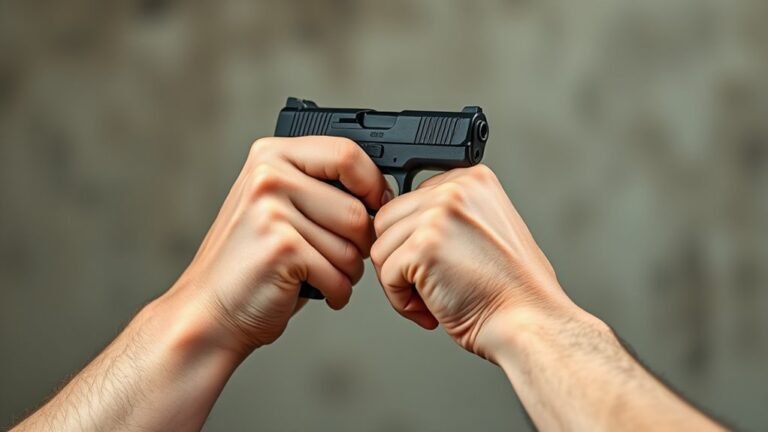
Pistols are designed to be fired with one hand and usually have an overall length under 26 inches.
Adding a stock or having a longer barrel can change its legal category.
Understanding these details helps you stay within regulations and avoid legal issues.
Keep exploring to better grasp how design impacts classification. It’s important to know these distinctions so you can handle and own firearms responsibly.
Legal Definitions of a Pistol and Barrel Length Standards
Although the term “pistol” might seem straightforward, the ATF sets specific legal definitions based on barrel length and design.
The ATF defines pistols by precise criteria involving barrel length and firearm design.
You’ll find that a pistol is defined as a firearm intended to be fired with one hand and without a shoulder stock. The barrel length plays a vital role: if it’s less than 16 inches and the overall length is under 26 inches, the firearm usually qualifies as a pistol.
If there’s a shoulder stock attached or the barrel length hits 16 inches or more, it’s classified as a rifle, not a pistol. Adding a shoulder stock to a short barrel firearm can reclassify it as a Short Barrel Rifle (SBR), which falls under different regulations.
Understanding this firearm classification helps you navigate the legal definition of pistols correctly. It’s important to know these distinctions to stay on the right side of the law.
Practical Implications of Barrel Length on Pistol Classification
When you choose a pistol based on barrel length, you’ll find that shorter barrels typically make the firearm easier to handle and conceal. But they also affect classification and legal considerations.
Understanding how barrel length interacts with firearm design and federal law helps you navigate ATF regulations confidently. Here’s what you should consider:
- Barrel Length & Overall Length: Short barrels (usually under 16 inches) often mean pistol classification. However, overall length and absence of a shoulder stock are key factors.
- Firearm Design: A pistol designed for one-handed use with short barrels aligns with federal definitions. This impacts its legal status.
- Concealed Carry & Classification: Short barrels enhance concealability but can complicate classification. So, knowing ATF rules helps avoid legal pitfalls.
Balancing these factors ensures you comply with firearm classification standards.
Conclusion
So, you think barrel length alone decides if your firearm is a pistol? Funny enough, the law isn’t that simple. While you might expect a strict measurement, definitions can twist based on jurisdiction and purpose.
It’s ironic that something as straightforward as a barrel length ends up tangled in legal jargon. But hey, now you know—it’s not just about inches, it’s about how the law sees your gun, not just how it feels in your hand.
When it comes to what barrel length is considered a pistol, remember the key factor is legal definitions, not just physical measurements. Different states and federal laws might set varying length limits and criteria. So, always check local regulations before making assumptions about your firearm’s classification. Understanding the legal perspective on barrel length helps you stay informed and compliant with firearm laws.