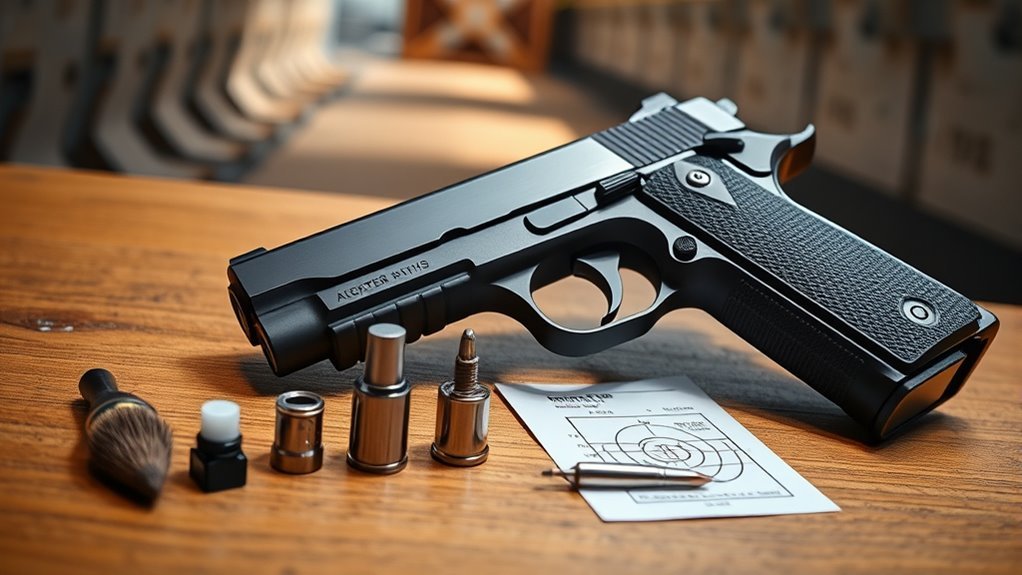
How to Break in a New Pistol With 5 Essential Steps
To break in your new pistol, start by reading the manual to learn important safety rules and maintenance tips. This step is crucial for understanding how your firearm works and how to handle it safely. Getting familiar with the manual sets a solid foundation for everything else.
Next, perform safety checks by unloading and inspecting your pistol carefully. Always make sure it’s clear before handling it further.
Then, disassemble the pistol to clean off any factory grease and lubricate key parts properly. This helps your gun run smoothly and prevents malfunctions down the road.
After that, condition your magazines by loading and unloading them repeatedly. This makes sure they feed ammunition smoothly without jams.
Finally, fire about 100 test rounds to guarantee reliable function and a good trigger feel. Taking these steps seriously helps ensure your pistol works safely and dependably every time you use it.
Keep reading to understand each step in more detail and break in your new pistol like a pro!
Key Takeaways
- Read the firearm manual to understand safety, maintenance, and specific model guidelines before use. It’s really important to know your pistol inside and out.
- Perform thorough safety checks by removing magazines and ensuring the chamber is empty. Safety first, always!
- Disassemble the pistol to clean factory grease, then lubricate key areas before reassembling. This helps everything run smoothly.
- Break in magazines by loading and unloading them at least 20 times to ensure reliable feeding. It might feel repetitive, but it’s worth it.
- Fire around 100 rounds of FMJ ammo, cleaning between groups to confirm smooth operation and trigger feel. This step really helps you get comfortable with your pistol.
Read the Manual to Understand Safety and Maintenance

Before you handle your new pistol, read the manual thoroughly to understand its specific safety warnings, disassembly steps, and maintenance guidelines. The manual is your primary resource for knowing whether dry firing is safe for your model and how to check that the firearm is unloaded before working on it.
It guides you through proper disassembly and reassembly procedures, helping you avoid damage and maintain safety. You’ll also find lubrication points and cleaning instructions essential for breaking in your pistol and ensuring long-term reliability.
Following the manual’s directions not only protects your firearm but also keeps you safe during maintenance. Taking time to learn from the manual sets a solid foundation for responsible handling and care of your new pistol.
Perform Initial Safety Checks Before Handling

Although you’ve read the manual, you should always start by removing the magazine and thoroughly checking that the firearm is unloaded. Perform both a visual and physical inspection of the chamber to confirm no ammunition is present.
These initial safety checks are vital before handling your new pistol to prevent accidents. Make sure any trigger locks are removed carefully, allowing you to fully operate the firearm’s controls.
Familiarize yourself with essential parts like the slide lock, magazine release, and takedown pin so you can safely manage the pistol during further steps. Following the manual’s instructions closely ensures you understand model-specific warnings, helping you maintain safety at every stage of handling your firearm.
Disassemble, Clean, and Lubricate Your New Pistol
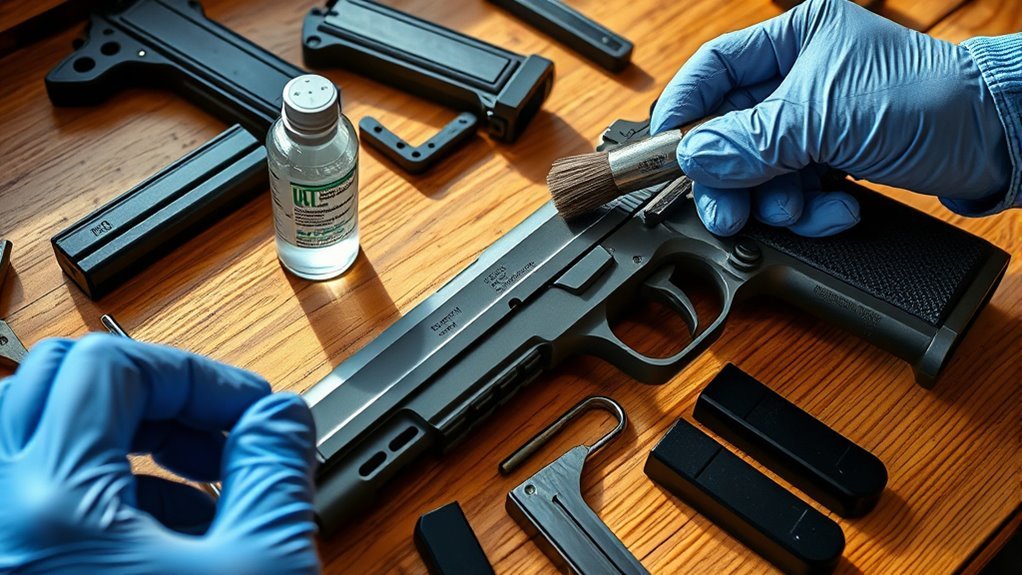
When you disassemble your new pistol, start by locking the slide back and carefully removing the takedown pin. Then, release the slide, barrel, and recoil spring, making sure to note their orientation.
Before you apply any lubricant, clean off the factory grease or oil using a shop towel and brush. Run a clean patch through the barrel to get rid of any debris, but remember — never pull the trigger while it’s disassembled.
Once everything is clean, apply just a small amount of lubricant to key areas like the barrel, slide lock, and guide rod. Wipe off any excess so it doesn’t build up and attract dirt.
Finally, when you’re putting it back together, make sure all the parts line up correctly. Pay special attention to the barrel and takedown pin. Doing this helps keep your pistol reliable and ready to perform smoothly.
Break In Magazines for Reliable Feeding
After cleaning and lubricating your pistol, give equal attention to your magazines to guarantee smooth feeding. A proper break-in period for magazines ensures feeding consistency and reliable function with your magazine release.
Follow these steps:
- Load and unload each magazine at least 20 times with a speedloader to initiate spring wear and ease future loading.
- Avoid worrying about leaving magazines fully loaded; their springs usually resist damage due to work-hardening properties.
- After the initial break-in, try loading magazines overnight to further improve feeding performance.
- If you encounter persistent feeding issues, disassemble, clean, and lubricate the magazines to extend their lifespan.
This process will optimize your magazines’ reliability and complement your pistol’s break-in period for consistent operation. It’s a simple step that makes a big difference!
Shoot Test Rounds to Check Reliability and Trigger
Before you fully rely on your new pistol, you’ll want to fire about 100 rounds through it, breaking them into groups while cleaning in between.
Shoot test rounds using full metal jacket (FMJ) ammo to evaluate the pistol’s reliability in cycling and feeding without malfunctions. Pay close attention to the trigger’s feel and reset during firing; it should become softer and cleaner as you break it in.
Mark and monitor magazines to spot any feeding issues or inconsistencies. Testing with different shooters and ammo types helps assure consistent performance.
Only after confirming reliability and a smooth trigger should you shift to your preferred self-defense rounds. This process guarantees your pistol functions dependably and the trigger operates smoothly when it matters most.
Frequently Asked Questions
How Long Does the Break-In Process Typically Take?
The break-in process typically takes about 200 to 300 rounds. You’ll want to shoot steadily, clean regularly, and inspect your pistol to guarantee everything functions smoothly before relying on it for serious use or self-defense situations.
Can I Use Aftermarket Parts During the Break-In Period?
You can use aftermarket parts during the break-in period, but it’s best to stick with factory components initially to guarantee proper function. Once your pistol’s reliable, you can gradually add upgrades without risking damage or malfunctions.
What Type of Cleaning Solvents Are Safest for a New Pistol?
You’ll want to use mild, non-corrosive solvents like CLP (cleaner, lubricant, protectant) or dedicated gun cleaning oils. Avoid harsh chemicals that can damage finishes or delicate parts, ensuring your new pistol stays in top condition.
How Often Should I Inspect the Pistol During Break-In?
You should inspect your pistol after every 50 rounds during break-in. This helps catch any issues early, guarantees proper function, and lets you clean or lubricate as needed to keep everything running smoothly.
Is It Necessary to Wear Ear and Eye Protection When Breaking In?
Yes, you should always wear ear and eye protection when breaking in your pistol. Over 30 million shooting-related injuries occur yearly, and protection reduces your risk of permanent damage from noise and debris considerably.
Conclusion
Breaking in your new pistol isn’t just about function—it’s about forging a bond, much like a knight preparing for battle. By reading the manual and performing safety checks, you set the foundation for safe handling and operation.
Next, cleaning and lubricating your pistol ensures smooth performance and longevity. Don’t forget to break in magazines too, as they play a crucial role in feeding rounds reliably. Shooting test rounds helps you get a feel for your firearm and verify that everything works as it should.
Follow these essential steps to break in your pistol properly. Doing so guarantees your weapon becomes as reliable as a trusted sword in your hand. With these tips, you’ll be ready to face any challenge with confidence and precision. Your pistol’s true potential awaits—embrace the process and unlock dependable performance every time you shoot.