10 Steps to Properly Hold a Pistol
To properly hold a pistol, start by gripping it high behind the back strap. This gives you better control and helps manage the recoil effectively.
Wrap your lower fingers firmly around the grip, making sure to fully cover it and eliminate any gaps. This solid grip is key for stability and safety.
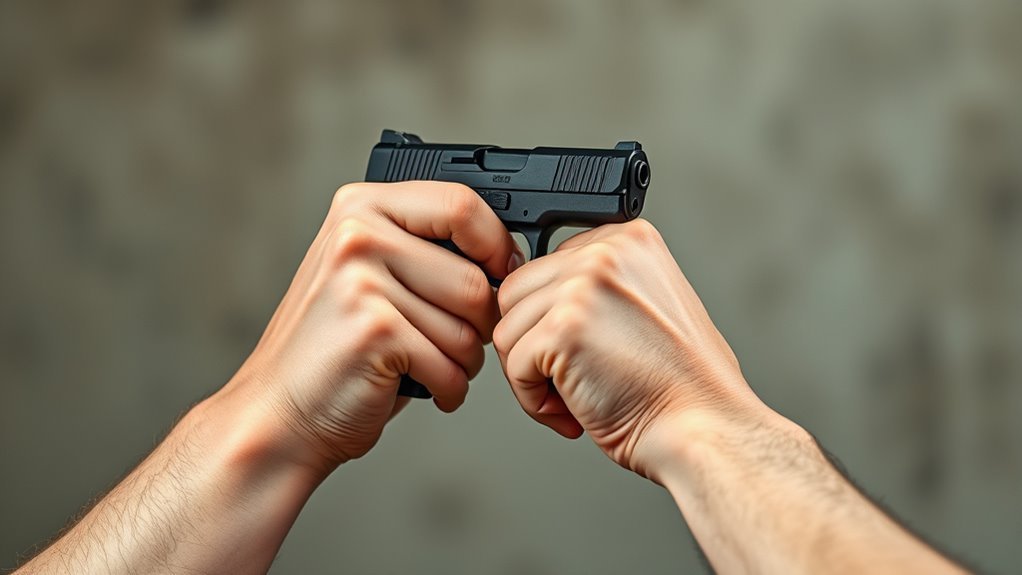
Next, align your non-firing hand’s knuckles so they’re parallel to the slide.
Angle your hand just right to add extra stability while aiming.
Apply even pressure from front to back and side to side, but keep your hands natural and relaxed, not tense.
Adjust your grip as needed to fit your hand size and strength comfortably.
Mastering these basic steps sets you up for smoother handling and greater accuracy.
Once you get these down, you’re ready to explore more advanced pistol techniques with confidence.
Key Takeaways
- Place the grip high on the back strap to maximize control and improve recoil management. Wrap the lower three fingers firmly around the grip, ensuring even pressure without gaps.
- Align the non-firing hand’s knuckles parallel to the slide, with the thumb outside to prevent injury. This helps keep your hands safe and steady.
- Apply even front-to-back pressure while maintaining a relaxed but firm hand shape for stability. It might feel a bit strange at first, but you’ll get used to it.
- Adjust grip angle and pressure for comfort, and practice regularly to build confidence and accuracy. The more you practice, the more natural it will feel.
Why Proper Pistol Grip Matters
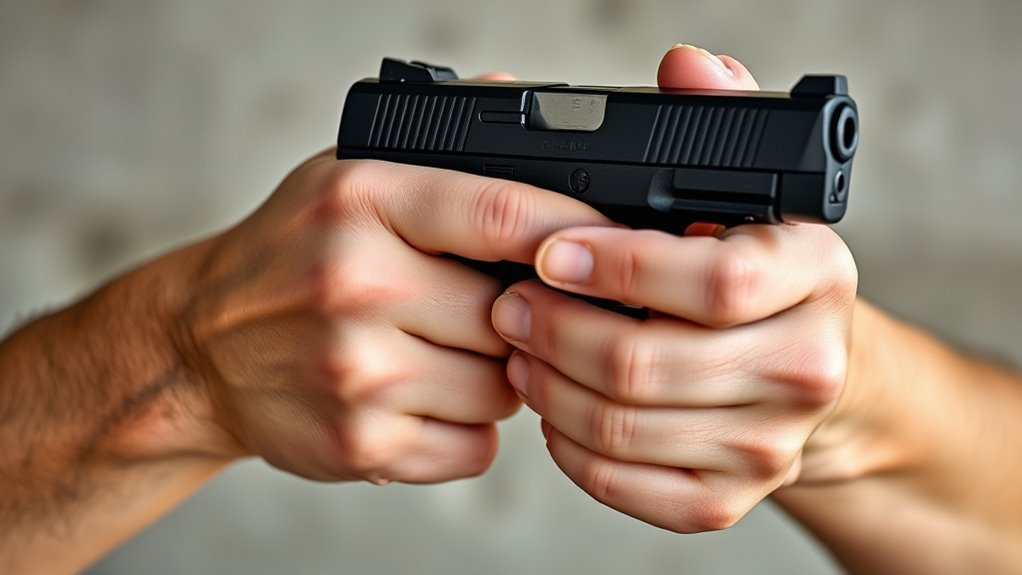
Mastering a proper pistol grip gives you better control and reduces recoil, which directly improves your shooting accuracy. When you hold your pistol correctly, you keep the slide operating smoothly, preventing malfunctions that could disrupt your shot.
A solid grip also keeps your fingers and hands clear of moving parts like the slide and slide lock, minimizing injury risk. By distributing pressure evenly, you stop side-to-side movement, helping you maintain steady aim and precise shots.
This foundation in grip technique is essential not only for accuracy but also for your safety and overall firearm handling. When you focus on a consistent, effective grip, you set yourself up for better performance every time you shoot.
Grip the Pistol High Behind the Back Strap
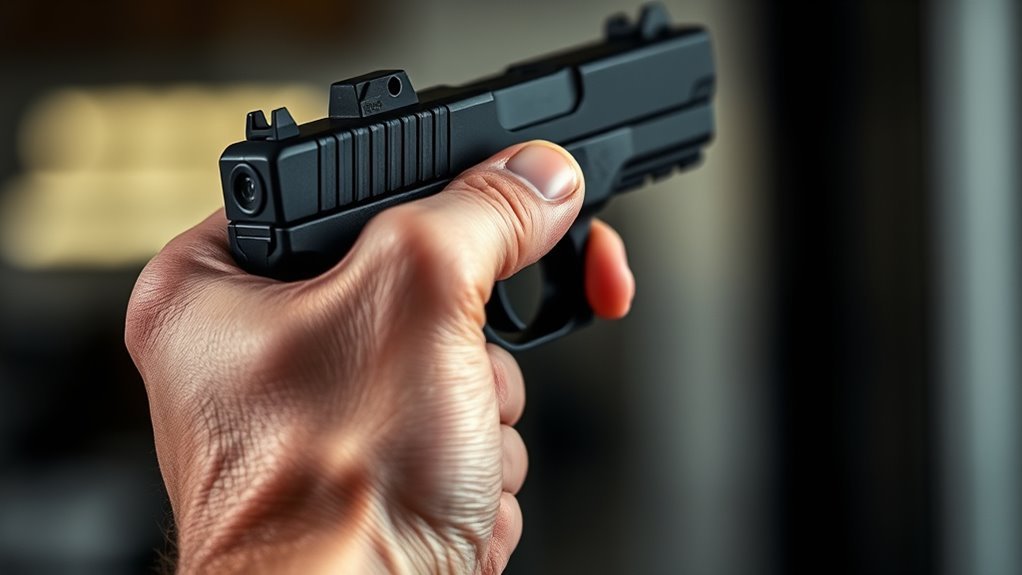
To get the most control and leverage when holding your pistol, place your grip as high as possible behind the back strap. This high placement guarantees the entire back strap is covered, eliminating gaps that could reduce stability.
When you grip the pistol this way, you enhance your ability to manage recoil effectively and maintain better overall control. Keep your thumb positioned on the frame or outside the firearm to avoid interfering with the slide’s movement or risking injury.
Make certain your grip is firm but natural, focusing on that high placement to maximize leverage without tension. This technique sets the foundation for a solid hold, helping you shoot more accurately and comfortably.
Wrap Your Lower Fingers Firmly Around the Grip
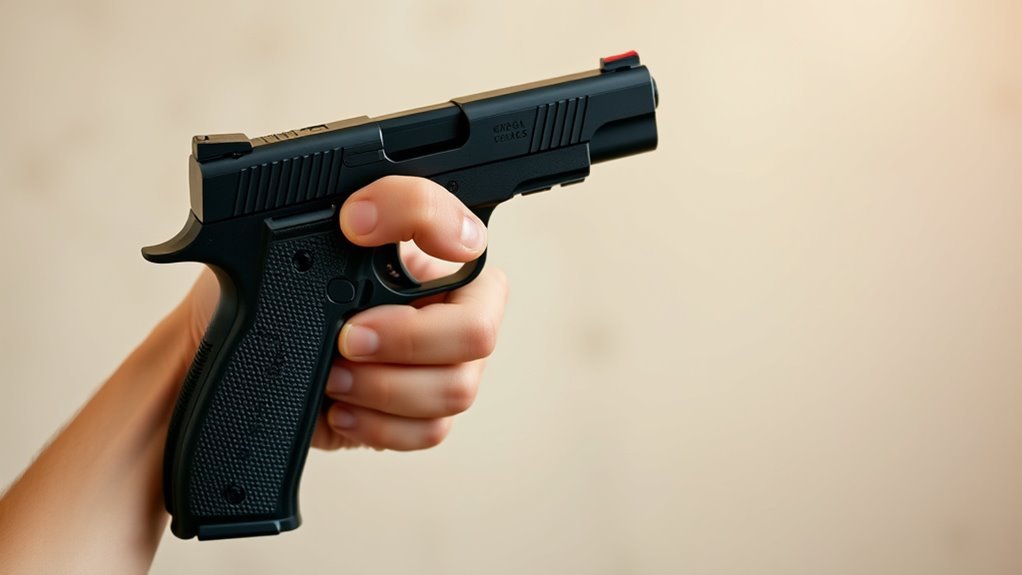
When you wrap your lower three fingers firmly around the bottom of the pistol grip, you create a secure foundation that keeps the firearm steady. Make certain your fingers are snugly placed without gaps to maximize grip stability and control.
Applying firm pressure with these fingers helps you maintain control during recoil, preventing the pistol from shifting in your hand as you fire. This tight grip with your lower fingers enhances overall firearm handling, making your shots more accurate and consistent.
Focus on keeping those fingers wrapped firmly and evenly to build a solid connection between your hand and the pistol. This step is vital to guarantee that your grip supports proper shooting technique and helps you manage the firearm safely and effectively.
Cover the Grip Fully to Eliminate Gaps
Although a firm grip is essential, you also need to make sure your hand fully covers the pistol’s grip. That means no gaps between your fingers and the surface.
A firm grip requires your hand to fully cover the pistol’s grip with no gaps.
This full coverage guarantees maximum control and helps prevent shifting during recoil. Use your dominant hand to cover both the backstrap and the front of the grip completely.
Your fingertips and palm should create a secure, uniform contact with the grip. And don’t forget to check your non-firing hand too—it should wrap fully around the grip without any spaces.
Always adjust your hold, especially when switching between different firearms, to keep that consistent coverage.
- Eliminate gaps by fully wrapping your hand around the grip’s surface
- Use fingertips and palm for secure, even contact
- Regularly adjust grip for different pistol sizes
Align Your Non-Firing Hand’s Knuckles Parallel to the Slide
Make sure your non-firing hand’s knuckles line up parallel to the pistol’s slide. This alignment helps keep your grip stable and improves recoil control.
When your knuckles stay straight with the slide, you’ll have better overall handling and accuracy. It’s a simple adjustment, but it makes a big difference. Give it a try next time you shoot!
Knuckle Alignment Importance
Two key benefits come from aligning your non-firing hand’s knuckles parallel to the slide: improved grip stability and better control during recoil. This alignment guarantees even pressure between both hands, helping you maintain accuracy shot after shot.
When your knuckles stay parallel, you reduce the chance of your non-firing hand twisting or slipping. That keeps your grip consistent and reliable.
Focus on these points to understand why knuckle alignment matters:
- Promotes even pressure distribution for steady aim
- Minimizes hand twisting, preventing grip slippage
- Reduces fatigue by encouraging proper hand placement
Slide Parallel Positioning
When you align your non-firing hand’s knuckles parallel to the slide, you create a stable foundation that enhances control and accuracy. Position your non-dominant hand so the knuckles from the lower knuckle to the wrist stay straight and level with the slide.
This alignment reduces torque and helps you manage recoil more effectively. Keeping your knuckles in line with the slide ensures consistent hand placement, which is essential for steady shooting.
Adjust your grip until your non-firing hand’s knuckles follow the same horizontal plane as the slide. This parallel positioning promotes proper hand alignment, making your shots more precise and your firearm easier to control.
Position Your Thumb Outside the Slide to Avoid Injury
Because the slide rapidly moves backward during recoil, positioning your thumb outside the slide is essential to avoid injury. Keeping your thumb clear prevents painful pinching or burns from hot and moving parts.
It also reduces the risk of accidentally engaging the slide lock, which can disrupt your shot and damage your pistol. By placing your thumb outside the slide, you assure smooth cycling and maintain a safer grip.
Remember to:
- Keep your thumb safely away from the slide and slide lock.
- Avoid contact with hot surfaces to prevent burns.
- Prevent interference with slide movement for reliability.
This simple adjustment protects your hand and helps your pistol function properly every time you fire. It’s a small change that makes a big difference!
Apply Even Pressure Front to Back and Sides
Keeping your thumb clear of the slide sets the foundation for a secure grip, but holding the pistol firmly requires more than just thumb placement.
Thumb placement is crucial, but a firm, balanced grip is essential for secure pistol control.
You need to apply even pressure from the front of the grip to the back to guarantee the firearm stays securely in your hand and reduces unwanted movement during firing.
At the same time, press equally on both sides of the grip to prevent side-to-side shifting, which helps maintain control and accuracy.
Make sure to squeeze the grip consistently throughout the shot, distributing pressure evenly between your dominant and support hand.
This balanced front-to-back and side-to-side pressure stabilizes the pistol during recoil, improving your shot precision and overall shooting control.
Keep Your Hands in a Natural but Controlled Shape
Although maintaining a secure hold is essential, you should keep your hands in a natural, controlled shape that feels comfortable and allows full control of the pistol. Avoid gripping too tightly, as tension can affect your accuracy and endurance.
Instead, keep your fingers curved and relaxed to maintain precision without sacrificing control. Adjust your grip based on your hand size and strength to guarantee comfort and effectiveness.
To maintain your hands naturally controlled, remember to:
- Maintain a firm grip that manages recoil without causing discomfort.
- Keep your fingers slightly curved and relaxed to reduce tension.
- Adapt your hand shape to fit your unique physical capabilities for ideal control.
This balance helps you shoot accurately and comfortably over time. It really makes a difference when you’re out there practicing or in a real situation.
Angle Your Non-Firing Hand to Improve Stability
When you angle your non-firing hand at about 45 degrees, you create a stable platform that greatly improves your control over the pistol. Position this hand slightly below and to the side of your firing hand, allowing it to wrap around the front.
Angling your non-firing hand at 45 degrees creates a stable, controlled grip for better pistol handling.
This placement helps distribute recoil evenly and enhances your grip strength. Keep your non-firing hand firm yet relaxed so it supports without interfering with your firing hand’s hold.
Maintaining this angle consistently during shooting reduces firearm movement, which directly boosts your accuracy. By consciously angling and positioning your non-firing hand, you build a more balanced and controlled shooting stance.
This makes each shot steadier and more precise. Honestly, this simple adjustment is key to improving your overall pistol handling and performance.
Adjust Your Pistol Grip for Your Physical Needs
Since every shooter’s hands and strength differ, you’ll want to adapt your pistol grip to fit your physical needs. Pay attention to how your hand feels during use and don’t hesitate to make changes that enhance comfort and control.
You can modify grip pressure, finger placement, or angle to reduce strain and improve handling. Consider using ergonomic aids if your hand size or strength requires additional support.
Keep these key points in mind:
- Adjust grip pressure and positioning to avoid discomfort.
- Use grip aids for a more natural, secure hold.
- Maintain consistent contact points that prevent fatigue.
Regularly assess your grip to ensure it remains safe and effective for you. Tailoring your grip will boost both comfort and shooting accuracy.
Frequently Asked Questions
How Do I Safely Clear a Jammed Pistol?
You should keep the pistol pointed in a safe direction, remove your finger from the trigger, and carefully lock the slide back. Then, clear the jammed round or casing before inspecting the chamber and reloading safely.
What Type of Pistol Holster Is Best for Beginners?
You’ll want a holster that offers good retention and easy access, like a molded Kydex or leather holster. These provide safety and comfort while you build confidence handling your pistol. Avoid complicated designs at first.
How Often Should I Clean My Pistol?
You should clean your pistol after every use, or at least once a month if it’s just sitting. Dirt and grime pile up faster than a mountain avalanche, so regular cleaning keeps it reliable and safe.
Can I Use Gloves While Holding a Pistol?
Yes, you can use gloves while holding a pistol, but make sure they fit well and don’t reduce your grip or trigger sensitivity. Gloves can protect your hands, especially in cold weather or rough conditions, but stay safe.
What Are the Legal Requirements for Pistol Ownership?
When it comes to pistol ownership, you’ve got to play by the book—background checks, age limits, and permits usually apply. Laws vary by state, so don’t jump the gun; always check local regulations before buying.
Conclusion
If you don’t grip your pistol properly, you might as well be holding a slippery eel instead of a powerful tool—you’ll never shoot accurately or safely. Mastering these steps isn’t just a suggestion; it’s the difference between total control and complete chaos.
So, take your time, adjust your grip like your life depends on it—because, honestly, it just might. Perfect your hold, and you’ll shoot with confidence like a true pro every single time.
Remember, holding a pistol correctly is key to both accuracy and safety. When you follow these 10 steps to properly hold a pistol, you gain better control and reduce the risk of accidents. A solid grip ensures you handle your firearm responsibly and shoot with precision. So don’t rush—practice your grip until it feels natural. That’s how you become a confident, safe shooter every time you pick up your pistol.