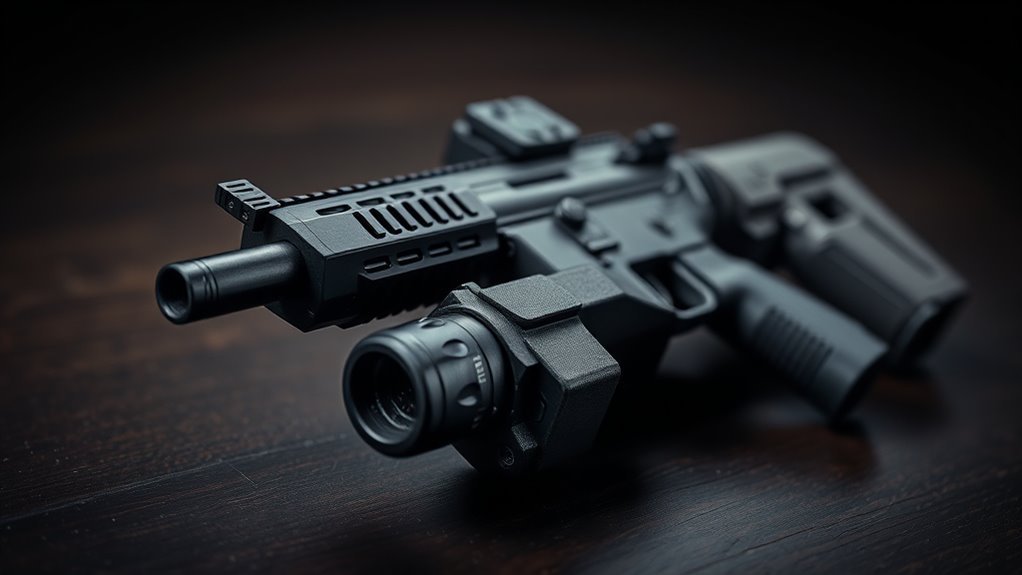
How to Identify What Is Considered an AR Pistol
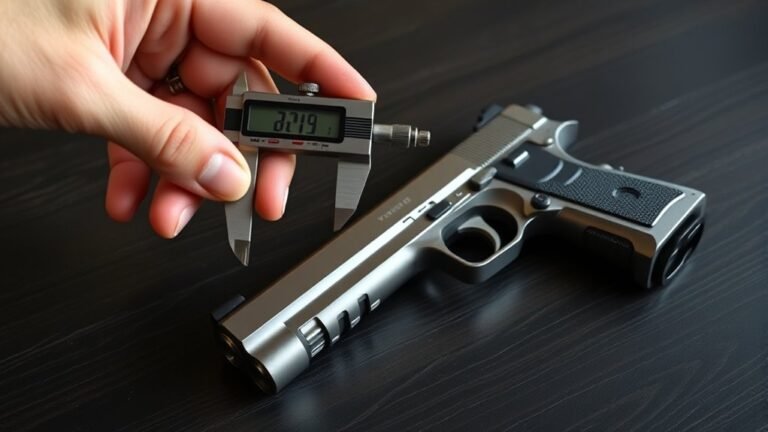
To identify an AR pistol, start by measuring the barrel length. It needs to be under 16 inches to qualify.
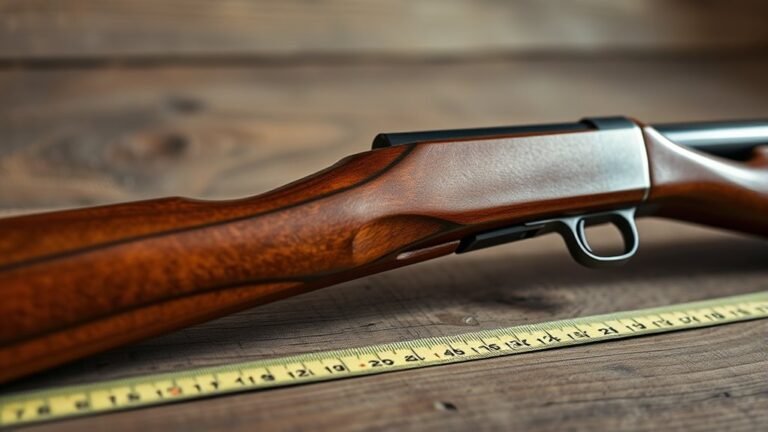
Also, check the overall length without a shoulder stock—it should be less than 26 inches.
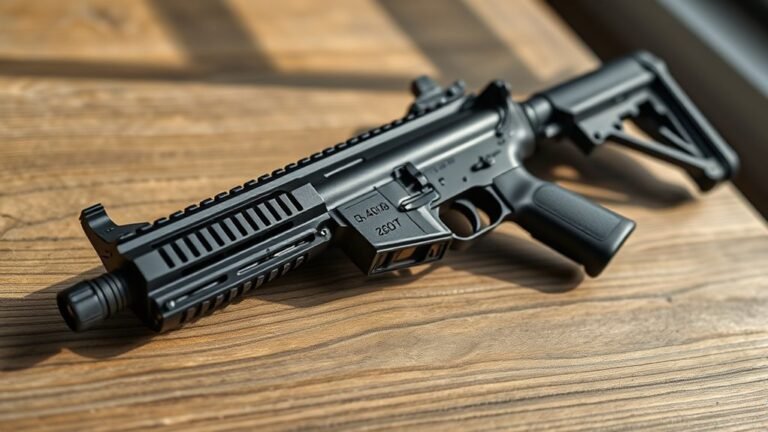
Another important thing to look for is the presence of a stabilizing brace instead of a shoulder stock. This feature really sets AR pistols apart.
If you find a shoulder stock or a barrel longer than 16 inches, you’re probably dealing with an SBR (short-barreled rifle) or a rifle, which means different legal rules apply.
So, keep these measurements and features in mind as you figure out the exact legal distinctions. It can get a bit tricky, but knowing these basics will help you identify an AR pistol correctly.
Key Takeaways
- An AR pistol has a barrel length under 16 inches and an overall length less than 26 inches without a stock. It features a stabilizing brace instead of a shoulder stock for support.
- When measuring, you have to exclude muzzle devices and include the barrel extension face to get an accurate length. This is important to make sure you’re following the rules.
- If there’s a shoulder stock on the firearm, it’s no longer an AR pistol. Instead, it’s classified as an SBR or a rifle.
- Taking accurate length measurements helps you stay compliant with firearm laws and avoid any unwanted legal reclassification. So, it’s definitely worth double-checking!
How to Legally Measure an AR Pistol’s Length and Barrel
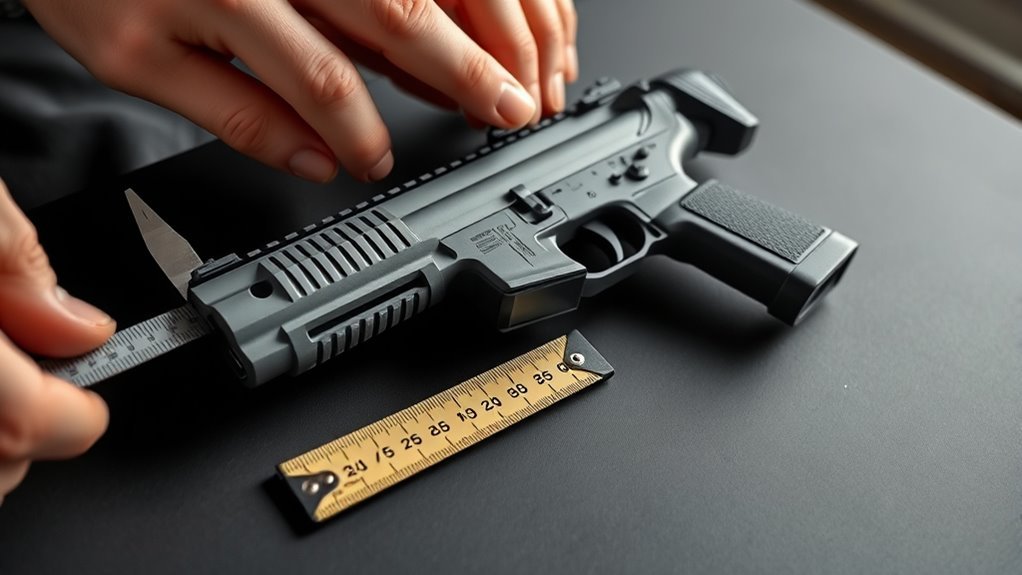
When you measure an AR pistol, make sure to do so in its shortest configuration by fully retracting any collapsible braces or supports. To legally determine overall length, measure in a straight line from the muzzle to the end of the stabilizing brace or support device. Confirm that the firearm is as compact as possible before measuring.
For barrel length, measure from the muzzle to the barrel extension face, excluding any muzzle devices like flash suppressors. Remember, the barrel length must be under 16 inches to classify the firearm as an AR pistol.
These precise measurements are essential because exceeding them might require a tax stamp and reclassify the firearm as a Short Barreled Rifle. By following these guidelines, you’ll guarantee your AR pistol’s length and barrel are measured accurately and legally.
How to Tell an AR Pistol From an SBR or Rifle
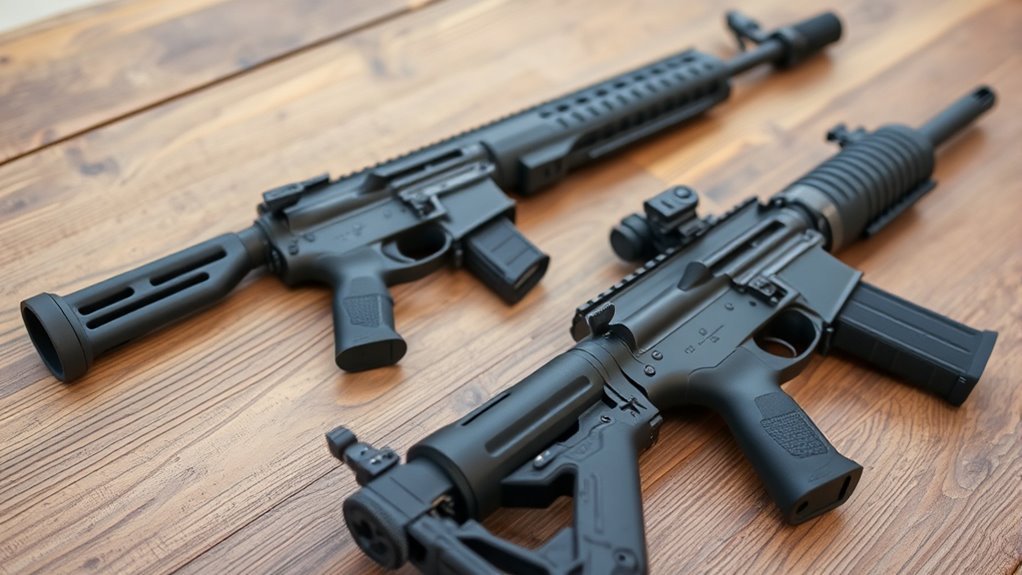
Accurately measuring your AR pistol’s length and barrel sets the stage for distinguishing it from other firearm classifications. To tell an AR pistol from an SBR or rifle, focus on these key points:
- Barrel Length & Overall Length: An AR pistol has a barrel less than 16 inches and an overall length under 26 inches without a shoulder stock.
- Stabilizing Brace vs. Shoulder Stock: AR pistols use a stabilizing brace, not a shoulder stock. If it has a stock, it’s either an SBR or rifle.
- Legal Requirements: SBRs have barrels under 16 inches but include a shoulder stock, requiring ATF approval and a tax stamp.
Knowing these distinctions ensures you understand your firearm’s classification and stay compliant with regulations. It’s really important to get this right so you don’t run into any legal trouble.
Frequently Asked Questions
What Does a Legal AR Pistol Look Like?
A legal AR pistol has a short barrel under 16 inches, no rifle stock, and a stabilizing brace. It’s compact, usually under 26 inches total, and won’t have a vertical foregrip, keeping it within legal limits.
What Part of an AR-15 Is Considered a Firearm?
You’ll find the lower receiver is the part of an AR-15 that’s legally considered the firearm. It houses the trigger group, carries the serial number, and is the key component regulated by law for ownership and transfer.
How Many Inches Is Considered an AR Pistol?
You’re looking at a firearm shorter than 16 inches in barrel length, with an overall length under 26 inches. If it fits those dimensions and uses a stabilizing brace, you’re holding an AR pistol.
What’s the Difference Between an AR-15 and an AR Pistol?
The difference between an AR-15 and an AR pistol is that you’ll find the AR pistol uses a stabilizing brace, has a shorter barrel, and isn’t meant for shoulder firing, while the AR-15 has a stock and longer barrel for shoulder use.
Conclusion
Now that you’ve unraveled the puzzle of AR pistols, you hold the key to distinguishing them from SBRs and rifles. Like a compass guiding you through a forest of regulations, measuring length and barrel lets you navigate legal waters with confidence.
Remember, every inch counts. Knowing the rules turns confusion into clarity.
So, step forward with certainty—your understanding sharpens the line between compliance and risk, lighting the path ahead. Identifying what is considered an AR pistol is crucial for staying within the law and avoiding potential legal trouble. With this knowledge, you can confidently handle your firearm while respecting important regulations that protect you and others.