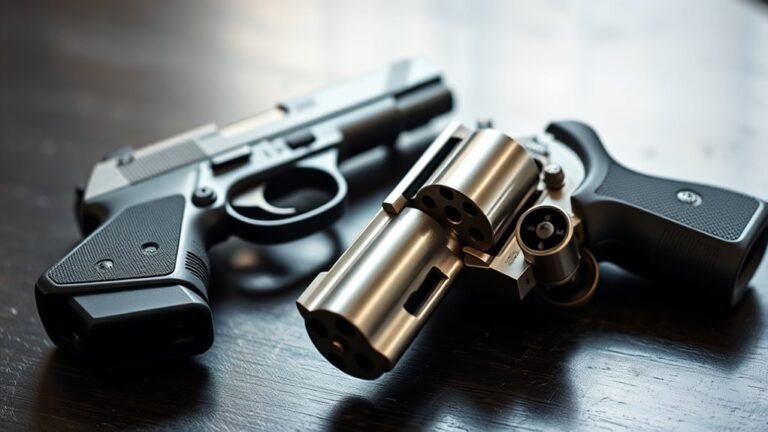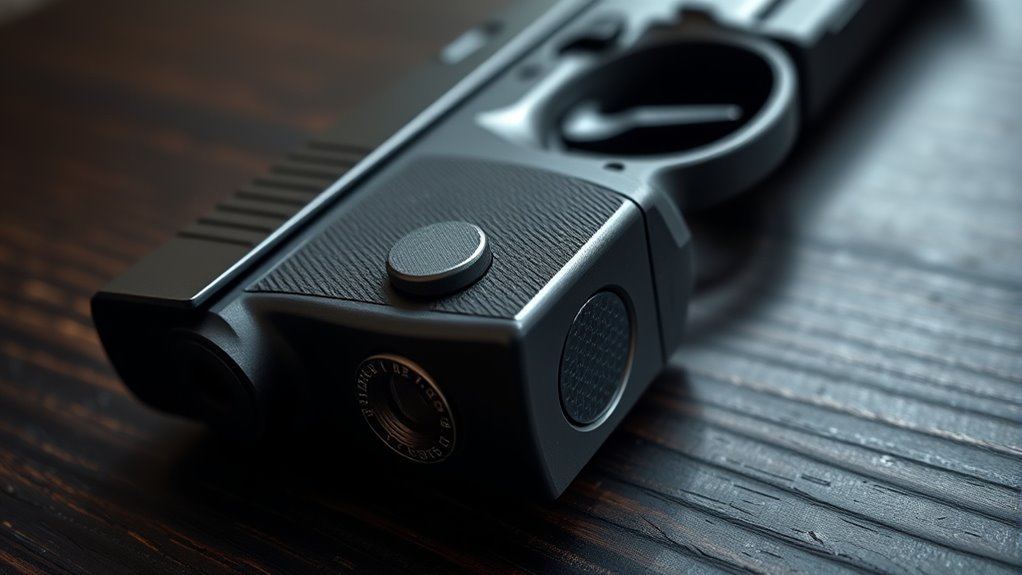
What Is Thumb Safety on a Pistol?
A thumb safety on a pistol is a small lever located near your thumb that helps prevent the gun from firing accidentally. It works by locking the trigger or firing mechanism when engaged. This safety feature is designed to give you greater control over when your pistol fires.
You can quickly disengage the thumb safety with your thumb to fire the gun. This makes it easier to handle while reducing the chances of accidental shots.
It’s especially useful for beginners who want an extra layer of safety and confidence when handling a pistol.
That said, using a thumb safety can sometimes slow down your response time. It takes practice to use it effectively without hesitation.
Keep exploring how this balance between safety and speed affects your overall pistol handling skills.
Key Takeaways
- Thumb safety is a lever or button near the thumb that blocks the firing mechanism on a pistol. It prevents the gun from firing when engaged by locking the trigger or firing pin.
- When you disengage the thumb safety, it allows the trigger and firing mechanism to operate freely. It’s designed for quick, intuitive use within a natural grip during carry and handling.
- Thumb safety enhances firearm safety by preventing accidental discharges. Plus, it gives you extra control when handling your pistol.
How a Thumb Safety Works on a Pistol
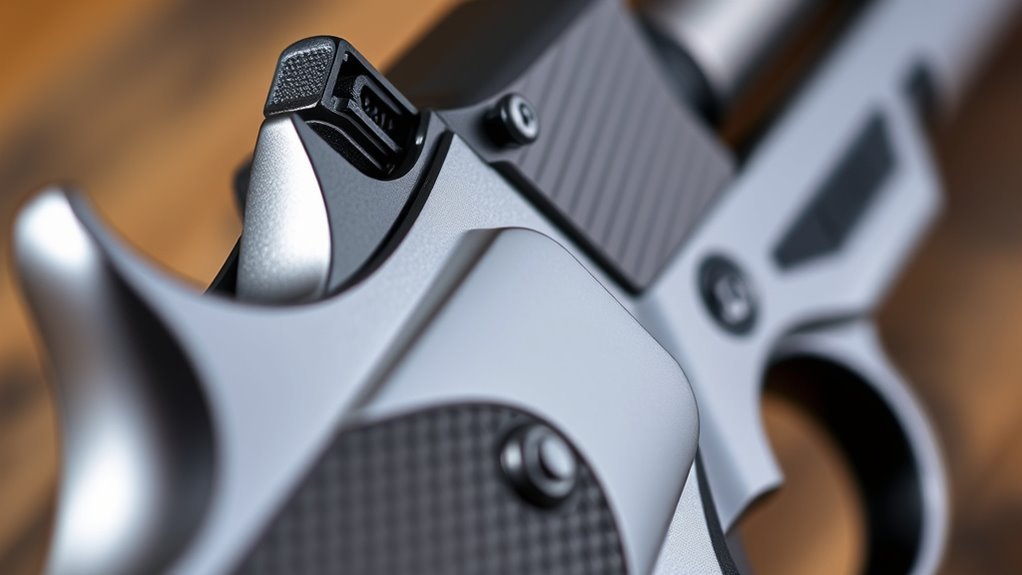
Although the design varies, a thumb safety on a pistol is a lever or button near your thumb that physically blocks the firing mechanism or trigger, preventing the gun from firing when engaged. This manual safety works by locking the sear, firing pin, or trigger safety, effectively stopping the firearm from discharging.
When you’re ready to fire, you usually flip or press the safety lever with your thumb to disengage it. This lets the trigger and firing mechanism move freely.
The thumb safety is designed for quick, intuitive use right within your natural grip, which helps make handling your pistol safer. With proper training, you’ll learn to fully activate the safety when carrying and smoothly deactivate it before firing. This way, you can handle your pistol confidently and safely.
Pros and Cons of a Thumb Safety on Your Pistol
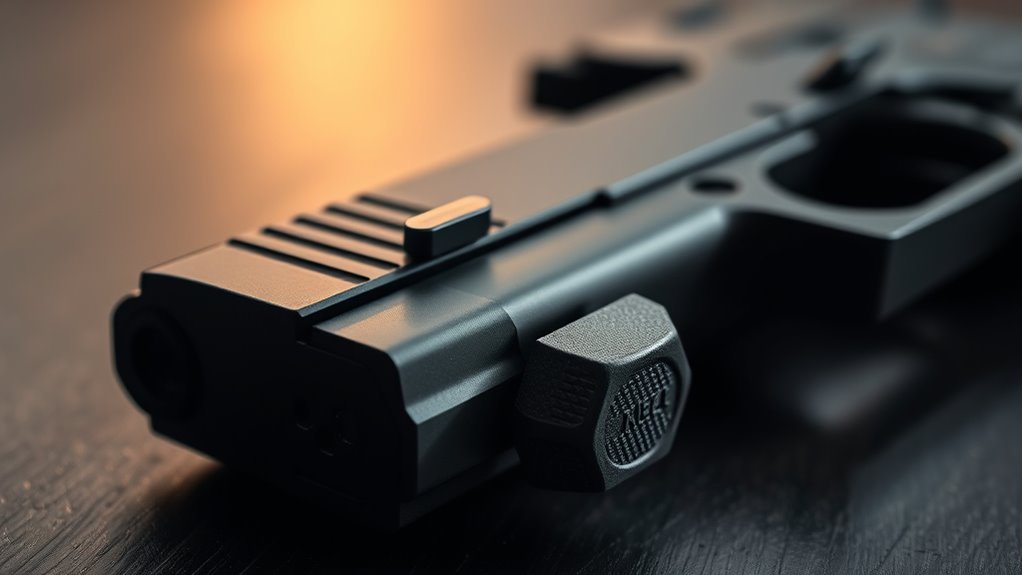
When you carry a pistol with a thumb safety, you gain an added layer of control that can help prevent accidental discharges and boost your confidence. This is especially true if you’re still building your shooting skills.
This manual safety requires you to practice disengaging it quickly. You need to balance safety features with quick response in critical moments.
Some rely solely on internal safeties and trigger safety for faster action. But the thumb safety adds peace of mind.
| Pros | Cons |
|---|---|
| Prevents accidental discharge | Slows draw and fire speed |
| Adds confidence for beginners | Requires training and practice |
| Enhances safety features | May complicate quick response |
Frequently Asked Questions
Is It Better to Have a Thumb Safety or Not?
Whether you want a thumb safety depends on your needs. If you prioritize extra security and confidence, keep it. If speed and quick response matter more, you might prefer no thumb safety. Choose what suits you best.
What Does “Mexican Carry” Mean?
About 60% of accidental handgun discharges happen when carrying improperly. Mexican carry means you’re carrying a gun tucked into your waistband without a holster, exposing the trigger and increasing the risk of accidents or losing your firearm.
Which Pistols Have Thumb Safety?
You’ll find thumb safeties on pistols like the 1911, Browning Hi-Power, SIG Sauer P226, Beretta 92, and Smith & Wesson M&P models. Some revolvers, like the Ruger Security-9, also have them, though less commonly.
What Does It Mean When a Gun Has No Thumb Safety?
When a gun has no thumb safety, you rely on internal mechanisms and safe handling to prevent accidental firing. You’ll draw and shoot faster but must stay vigilant to avoid mishaps since there’s no manual safety lever.
Conclusion
Now that you understand how a thumb safety works and its pros and cons, you can make a smarter choice for your pistol. It adds an extra layer of security, but it also means you need to practice handling it smoothly.
Isn’t your safety worth that little extra effort? Practicing ensures you can engage and disengage the thumb safety quickly and confidently when it matters most.
In the end, whether you use a thumb safety on your pistol or not, the key is staying confident and in control every time you pull the trigger. Remember, the thumb safety is just one part of safe firearm handling. Prioritize consistent practice, awareness, and proper technique to keep yourself and others safe. Your safety—along with responsible handling—should always come first when carrying or using a pistol.