5 Key Differences Between a Pistol and a Revolver
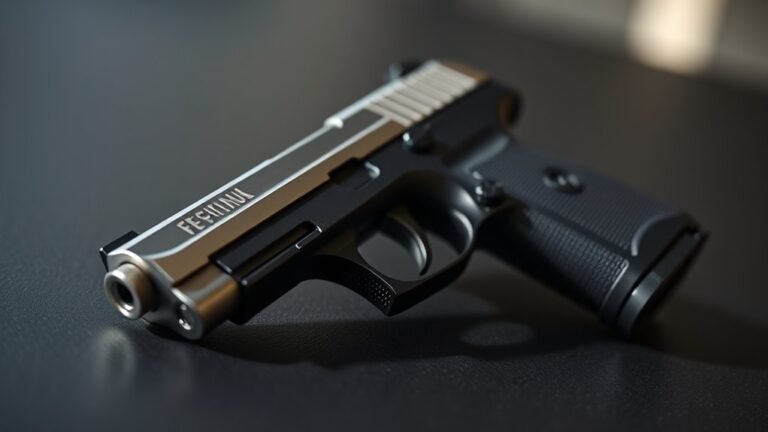
You’ll notice five key differences between pistols and revolvers when it comes to their design and functionality. Pistols use a fixed chamber and typically come with magazines that hold more rounds, making them great for carrying a higher ammo capacity.
Revolvers, on the other hand, have a rotating cylinder that usually holds 5-6 shots, offering a more traditional approach.
Reloading pistols is faster because of their detachable magazines and automatic shell ejection. Revolvers require manual ejection of spent shells, which means reloading takes a bit longer.
Pistols are designed for rapid fire and higher capacity, while revolvers are known for their simple, reliable mechanics and fewer chances of malfunction.
Keep exploring these differences to find out which one suits your needs best!
Key Takeaways
- Revolvers have a rotating cylinder with 5-6 chambers, while pistols use a fixed chamber with detachable magazines holding 6 to 30+ rounds.
- Revolvers are manually loaded and ejected one round at a time, whereas pistols automatically eject spent casings and reload via magazine swaps.
- Pistols offer faster reloading and higher ammunition capacity compared to the slower, manual reloading process of revolvers.
- Revolvers feature simpler, more robust mechanisms with fewer moving parts, enhancing reliability and reducing malfunctions.
- Pistols have lighter, streamlined designs suited for rapid fire and quick chambering, unlike the heavier, more rugged revolver action.
Pistols vs. Revolvers: Key Design Differences

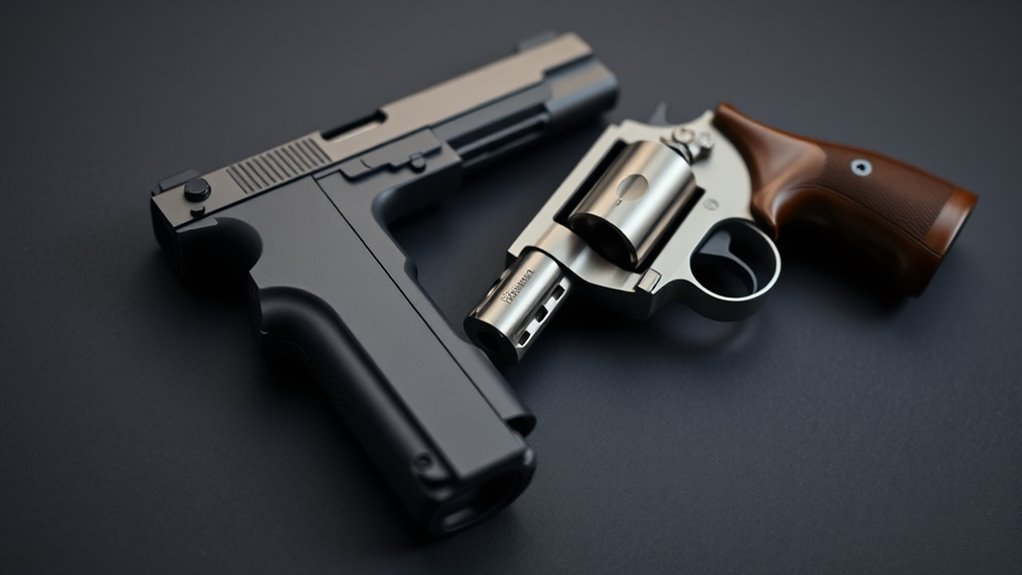
Although both pistols and revolvers serve the same basic purpose, their designs differ considerably. When you handle a revolver, you’ll notice its rotating cylinder holds multiple chambers, each aligned with the barrel as you pull the trigger.
This firing mechanism contrasts with a pistol’s fixed chamber and slide, where cartridges feed from a detachable magazine. Loading a revolver involves swinging out or tilting its external cylinder, making each chamber visible, while pistols require you to insert or remove the magazine internally.
The revolver’s action is generally heavier and more robust, designed to withstand the stresses of this unique firing mechanism. In contrast, pistols favor lighter, streamlined designs.
Understanding these design differences helps you appreciate how each firearm operates and feels in your hands. It’s pretty interesting once you get a feel for it!
Ammunition Loading and Capacity Compared
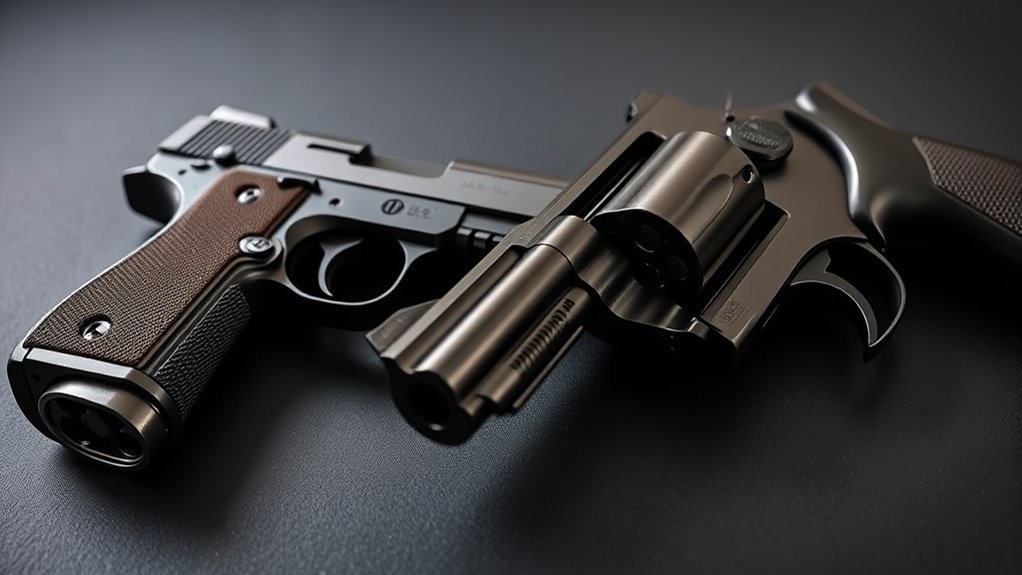
When you load a revolver, you insert rounds one by one into each chamber of its rotating cylinder, which usually holds 5 to 6 rounds. Revolvers have a lower ammunition capacity compared to semi-automatic pistols, which use a detachable magazine to hold anywhere from 6 to over 30 rounds, depending on the model.
Reloading a revolver means opening the cylinder, ejecting spent casings, and manually inserting new rounds or using speedloaders. In contrast, with pistols, you remove the magazine by pressing the magazine release, reload it with rounds, and reinsert it before chambering a round by racking the slide.
Semi-automatic pistols offer quicker reloading thanks to higher magazine capacity and ease of swapping magazines, whereas revolvers rely on slower, individual loading of their chambers. It’s a bit of a trade-off between capacity and simplicity when choosing between the two.
Shell Ejection: How Pistols and Revolvers Differ
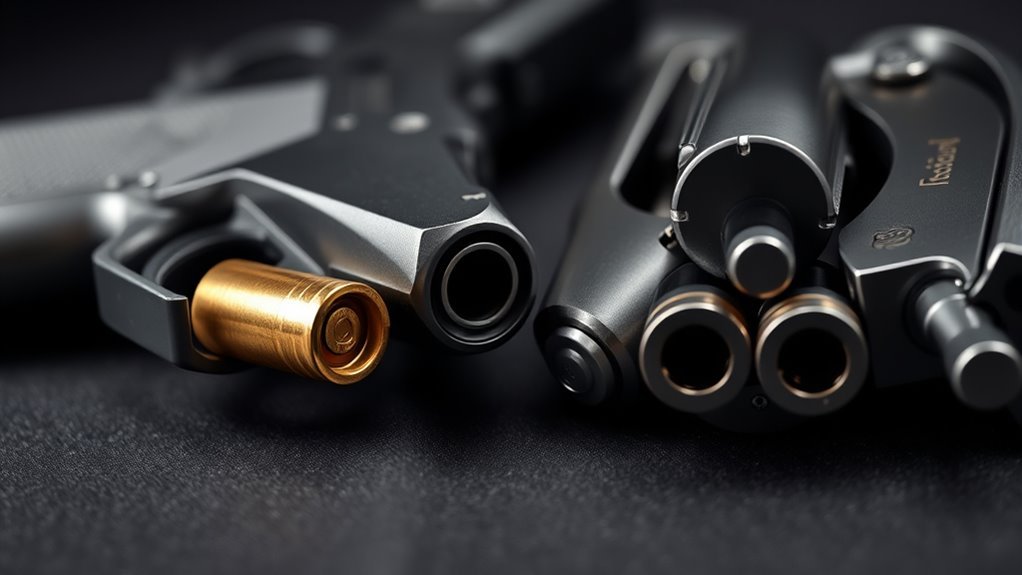
Since revolvers hold spent shell casings inside their cylinders, you need to manually eject them before reloading. This manual ejection is done using an ejector rod, which pushes out the spent shells one by one.
In contrast, semi-automatic pistols feature automatic ejection — a mechanical ejector expels spent shell casings through the ejection port each time you fire, streamlining the process.
| Feature | Revolvers | Semi-Automatic Pistols |
|---|---|---|
| Shell Ejection | Manual ejection via ejector rod | Automatic ejection via ejection port |
| Spent Shell Casings | Retained inside the cylinder | Ejected automatically |
| Reloading Speed | Slower due to manual ejection | Faster due to automatic ejection |
This difference in shell ejection impacts your reloading speed and convenience. So, depending on what you value—speed or simplicity—this is something to keep in mind.
Advantages of Pistols: Faster Reloads and More Ammo
Because pistols use detachable magazines, you can reload them much faster than revolvers, which require manually inserting each round. Semi-automatic pistols feature a magazine release that lets you eject an empty detachable magazine instantly, enabling quick reloading and reducing reloading time considerably.
High-capacity magazines boost your ammunition capacity, often holding 15 to 30 rounds, compared to the 5 or 6 rounds in revolvers. This extended firepower allows for rapid fire without frequent pauses.
The design of these pistols facilitates faster chambering rounds, helping you maintain consistent shooting speed. Overall, pistols offer superior quick reloading and larger ammo reserves, making them ideal when you need efficient firepower and minimal downtime during use.
Advantages of Revolvers: Simplicity and Reliability
How does a revolver maintain its reputation for dependability? It’s all about its simple design and mechanical reliability. With fewer moving parts, you face fewer malfunctions.
A revolver’s simple design and fewer moving parts lead to exceptional mechanical reliability and fewer malfunctions.
The manual operation means you don’t rely on complex feeding systems, which enhances durability, especially in adverse conditions. You’ll find revolvers require low maintenance and are less prone to jams since there’s no slide or ejector system.
Here’s why revolvers stand out for you:
- Simple mechanical design reduces malfunctions
- Fewer moving parts increase reliability
- Low maintenance with no complex feeding mechanisms
- Durable and reliable even in adverse conditions
When you want a firearm that’s straightforward and dependable, a revolver’s simplicity and reliability make it a solid choice.
Frequently Asked Questions
Is a Glock Considered a Revolver?
No, a Glock isn’t considered a revolver. You’ll find it’s a semi-automatic pistol with a magazine, striker-fired system, and fixed chamber, unlike revolvers that have rotating cylinders and external hammers.
Which Is Safer, a Pistol or a Revolver?
You might think revolvers are safer, and they often are for beginners due to simplicity. But if you handle a pistol carefully, with good discipline, you’ll be just as safe, no matter which you choose.
Why Buy a Revolver Over a Pistol?
You’d buy a revolver over a pistol because it’s simpler, more reliable, and easier to maintain. You won’t deal with jams or magazines, making it great for beginners and anyone wanting straightforward, dependable performance.
Is a Revolver Stronger Than a Pistol?
You might think revolvers are superheroes because of their heavy frames, but pistols aren’t exactly fragile cupcakes. Both can handle serious pressure if built right, so don’t let the “strength” debate shoot you in the foot!
Conclusion
When you hold a pistol, imagine the smooth slide clicking back, ready for a quick reload and a higher round count. Picture a revolver’s sturdy cylinder, spinning with reliable simplicity, no fuss, just solid performance.
Whether you crave speed or trust, each has its charm. Knowing these differences helps you choose the right tool, like picking the perfect companion for your next adventure—fast and flexible or dependable and steady.
Understanding the key differences between a pistol and a revolver is essential for making an informed choice. Pistols offer quicker reloads and larger magazine capacities, making them ideal for situations where speed and firepower matter. Revolvers, on the other hand, provide unmatched reliability and straightforward design, perfect for those who value simplicity and dependability. So, whether you prefer a pistol’s quick reload and higher round count or a revolver’s solid performance and ease of use, knowing these distinctions will help you select the right firearm for your needs.