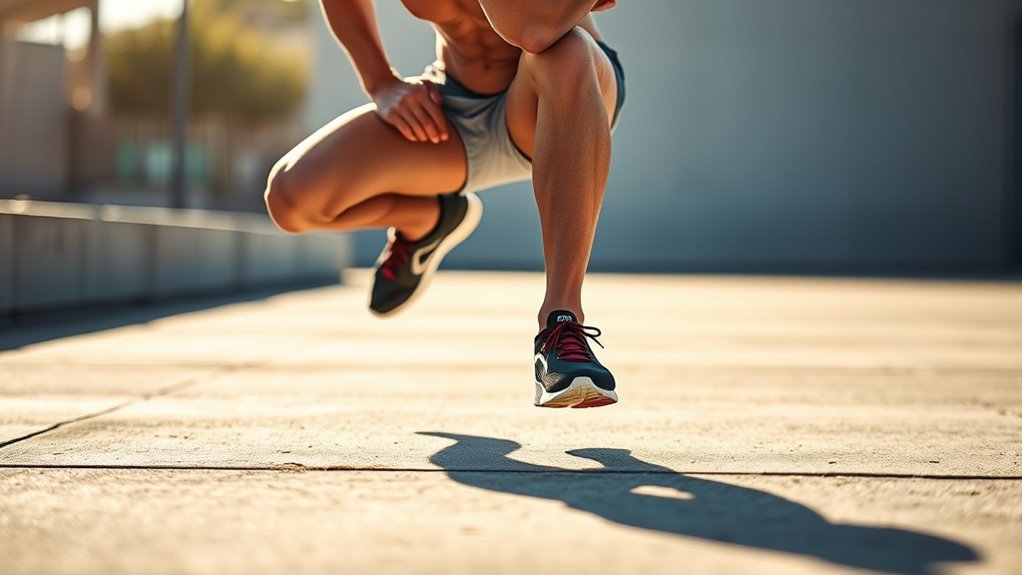
What Are Pistol Squats?
Pistol squats are deep, one-legged squats that really challenge your balance, strength, and mobility. They require you to have strong ankles, hips, and knees to control the movement smoothly.
Plus, keeping proper alignment throughout is key.
These squats test your coordination and unilateral strength, so you need both flexibility and stability to do them well. Because they can be tough, most people start with mobility work and assisted variations before moving on to full pistol squats.
If you stick with it, you’ll learn how to build the right strength and balance to master pistol squats. They’re a great way to improve your overall leg strength and body control.
Give them a try and see how far you can go!
Key Takeaways
- Pistol squats are single-leg deep squats that require balance, strength, and mobility. They really put your ankle, hip, and knee flexibility to the test to help you reach full depth safely.
- This exercise demands a lot of unilateral leg strength to keep you stable and in control throughout the movement. Proper coordination and alignment are key to making sure your descent and ascent are smooth.
- Pistol squats are great for building advanced lower-body strength. Plus, they help improve your balance and coordination over time.
Why Are Pistol Squats So Tough?
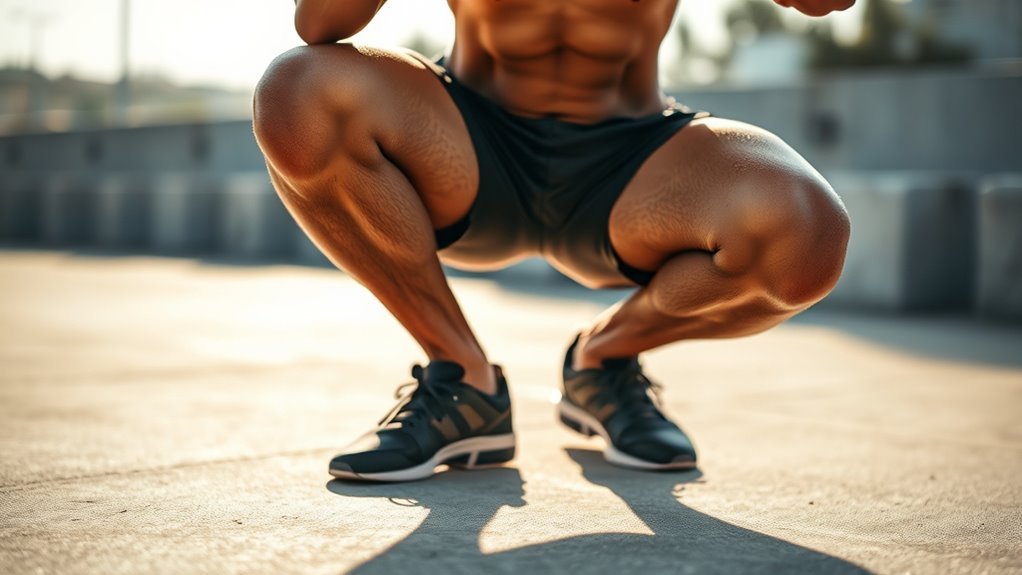
Although pistol squats look impressive, you’ll find they’re tough because they demand exceptional ankle, hip, and knee mobility that many people don’t have. To perform a pistol squat, you need excellent hip mobility to achieve a deep squat, allowing a full range of motion without compromising form.
Ankle mobility is equally vital, as limited flexibility restricts your ability to maintain balance on one leg throughout the movement pattern. Unlike a regular bodyweight squat, pistol squats require unilateral strength, challenging your muscles to stabilize and control descent and ascent independently.
This one-leg exercise also tests your balance, making it difficult to maintain proper alignment. Mastering the coordination between mobility, strength, and balance is essential for safely executing the pistol squat’s full range of motion.
How To Build Strength And Mobility And Progress Toward Pistol Squats
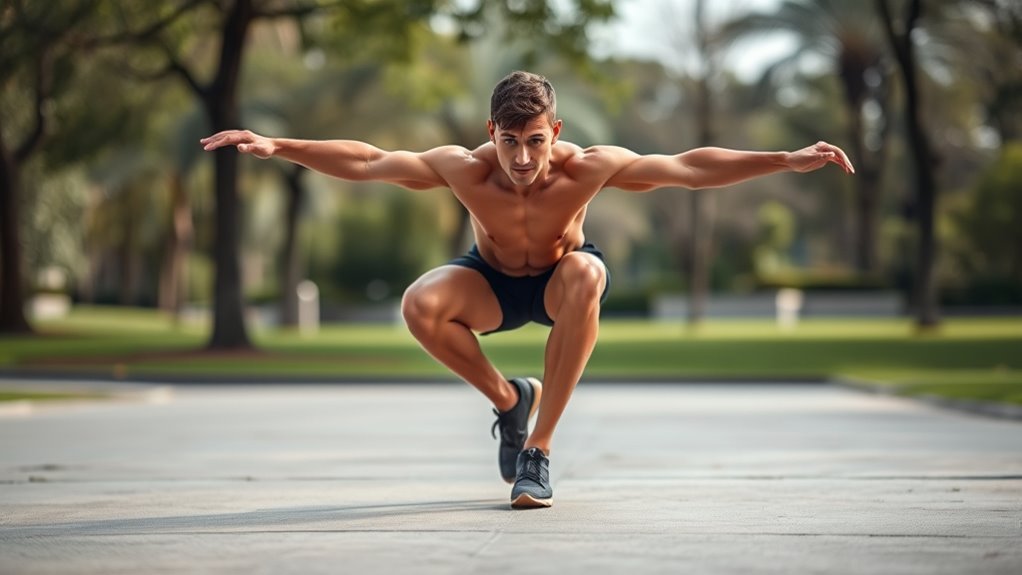
Mastering pistol squats requires more than just understanding why they’re challenging—you need to actively build the strength and mobility that support the movement.
Start with mobility work focusing on ankle dorsiflexion and hip flexibility to achieve proper depth. Progression is key: begin with assisted pistol squats and supported single-leg stands to develop stability and body control.
Begin with ankle and hip mobility, then progress to assisted pistol squats for stability and control.
Strengthen your legs unilaterally through Bulgarian split squats, step-ups, and glute bridges to meet your body’s needs. Consistent mobility routines combined with these strength exercises help address limitations and prepare you for the full pistol squat.
Focus on controlled descent and ascent, using support tools if needed, to build confidence. With patience and dedication, you’ll progress steadily toward performing a smooth, unassisted pistol squat.
Frequently Asked Questions
Can an Average Person Do a Pistol Squat?
Yes, you can do a pistol squat with consistent practice. You’ll need to improve your ankle, hip, and knee mobility, plus build single-leg strength. Start with regressions, stay patient, and gradually progress to full depth.
What Are Pistol Squats Good For?
Pistol squats are your secret weapon to build strong, balanced legs and rock-solid core stability. They boost your mobility, prevent injuries, and sharpen your athletic edge, helping you move through life with power and grace.
Is Pistol Squat Better Than Squat?
Pistol squats aren’t necessarily better than regular squats; they challenge your balance and mobility more, but regular squats let you lift heavier and build overall strength. Choose based on your goals and experience level.
Why Can’t People Do Pistol Squats?
You can’t do pistol squats because your ankle mobility, hip flexibility, and single-leg strength probably haven’t caught up yet. It’s funny how all those little weaknesses decide to show up right when you try this move!
Conclusion
Pistol squats might feel like climbing a steep mountain, but with each step, you’re building strength and opening your body’s hidden doors. Keep stretching your limits and steady your balance like a tightrope walker—soon, you’ll glide down into that one-legged squat with grace and power.
Remember, every small progress is a brushstroke painting your masterpiece of mobility and control. Stay patient, and you’ll conquer the pistol squat mountain before you know it.
Mastering pistol squats takes time and practice, but the payoff is huge. This exercise boosts single-leg strength, improves balance, and enhances overall mobility. So, keep working on your form, stay consistent, and enjoy the journey of building power and control in your body. With patience and persistence, pistol squats will become a natural part of your fitness routine.