Using a Thumb Safety on a Pistol
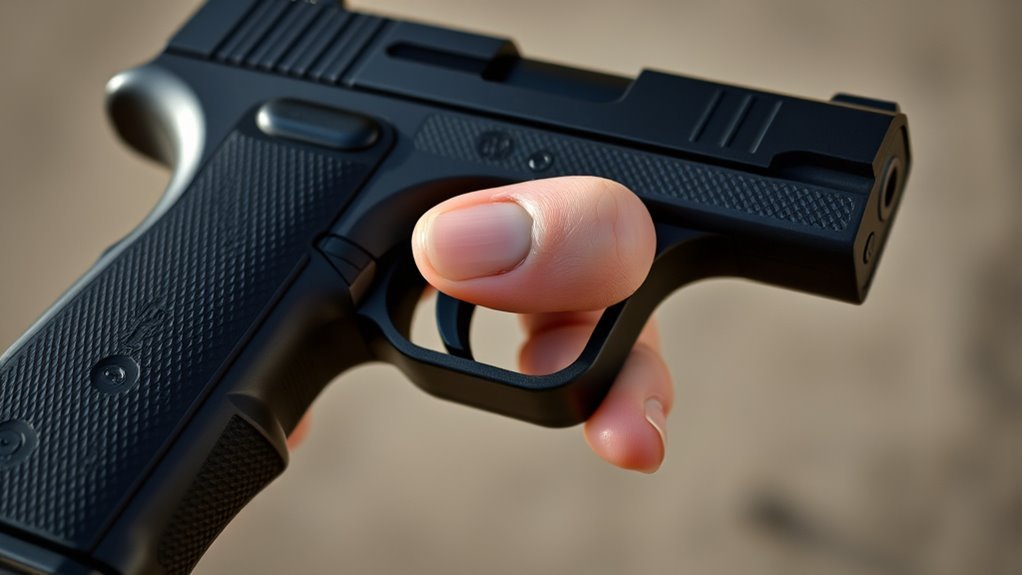
Using a thumb safety on your pistol gives you a manual way to prevent accidental firing by physically blocking the trigger or firing mechanism. This safety feature is especially useful for those who want an extra layer of control when handling their firearm.
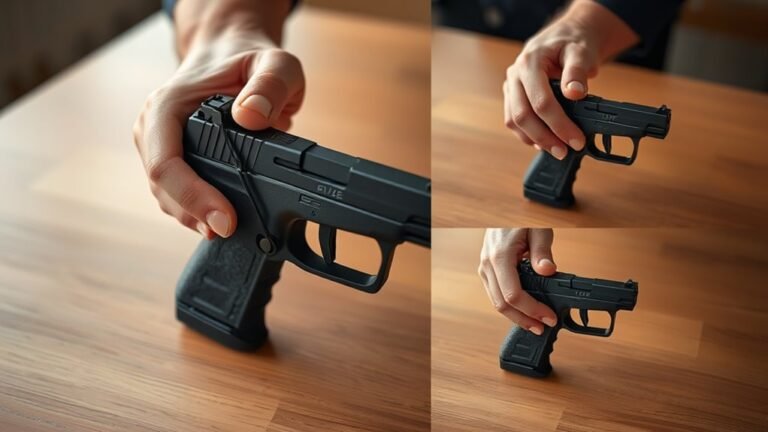
You can quickly engage it with your thumb when carrying or holstering. Then, when you’re ready to fire, simply flip it down.
While a thumb safety adds an important safety layer, it also requires practice. This helps you avoid slowing your response in critical moments.
If you want to understand both the benefits and drawbacks, there’s more essential info to contemplate.
Key Takeaways
- A thumb safety is manually engaged by flipping a lever up. This blocks the trigger or firing pin movement to prevent accidental discharge.
- It lets you quickly activate and deactivate it with your thumb. This way, you can stay ready to fire while carrying or holstering.
- Using the thumb safety adds a physical barrier against unintended firing. So, it really helps boost overall firearm safety during handling.
- Proper training is key to managing the thumb safety well. You don’t want it to slow you down in a self-defense situation.
- While it adds security, remember it’s an extra step before firing. So, there’s a bit of a trade-off between safety and speed.
How a Thumb Safety Works on Pistols
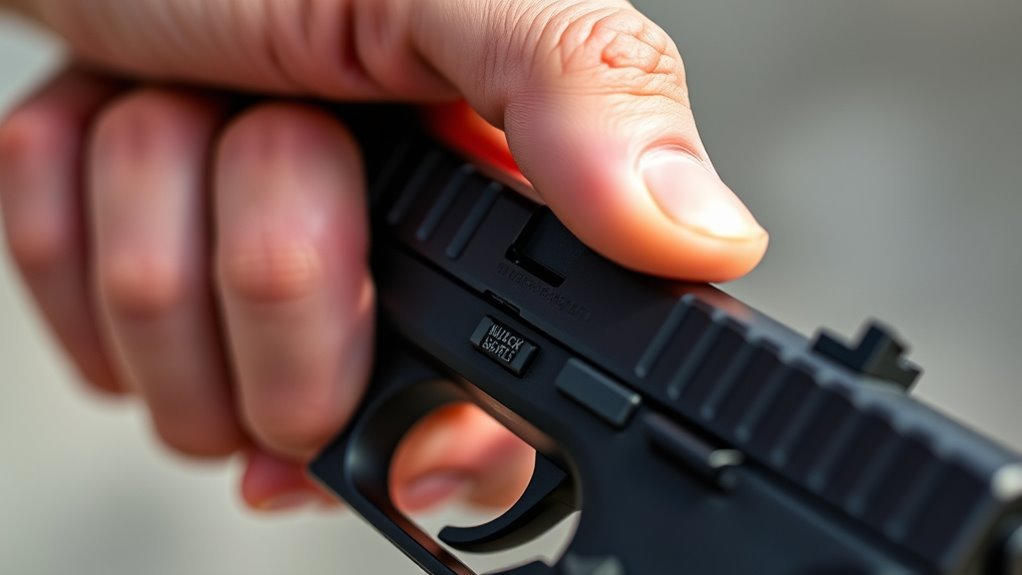
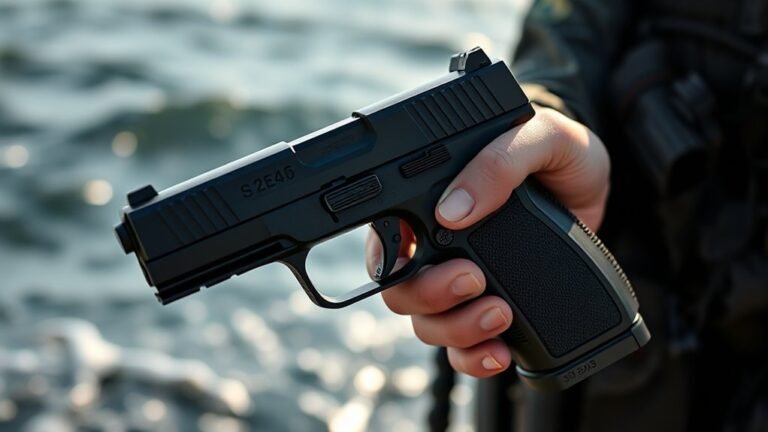
How does a thumb safety work on a pistol? The thumb safety is a manual safety feature that has a safety lever, usually located on the side of the pistol. You engage the safety by flipping this lever up, which activates the safety mechanism.
This action blocks the trigger or sear movement, creating a trigger block that prevents the firing pin from striking the primer. Basically, it provides firing pin safety. When you disengage the safety by flipping the lever down, you allow the internal firing mechanism to function.
That means the pistol can fire when you pull the trigger. It’s designed for quick activation with your shooting hand’s thumb. It’s essential to engage the thumb safety during carry or holstering to maintain proper firearm safety at all times.
Pros and Cons of Using a Manual Thumb Safety on Pistols
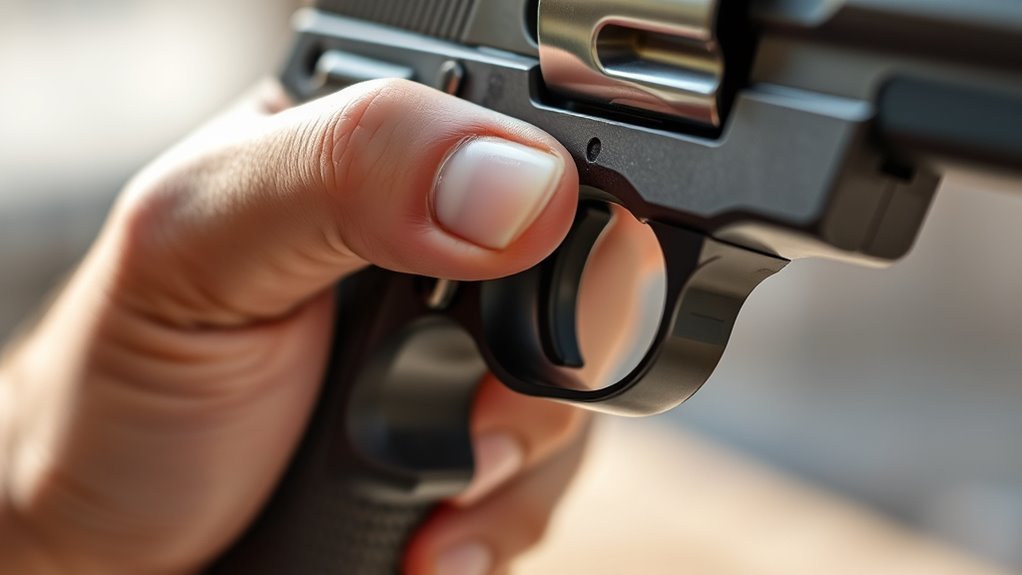
Although a manual thumb safety adds an extra step before firing, it gives you a valuable physical barrier that can help prevent accidental discharges when used correctly.
A manual thumb safety provides a crucial physical barrier to help prevent accidental discharges when properly used.
The thumb safety lets you carry with safety engaged, adding a vital layer of security during firearm handling or holstering. However, it may slightly slow your response time in self-defense situations due to the need to disengage it before shooting.
With proper training, you can reliably manage the engaged safety, reducing risks linked to accidental discharge. Unlike trigger safety features that act automatically, a manual safety requires conscious operation, so consistent practice is essential.
Ultimately, using a thumb safety balances added security with the need for smooth, confident handling under pressure.
Frequently Asked Questions
What Does “Mexican Carry” Mean?
“Mexican carry” means you carry a gun without a chambered round, often with the trigger exposed. It’s risky because it increases accidental discharge chances. Most experts advise against it for safety reasons.
Which Pistols Have Thumb Safety?
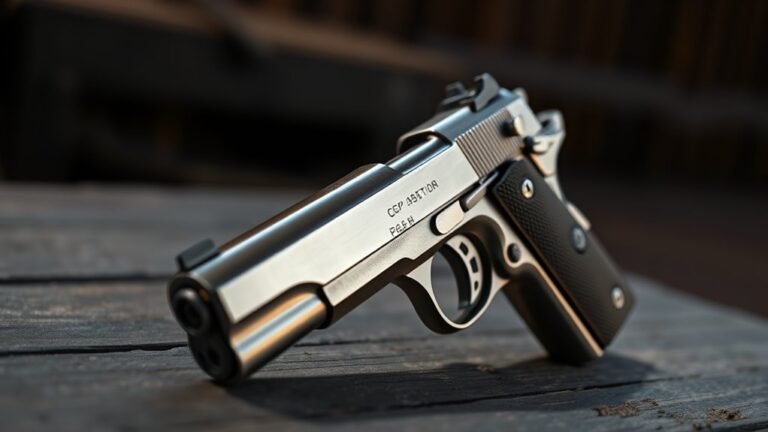
You’ll find thumb safeties on pistols like the 1911, Ruger Security 9, and SIG Sauer P320. Some M&P Shield Plus models have them too. Remember, not all pistols include this feature, so check each model carefully.
Why Don’t Glocks Have Thumb Safety?
Glocks don’t have a thumb safety because they prioritize simplicity and speed. You’ll rely on their internal safeties and trigger pull, letting you deploy quickly without fumbling with manual safeties under pressure.
Is a Trigger Safety Better Than a Thumb Safety?
A trigger safety is often better for you in rapid situations since it fires only when you pull the trigger, while a thumb safety requires extra manipulation, which can slow you down under stress or in emergencies.
Conclusion
Using a thumb safety on your pistol puts an extra layer of control right at your fingertips, giving you peace of mind when handling your firearm. While it might slow you down a split second, that pause can be the difference between safety and accident.
Think of it as a trusty gatekeeper—sometimes a little extra caution is just what you need to keep things locked down and secure in critical moments. Having that thumb safety engaged means you’re actively prioritizing safe gun handling.
In the heat of the moment, that small action can prevent unintended discharges and help you maintain control. So, using a thumb safety on a pistol is more than just a habit—it’s a smart safety practice. It’s about being responsible and confident, knowing you have an added layer of protection when you need it most.