How Much Does a Rifle Weigh?
A typical rifle weighs between 5 and 15 pounds, depending on its purpose and design. Whether you’re into hunting, target shooting, or tactical use, the weight of your rifle really matters. It affects how easily you can carry it, how steady your aim is, and even how much recoil you feel.
If you’re hunting and need portability, lighter rifles around 5 to 9 pounds are common. They’re easier to carry over long distances and won’t tire you out as quickly.
On the other hand, heavier options, up to 15 pounds, help manage recoil and improve stability for long shots. Materials like steel or carbon fiber, barrel style, and added accessories also affect weight.
Understanding these factors will help you choose the right balance and handling for your needs. So, think about what you’ll be using the rifle for, and pick a weight that feels comfortable and practical.
Typical Rifle Weights and Their Impact on Usage
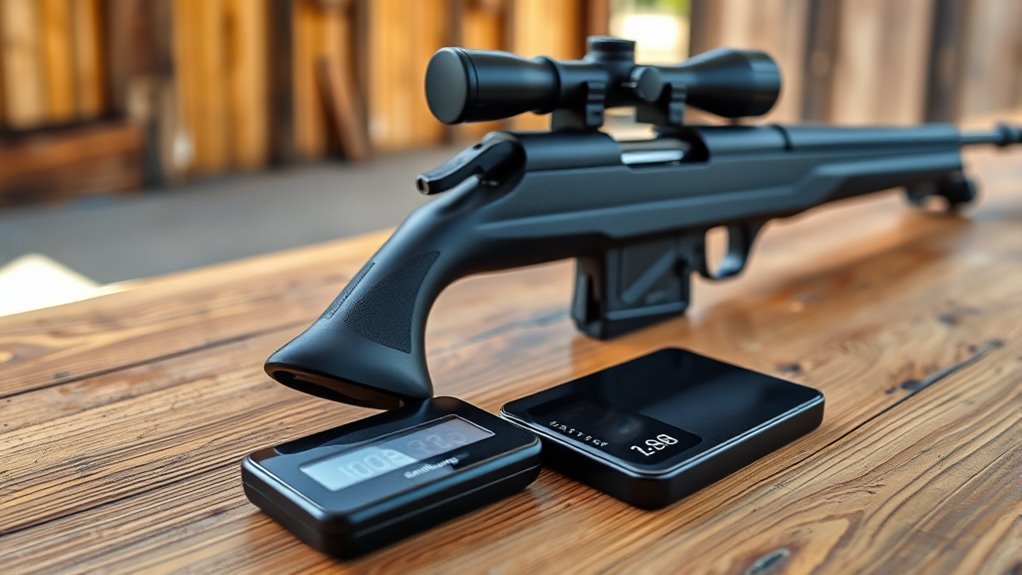
When you choose a rifle, its weight plays a crucial role in how you’ll use it. Hunting rifles typically weigh between 5 to 9 pounds, with scoped models tipping the scale around 9 to 11 pounds.
If you prefer a light weight, especially for mountain rifles, a rifle weighing 5 to 7 pounds helps with portability and ease of handling during long hikes. On the other hand, a heavier rifle—between 10 to 15 pounds—offers better recoil management and the stability needed for precise, long-range shots.
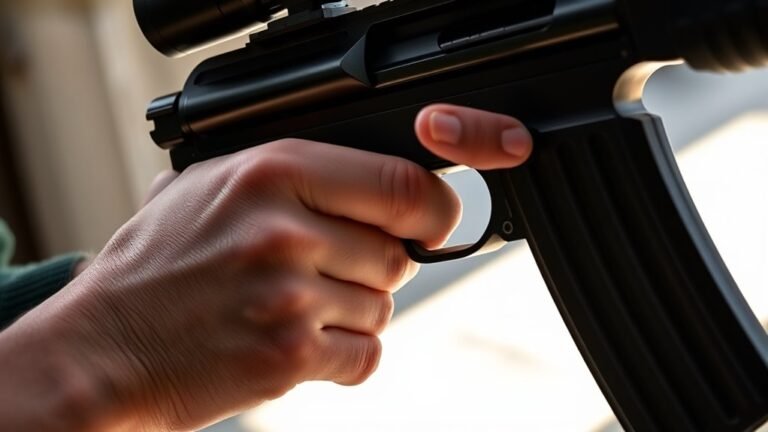
The overall weight affects your fatigue and shooting accuracy, so you’ll want to contemplate the balance point and how the weight of a rifle impacts its handling. Choosing the right rifle weight ensures you meet your specific hunting demands efficiently.
Factors Affecting Rifle Weight and Balance
Understanding how different factors influence a rifle’s weight and balance helps you make better choices for your shooting needs. The material used, such as steel, titanium, or carbon fiber, directly affects the rifle’s mass and feel.
Barrel contour, whether a lightweight pencil or heavy bull barrel, changes how sturdy or nimble your rifle feels. Stock material also plays a key role; wood adds weight, while synthetic or carbon fiber stocks reduce it.
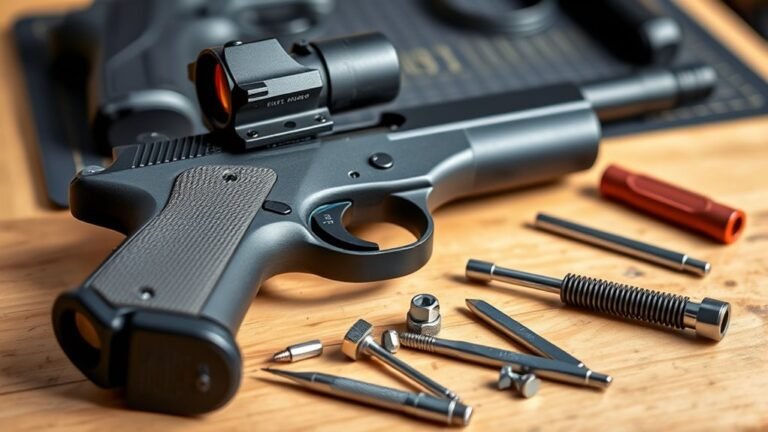
Accessories like scopes, bipods, and suppressors add extra weight and shift the balance. Internal components and internal modifications, including added weights for stability, influence weight distribution and handling.
Conclusion
Now that you know how much rifles typically weigh and what affects their balance, you might think choosing one is straightforward. But wait—there’s more to ponder than just numbers on a scale.
How that weight feels in your hands, how it influences your aim and endurance, can change everything. The right rifle isn’t just about the specs; it’s about how it fits *you*.
When considering how much does a rifle weigh, remember it’s not just the total pounds that matter. The distribution of weight and how comfortable the rifle feels during use are crucial. A well-balanced rifle can improve your shooting accuracy and reduce fatigue over time.
Ultimately, the best rifle weight is one that complements your strength, shooting style, and the type of activity you’re doing. Choosing the perfect rifle means balancing the technical details with personal comfort to find your ideal match. Are you ready to find the perfect one for you?