Where Is the Safety on a Pistol Located?
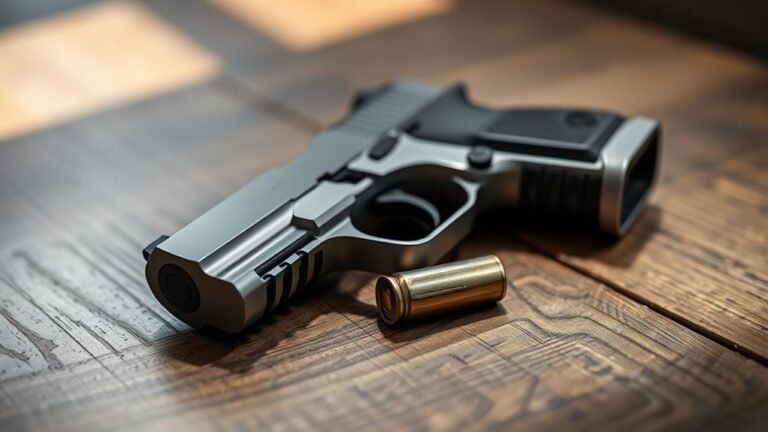
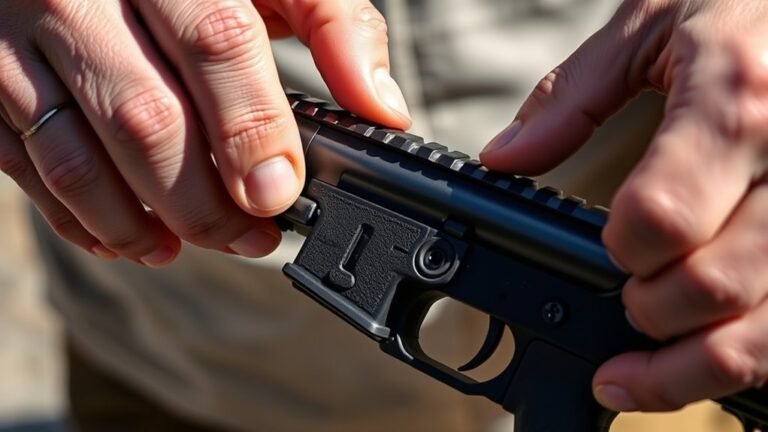
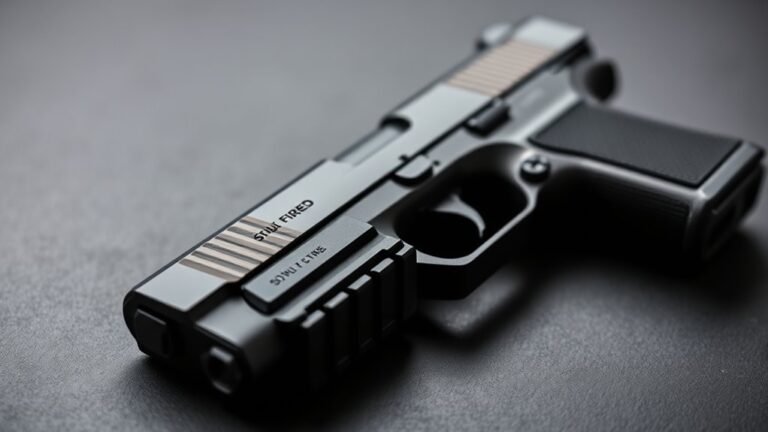
You’ll typically find the manual safety on a pistol near your thumb, positioned on the frame for easy, quick access without shifting your grip. This placement helps you engage or disengage the safety smoothly while keeping control.
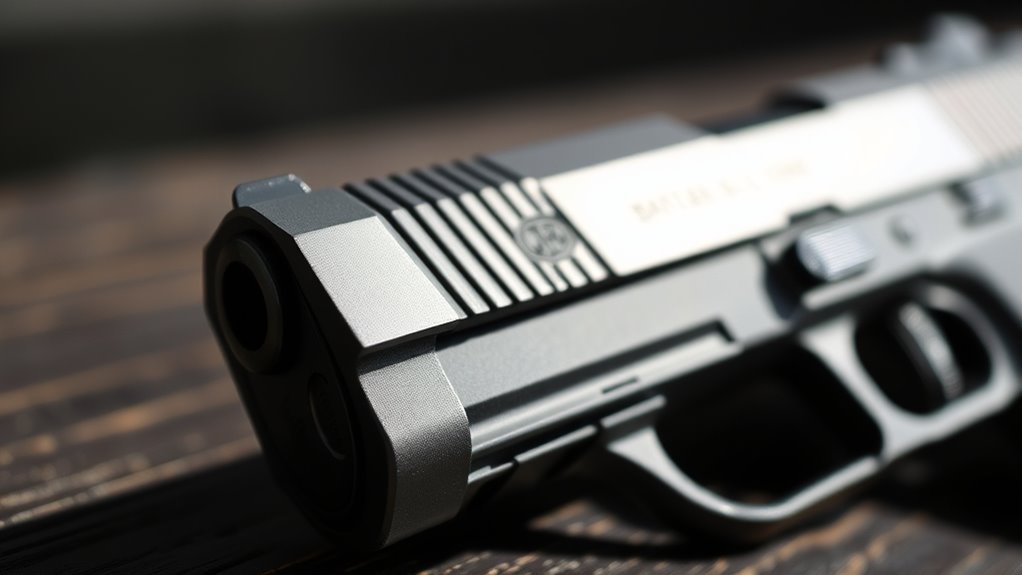
Some pistols have the safety located on the slide, which is often ambidextrous, making it convenient for both right- and left-handed shooters.
Other pistols don’t have an external manual safety at all. Instead, they rely on internal safeties like firing pin blocks to prevent accidental discharge.
These internal mechanisms work automatically, so there’s no manual switch to flip.
Understanding where these safeties are and why some pistols use internal systems can boost your confidence and help you handle your firearm more safely.
Key Takeaways
- Manual safeties are typically located on the pistol frame near the thumb for easy and ergonomic access. Some pistols have safeties positioned on the slide, often designed to be ambidextrous for both hands.
- Safety switches may be found on both sides of the firearm to accommodate left- and right-handed users. Certain pistols use internal safeties without external switches, such as firing pin blocks and drop safeties.
- The exact safety location varies by firearm design, but it is usually placed for quick engagement without shifting grip. So, you can quickly engage or disengage it without fumbling around.
Where Are Manual Safeties Located on Pistols?
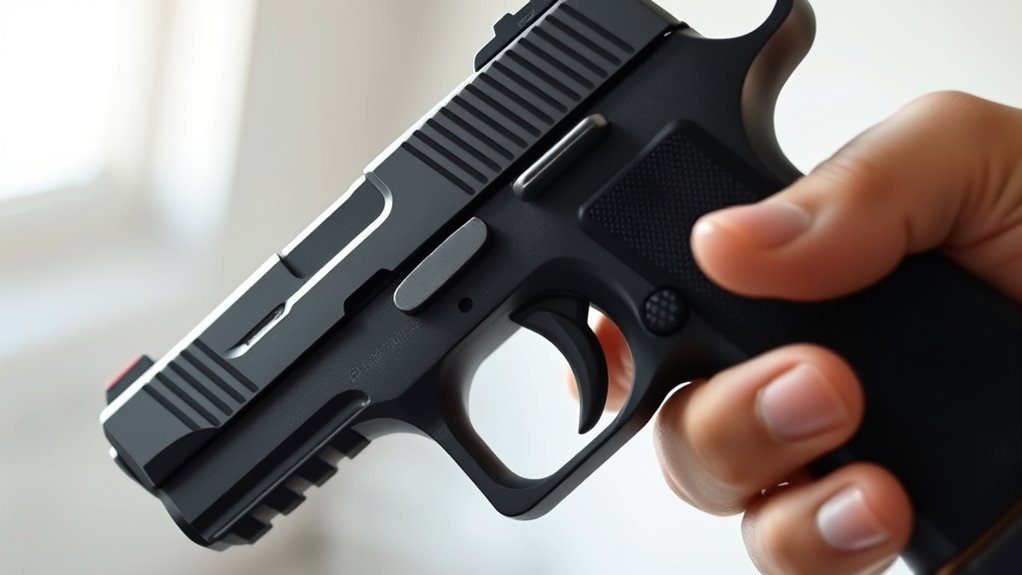
While the exact placement varies by design, you’ll typically find manual safeties on pistols located on the frame near your thumb for easy access. This safety position helps you quickly engage or disengage the safety mechanism without shifting your grip.
Depending on the firearm design, the manual safeties may also appear on the slide, often allowing for ambidextrous use with safety switches on both sides. Some pistols come with a lever safety you flip up or down, integrated into the frame or slide.
Knowing the specific location of your pistol’s safety is essential because each model’s safety mechanism operates differently. Regularly checking the safety switch ensures it functions properly, helping you handle your firearm confidently and safely.
Why Do Some Pistols Use Internal Safeties Instead of Manual Ones?
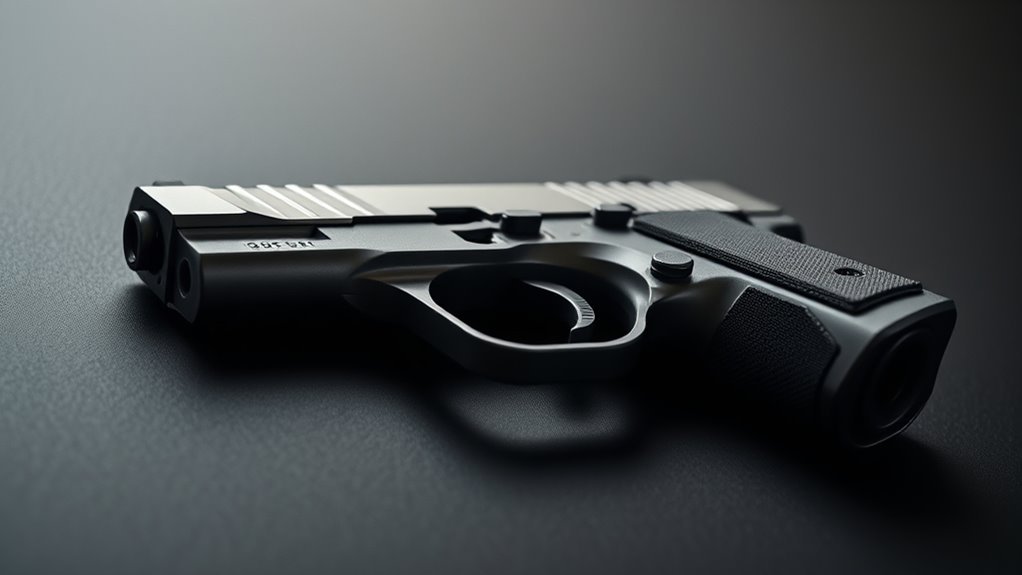
You’ve learned where manual safeties are located and how they function, but not all pistols include these external mechanisms. Many modern firearms rely on internal safeties, integrated into the firearm design, to enhance safety without needing a manual safety or external safety switch.
Internal safeties like firing pin blocks and drop safeties automatically prevent accidental discharges, especially in striker-fired pistols.
Internal safeties such as firing pin blocks and drop safeties help prevent accidental discharges automatically.
Here’s why some pistols use internal safeties instead of manual ones:
- They reduce user error by eliminating the need to engage a safety switch.
- Internal safeties provide consistent safety mechanisms without manual intervention.
- This approach simplifies the firearm design, making pistols easier to handle and quicker to ready.
Frequently Asked Questions
How Do I Engage the Safety on a Pistol?
You engage the safety on a pistol by flipping or sliding the safety lever, usually located near the trigger or slide, into the “on” position. Make sure it clicks, so you know the gun won’t fire accidentally.
Can a Pistol Be Fired With the Safety On?
Of course, you can totally fire a pistol with the safety on—if you’re aiming for disaster. In reality, the safety stops the trigger from moving, so you won’t fire unless you disengage it first. Always check!
Are Safeties Standard on All Pistols?
No, not all pistols have safeties. You’ll find some models rely on trigger or firing pin safeties instead. Always check your specific pistol to understand its safety features and how to use them properly.
How Can I Tell if the Safety Is on or Off?
You might think it’s tricky, but you can tell if the safety’s on by checking the lever’s position or color indicator—usually red means off, no color means on. Always double-check before handling your pistol.
Does the Safety Affect Trigger Pull Weight?
Yes, the safety can affect trigger pull weight. When engaged, it often blocks the trigger movement, making it harder or impossible to pull. Disengaged, the trigger feels lighter and moves more freely for firing.
Conclusion
Now that you know where pistol safeties are located, you can handle your firearm with more confidence. Whether it’s a manual safety on the slide or frame, or an internal safety hidden inside like a secret from a Wild West holster, each plays a vital role in preventing accidental discharge.
Remember, mastering your pistol’s safety features is like having a trusty six-shooter—you want it ready, reliable, and secure every time. Understanding the location and function of your pistol’s safety helps you stay in control and reduces the risk of accidents.
So, stay sharp and safe out there! Knowing where the safety on a pistol is located isn’t just about handling your firearm—it’s about respecting it. Keep practicing, stay alert, and make safety your top priority every time you pick up your pistol.