How to Identify the First Striker-Fired Pistol
You can identify the first striker-fired pistol by looking for a smooth, snag-free design without an external hammer. These early striker-fired pistols, like the Borchardt C93 and Luger P08, use an internal striker mechanism instead of a traditional firing pin or hammer.
This design gives them a clean, minimalist look that’s easy to spot.
These pistols focus on reliability through their internal firing system. Unlike other designs, there’s no external hammer to worry about catching on something.
If you’re curious about how this design evolved and influenced modern pistols, there’s plenty more to discover about its history and impact. It’s a fascinating journey for anyone interested in firearm development.
Key Takeaways
- Identify pistols with no external hammer and an internal striker firing mechanism. These types usually have a clean, sleek look since the firing system is all inside.
- Look for early models like the Borchardt C93, which was introduced in the late 19th century. It’s one of the first designs that featured this kind of mechanism.
- Note the minimalist, smooth design focused on internal firing systems. You won’t see the typical external parts that pop out on other pistols.
- Recognize the Luger P08 from 1908 as an early striker-fired example. It’s a classic that helped define this style.
- Confirm absence of external safeties and hammers typical of early striker-fired pistols. This clean design is a key giveaway when identifying them.
Identifying the First Striker-Fired Pistol: Key Features Explained
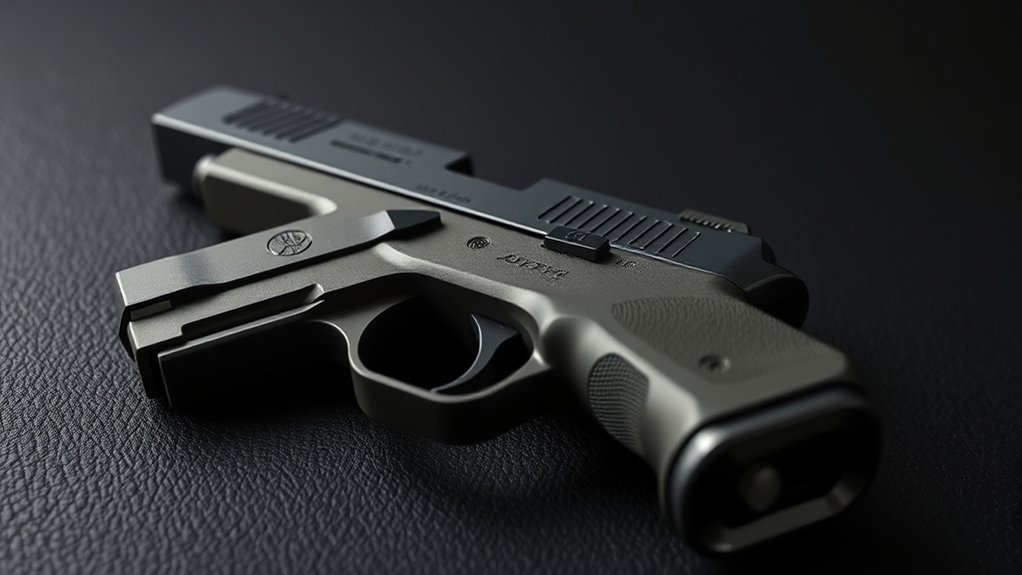
Although striker-fired pistols have evolved over time, you can identify the earliest models by their smooth, snag-free design and lack of an external hammer. These early models, like the Borchardt C93 and Luger P08, feature an internal striker mechanism, meaning you won’t see an external hammer.
When you look at a modern pistol such as the Glock 17, introduced in 1982, you’ll notice its polymer frame and internal firing system, which set it apart. Striker-fired guns generally offer a consistent trigger pull, unlike hammer-fired pistols with varied pulls.
The absence of external safeties or hammers in these pistols highlights their minimalist design, focusing on the internal firing system to deliver reliability and speed. Recognizing these features helps you spot the first striker-fired pistols easily.
Tracing the History of the First Modern Striker-Fired Pistol
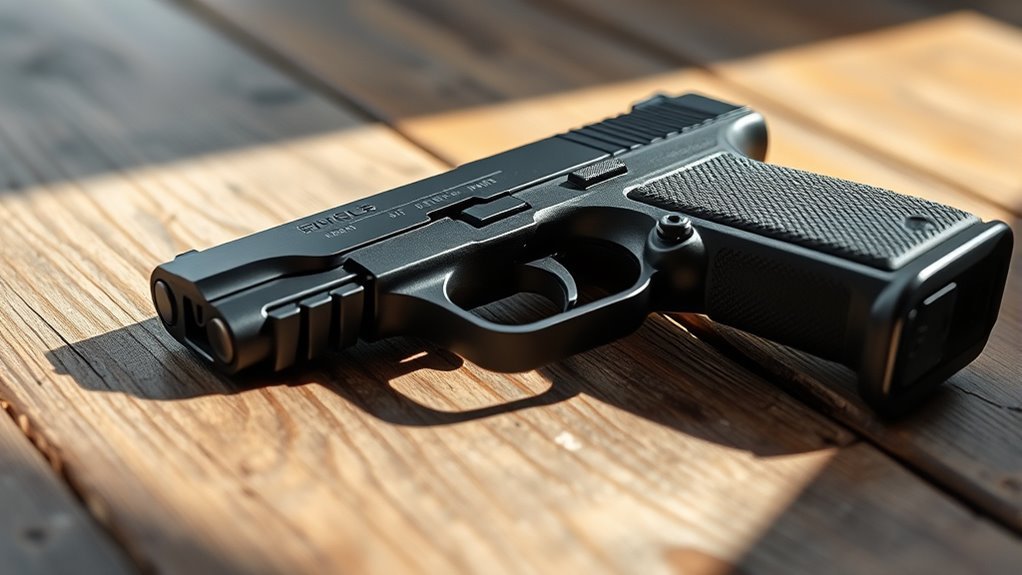
Where did the modern striker-fired pistol begin? It traces back to the late 19th century with Hugo Borchardt’s C93, which introduced an early striker system.
However, the Georg Luger-designed Luger P08, released in 1908, is widely recognized as the first modern striker-fired handgun. It featured an internal firing pin without an external hammer—a major technological shift.
Fast forward to 1970, the Heckler & Koch VP70 became the first polymer frame pistol with a striker-fired mechanism. This set the stage for future models.
The real breakthrough came with the Glock 17 in 1982. It popularized the striker-fired design combined with a polymer frame and the innovative Safe Action system.
These milestones collectively shaped the evolution of the modern handgun you see today. It’s pretty fascinating how each step built on the last, right?
Frequently Asked Questions
What Was the First Striker Fired Handgun?
You’ll find the first striker-fired handgun was the Hugo Borchardt C93, developed in the late 19th century. It set the stage for later designs like the Luger P08 and modern pistols you know today.
What Are the Different Types of Striker Fired Pistols?
Imagine handling a Glock; you’ll see polymer-frame striker-fired pistols. You’ll also find metal-frame types like the SIG P320. They differ in frame, safety features, and modularity, giving you various options based on your needs.
What Is the Best Striker Fired Pistol on the Market?
You’ll find the Glock 19 and Sig Sauer P320 among the best striker-fired pistols today. They balance reliability, safety, and ergonomics well, but your ideal choice depends on your size preference and intended use.
What Pistols Are Not Striker Fired?
Think of a classic clock’s ticking hammer—revolvers like the Smith & Wesson Model 10 and semi-autos like the M1911 use hammers, not strikers. So, when you see an external hammer, it’s not striker-fired.
Conclusion
Now that you’ve uncovered the key features and history of the first striker-fired pistol, you hold the map to a pivotal chapter in firearm evolution. Like a beacon lighting the way through fog, this knowledge sharpens your understanding and appreciation for modern pistols.
Keep this insight close—it’s more than history; it’s the foundation of innovation that still shapes every pull of the trigger today. Knowing how to identify the first striker-fired pistol gives you a deeper connection to the technology behind today’s popular handguns.
This understanding enriches your perspective on striker-fired mechanisms, making you more confident whether you’re discussing firearms, choosing a pistol, or simply appreciating the evolution of gun design. So, remember — the first striker-fired pistol isn’t just a piece of the past; it’s the blueprint for the future of firearms innovation.