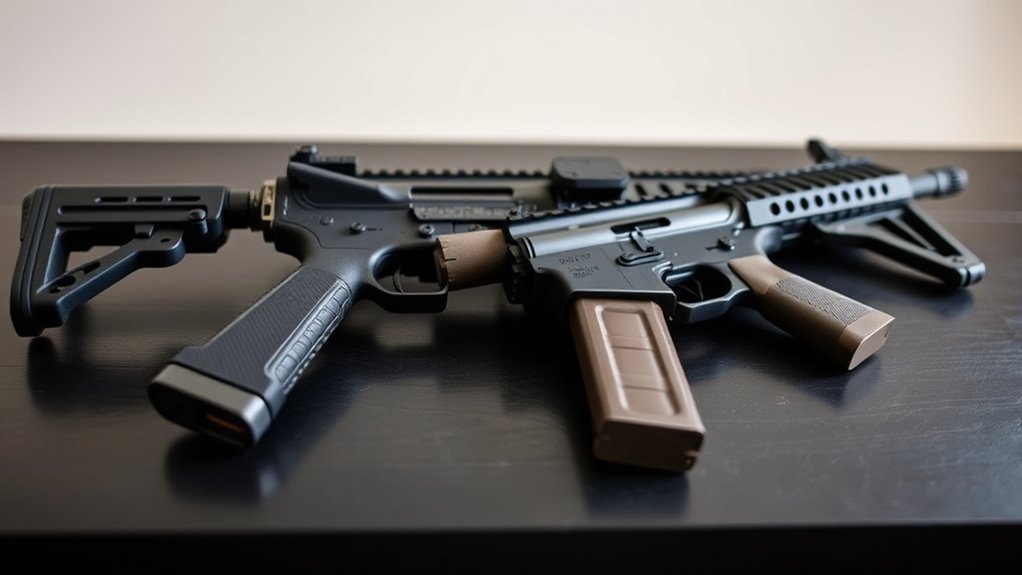
How to Tell AR Pistol vs SBR Differences
To tell an AR pistol from an SBR, start by checking if there’s a shoulder stock—AR pistols don’t have one, while SBRs do.
Both usually have barrels under 16 inches, but SBRs often measure over 26 inches in overall length when the stock is extended.
AR pistols typically use a pistol brace instead of a stock. This design difference is key to staying within legal guidelines.
Knowing these features helps you easily spot which is which.
Keep going, and you’ll get a clearer picture of their key differences and legal rules. It’s all about understanding how these firearms are set up and what the law says about them.
Key Takeaways
- An AR pistol lacks a traditional shoulder stock, while an SBR has one. Both have barrel lengths under 16 inches, so barrel length alone doesn’t distinguish them.
- AR pistols use a pistol brace or no brace, whereas SBRs have a stock for shoulder firing. Overall length under 26 inches typically indicates an AR pistol; over 26 inches with stock extended indicates an SBR.
- SBRs require ATF registration and a $200 tax stamp; AR pistols do not. So, while they might look similar at first glance, these details really set them apart.
How to Identify an AR Pistol: Design and Features
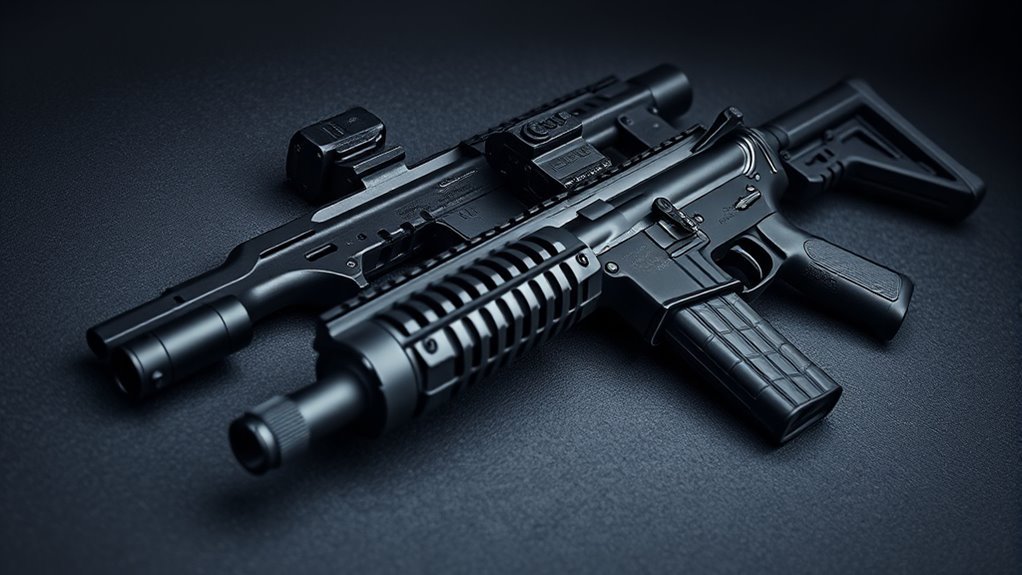
While an AR pistol shares many internal parts with an AR-15 rifle, you can identify it by its shorter barrel—less than 16 inches—and the absence of a traditional stock. Instead of a stock, an AR pistol uses a pistol brace or sometimes no brace at all, keeping its firearm classification distinct from rifles.
The pistol buffer tube doesn’t extend to form a shoulder stock, which means it’s not designed for shoulder firing like a rifle. Its overall length typically stays under 26 inches, making it more compact.
Although the internal components—like the upper receiver and bolt carrier group—are the same as an AR-15 rifle, the key differences in barrel length, stock presence, and intended use set the AR pistol apart clearly. It’s these features that help you tell them apart easily.
How to Identify an SBR: Legal and Practical Differences
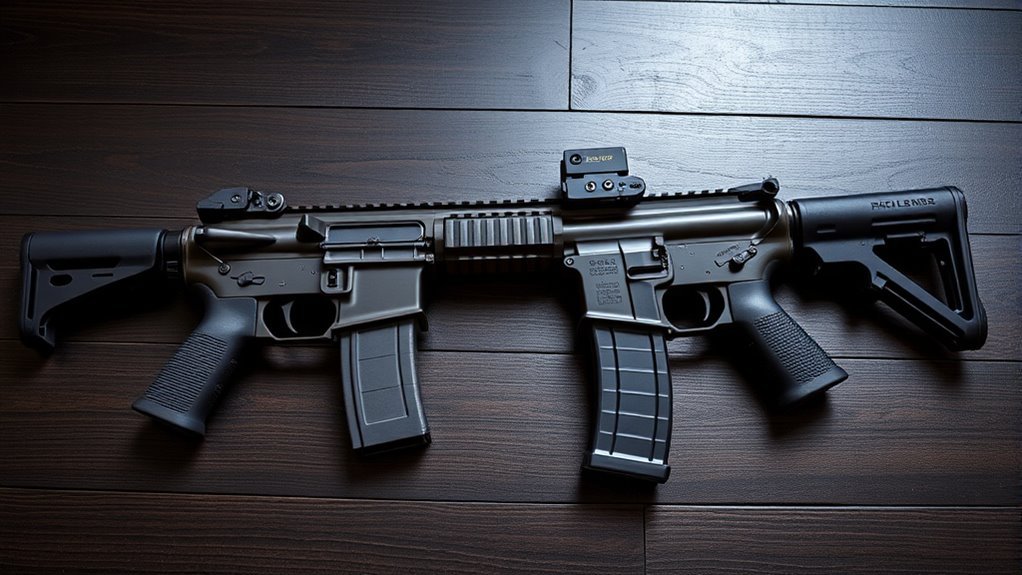
Because an SBR features a traditional shoulder stock and a barrel shorter than 16 inches, you’ll need to recognize it as a legally regulated rifle, not a pistol. Unlike an AR pistol, which often uses a pistol brace, an SBR’s shoulder stock is a key factor in its legal classification.
The overall length of an SBR includes the fully extended stock, typically exceeding 26 inches, distinguishing it from pistols. Federal firearms laws require ATF registration and a $200 tax stamp for SBRs, making firearm identification essential.
You can’t transfer or build an SBR without proper paperwork and approval. So, when identifying your firearm, focus on barrel length, the presence of a shoulder stock, and overall length to comply with ATF rules and avoid legal issues.
Frequently Asked Questions
What Is the Key Difference Between a SBR and an AR Pistol?
The key difference is that you’ll find an AR pistol has no stock and uses a pistol brace for one-handed shooting, while an SBR includes a rifle stock designed for shoulder firing and requires ATF registration.
Are AR-15 Pistols Considered SBR?
No, AR-15 pistols aren’t secret SBRs in disguise. You just need to skip the stock and use a brace. Add a stock, and suddenly, you’re playing in the SBR legal sandbox.
Is My Gun an SBR?
You can tell if your gun is an SBR by checking if it has a stock and a barrel under 16 inches. If so, it needs ATF registration. Without a stock or with a pistol brace, it’s not an SBR.
What Determines if an AR Is a Pistol?
You determine if an AR is a pistol by checking if it has a barrel under 16 inches, lacks a shoulder stock, and uses a pistol brace. Its length and design for one-handed firing also matter legally.
Conclusion
Now that you know the key design and legal differences between an AR pistol and an SBR, you can easily spot each one. Remember, an AR pistol lacks a stock and usually has a shorter barrel. On the other hand, an SBR has a stock and is legally registered.
Visualize the presence or absence of a stock and barrel length to quickly identify them. These visual cues make it simple to tell an AR pistol from an SBR at a glance. Understanding these distinctions helps you stay informed and compliant with firearm regulations.
When it comes to AR pistols versus SBRs, the stock and barrel length are the main giveaways. An AR pistol’s design is more compact without a stock, while an SBR includes a stock and requires legal registration due to its shorter barrel. Knowing these differences not only helps with identification but also ensures you follow the law correctly. Staying informed about AR pistol vs SBR differences is essential for any firearm owner aiming to be responsible and law-abiding.