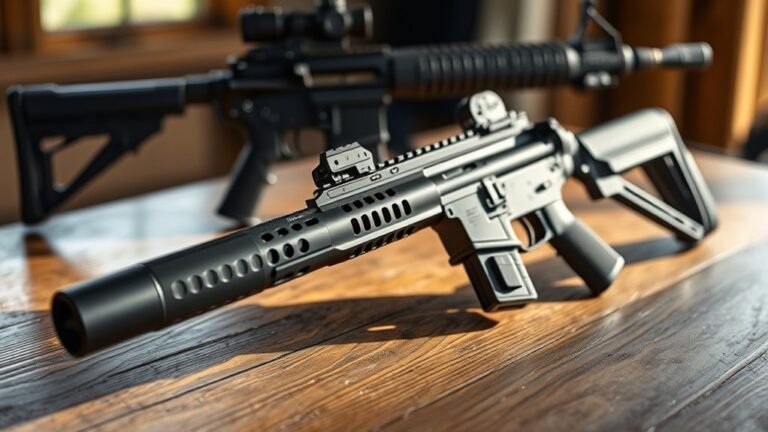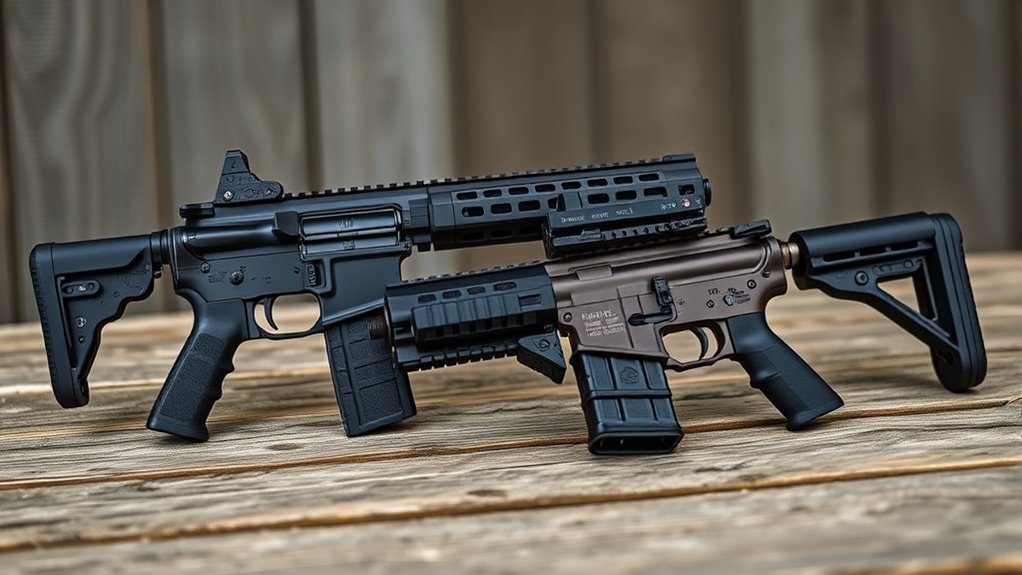
How to Tell AR Pistol Vs SBR €“ Key Differences
To tell an AR-15 pistol from a short-barreled rifle (SBR), you want to look at a few important details. First up, check whether it has a shoulder stock or a pistol brace.
An AR pistol uses a pistol brace and doesn’t have the traditional shoulder support you find on an SBR.
Both firearms typically have barrels under 16 inches, but here’s the kicker: SBRs need to be registered with the ATF and require a tax stamp, while AR pistols do not.
The overall length and how each is intended to be used also differ.
Keep reading to get the key design and legal differences that really set AR pistols and SBRs apart. Understanding these points helps you know what you’re dealing with and stay on the right side of the law.
Key Takeaways
- AR pistols use a pistol brace instead of a traditional shoulder stock for support. This is one of the main ways to tell them apart.
- SBRs, on the other hand, have a stock designed specifically for shoulder use, which makes them different from pistols.
- Both AR pistols and SBRs have barrels that are under 16 inches. However, the overall length of an SBR, including the stock, is under 26 inches.
- Another big difference is in the paperwork. AR pistols don’t require ATF registration or a tax stamp. SBRs, however, do.
- When you’re trying to visually identify them, just look for the stock versus the pistol brace. If it has a stock, it’s an SBR. If it has a pistol brace, it’s an AR pistol.
How to Identify an AR-15 Pistol: Design and Legal Features
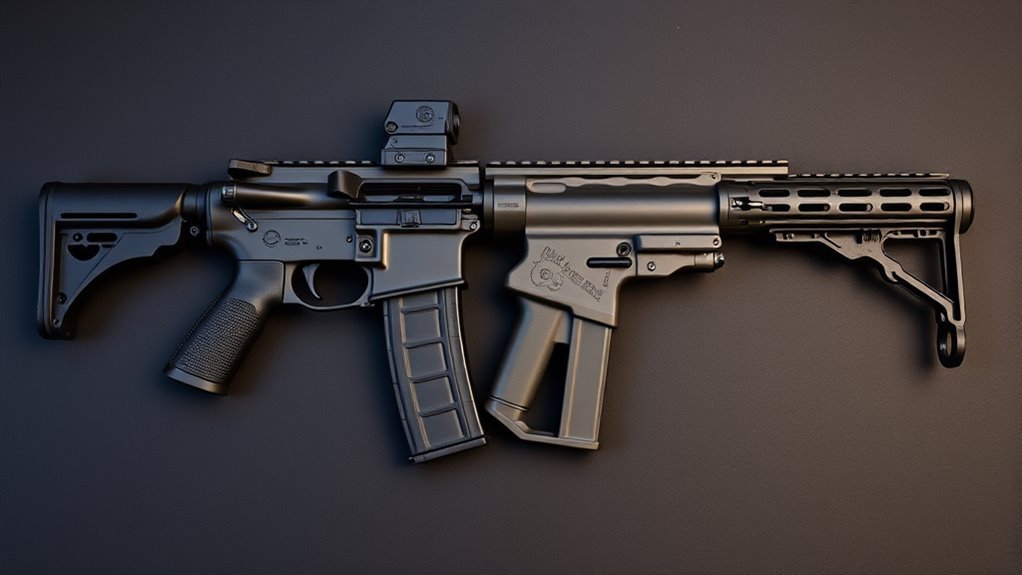
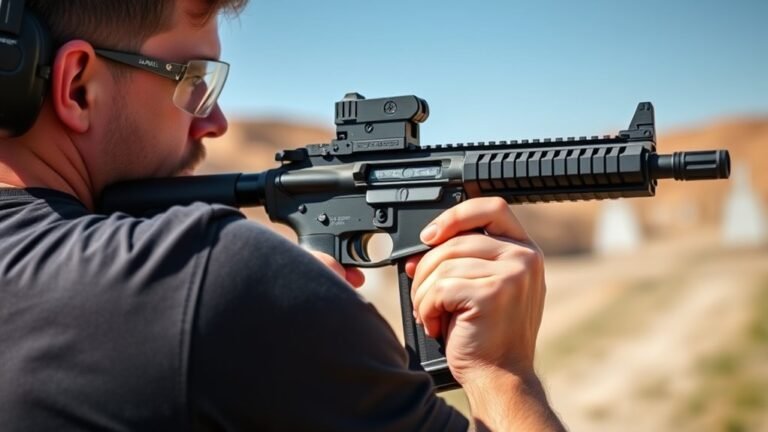
Although AR-15 pistols look similar to rifles, you can identify them by their design and legal features. An AR-15 pistol lacks a shoulder stock and instead uses a pistol brace, making it compact and intended for one-handed use.
AR-15 pistols resemble rifles but feature a pistol brace instead of a shoulder stock for compact, one-handed use.
Its barrel length is typically under 16 inches, and the overall length stays below 26 inches. The pistol brace attaches to the buffer tube, distinguishing it from rifles.
According to ATF regulations, this design results in a different legal classification—an AR-15 pistol doesn’t require registration or a tax stamp, unlike a short-barreled rifle (SBR), which has a shoulder stock and must be registered.
When doing firearm identification, look for the absence of a traditional stock and presence of a pistol brace to confirm it’s an AR-15 pistol.
How to Identify a Short Barreled Rifle (SBR): Design and Legal Features
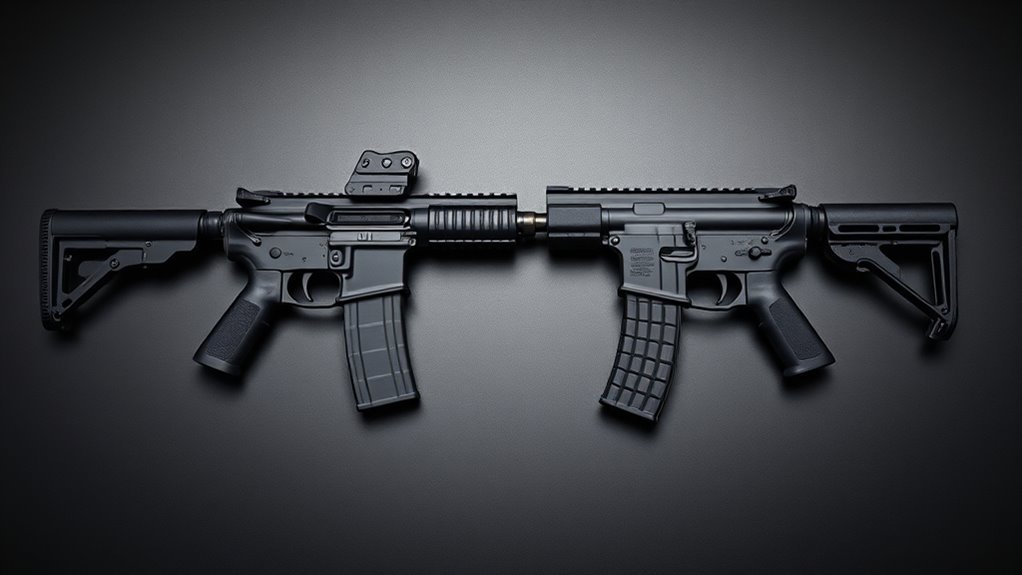
While AR-15 pistols use a pistol brace and lack a shoulder stock, short-barreled rifles (SBRs) feature a traditional rifle stock combined with a barrel shorter than 16 inches. To identify an SBR, focus on design features like the stock presence and barrel length under 16 inches.
The overall length, including the fully extended stock, must be under 26 inches for legal classification as an SBR. Under ATF regulations, SBRs require firearm registration, a $200 tax stamp, and approval through Form 1 or Form 4 before manufacture or transfer.
NFA compliance also mandates fingerprinting, photos, and background checks. Understanding these design and legal features helps you distinguish an SBR from an AR pistol and guarantees you comply with federal laws.
Frequently Asked Questions
What Is the Difference Between AR Pistol and SBR?
You’ll spot the difference because an AR pistol has a brace and no stock, letting you fire one-handed, while an SBR has a shoulder stock, needs registration, and includes the stock in its overall length measurement.
Is a 9mm AR Considered a SBR?
A 9mm AR is considered an SBR only if it has a barrel under 16 inches and a shoulder stock. If it uses a pistol brace instead, it’s classified as an AR pistol, not an SBR.
What Determines if an AR Is a Pistol?
You might think adding a brace makes it an SBR, but it doesn’t. An AR is a pistol if it lacks a stock, has a barrel under 16 inches, and stays under 26 inches overall length without a stock.
Is the ATF Waiving the SBR Tax Stamp?
No, the ATF isn’t waiving the SBR tax stamp. You still have to register your SBR and pay the $200 fee. Any claims saying otherwise are false or misinformation, so don’t fall for them.
Conclusion
Think of your AR as a loyal dog on a leash—compact, agile, and perfectly legal to carry around without extra permits. The SBR, on the other hand, is like that same dog off-leash but with a collar that requires special registration.
Knowing these subtle differences keeps you on the right side of the law and guarantees your gear works exactly how you intend. Stay sharp, and handle your AR responsibly to avoid any unexpected bites.
Understanding how to tell an AR pistol vs SBR is crucial for every firearm owner. An AR pistol usually features a shorter barrel and no stock, making it easier to carry without needing a tax stamp. Meanwhile, an SBR has a stock and a barrel under 16 inches, which means it falls under stricter regulations and requires registration with the ATF. Always make sure you know which category your firearm fits in to avoid legal trouble. Staying informed about the key differences between AR pistols and SBRs ensures safe, lawful ownership and peace of mind every time you handle your firearm.