Are Pistol Chassis Legal and Compliant
You can legally own and sell pistol chassis federally, but it’s important to be careful with how you assemble or modify them. These pistol chassis systems are popular for building custom firearms, but certain changes can change the legal classification of your setup.
For example, adding a shoulder stock, shortening the barrel to less than 26 inches, or including specific features might classify your firearm as a Short-Barreled Rifle (SBR) or an assault weapon. That means stricter regulations and requirements apply.
Keep in mind, state laws can vary widely. So, it’s a good idea to check your local restrictions closely before making any modifications. Understanding these rules helps you stay compliant and avoid legal trouble.
Keep exploring to see how specific changes impact your pistol chassis and its legal status.
Key Takeaways
- Pistol chassis are generally legal to sell and own unassembled under federal law as firearm parts.
- However, adding a shoulder stock or shortening the barrel below 26 inches might classify the firearm as an SBR under the NFA.
- State laws can be all over the place. For example, places like California and New York have restrictions on certain pistol chassis setups, often labeling them as assault weapons.
- Also, watch out for using features that are prohibited, like vertical foregrips or folding braces that act like stocks. That can change how the law sees your firearm.
- Bottom line: you need to know both federal and state laws before you put together or modify a pistol chassis to stay on the right side of the law.
Federal and State Laws on Pistol Chassis Legality
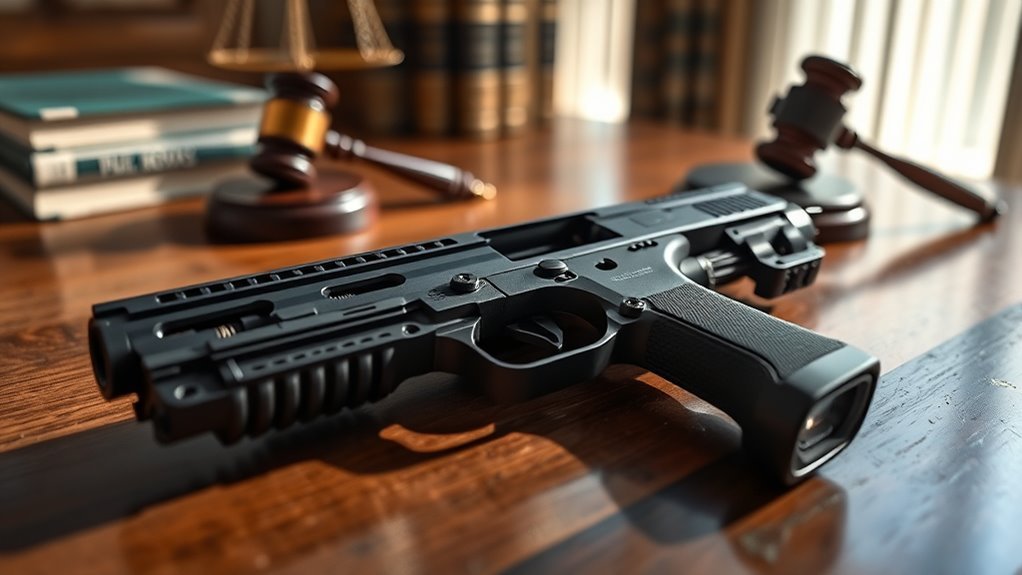
Although pistol chassis kits are generally legal to sell and own unassembled under federal law, their legality depends heavily on how you configure and use them. The ATF regulations treat a pistol chassis as a firearm part until you assemble it.
Once configured with a shoulder stock or shortened barrel under 26 inches, it can be classified as a short-barreled rifle (SBR), triggering strict compliance requirements, including registration and tax payment.
Adding a shoulder stock or barrel under 26 inches may classify it as an SBR, requiring registration and taxes.
Additionally, many states impose their own restrictions, with places like California and New York labeling certain pistol chassis setups as assault weapons, making them illegal to possess. Since these state restrictions vary widely, you must stay informed about local laws.
Ensuring your pistol chassis complies with both federal law and state regulations is vital to avoid legal issues and maintain lawful ownership. So, always double-check the rules before you build or modify your setup.
Modifications That Trigger NFA or Assault Weapon Classification
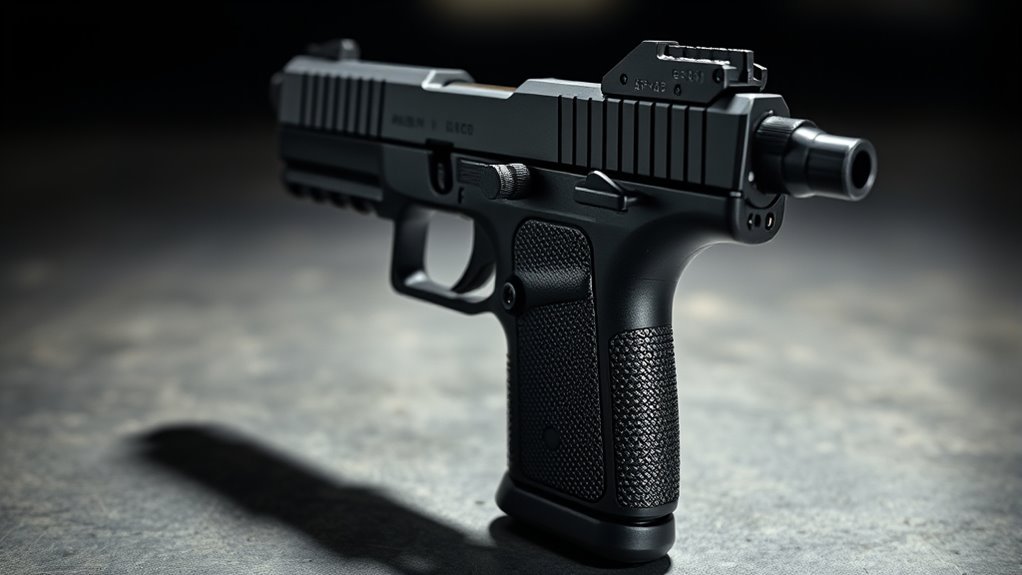
When you add a shoulder stock or any attachment that lets you fire a pistol from your shoulder, you risk having it classified as a short-barreled rifle (SBR) under the National Firearms Act (NFA).
With pistol chassis setups, certain firearm modifications like installing a folding brace that functions like a shoulder stock may also trigger SBR classification under ATF regulations.
Reducing the overall length below 26 inches combined with these features can further complicate NFA compliance.
Additionally, adding prohibited features such as vertical foregrips can cause your firearm to be reclassified as an assault weapon, depending on state laws.
To avoid unintended SBR or assault weapon designations, it’s essential to understand how your pistol chassis and modifications align with federal and local rules before making changes.
Frequently Asked Questions
Are Pistol Chassis Systems Legal?
Pistol chassis systems can be legal if you configure them without shoulder stocks or features that reclassify them. You’ll need to follow federal and state laws closely to avoid creating an illegal firearm like an SBR.
Is Shouldering a Pistol Brace a Felony?
You could risk the wrath of a thousand ATF agents if you shoulder a pistol brace. Doing so might classify your firearm as an illegal SBR, potentially landing you in felony trouble—so don’t shoulder it, okay?
What Does “Mexican Carry” Mean?
“Mexican carry” means you carry a firearm without a holster, often tucked in your waistband or pocket. It’s risky because it lacks secure retention and can increase chances of accidental discharge or theft, so most discourage it.
Are Pistol Chassis Considered SBR?
Think of a pistol chassis like a car frame; if you add a shoulder stock, it transforms into a different vehicle—an SBR. So yes, if configured for shoulder firing, your pistol chassis counts as an SBR under the law.
Conclusion
So, you want to slap a chassis on your pistol and stay squeaky clean with the law? Funny enough, maneuvering federal and state rules feels like trying to solve a Rubik’s Cube blindfolded.
Just remember, a simple tweak might suddenly turn your sleek build into an NFA nightmare or an “assault weapon” headline. Who knew staying legal could be the most complicated part of building your dream pistol?
Stay sharp and double-check—your freedom depends on it. Understanding if pistol chassis are legal and compliant means knowing the fine print. Always check local laws and federal regulations before making modifications. When it comes to pistol chassis legality, a little homework goes a long way in keeping your build both functional and within the law.