What Is an AR Pistol?
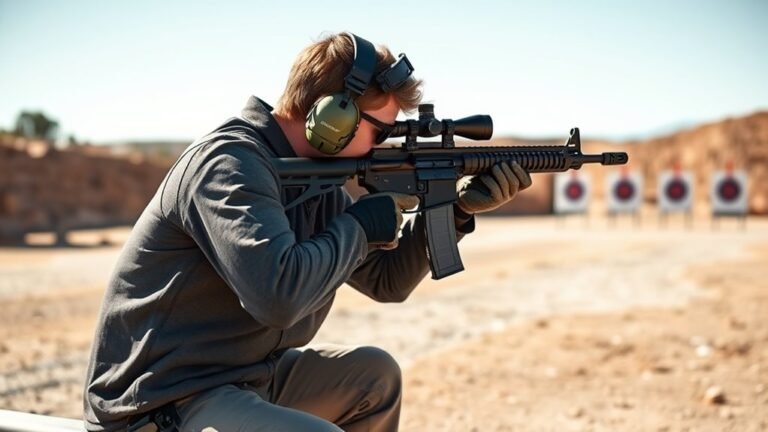
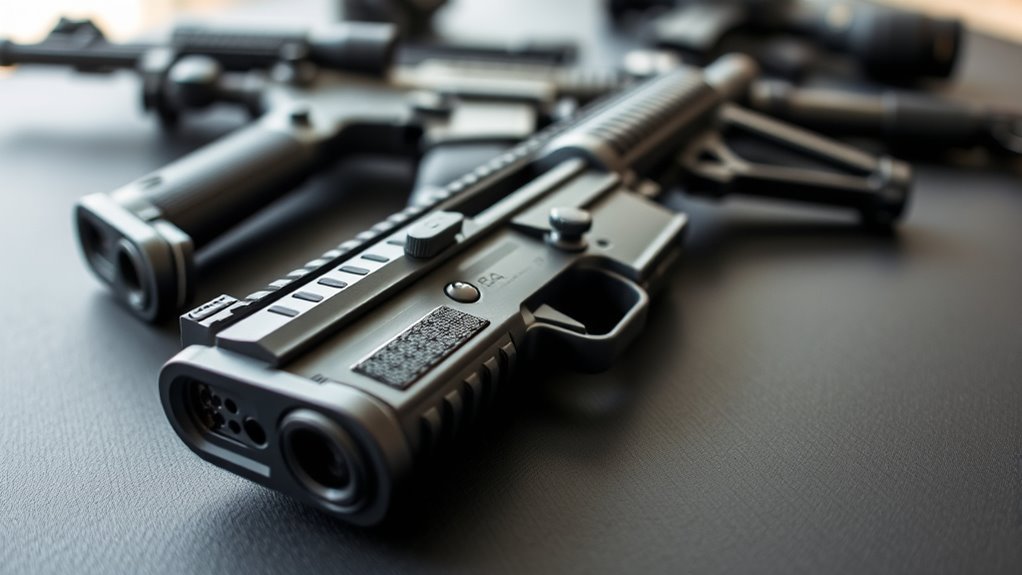
An AR pistol looks a lot like an AR-15 rifle, but there are some key differences that set it apart. For starters, it has a barrel shorter than 16 inches and doesn’t have a traditional rifle stock, which legally classifies it as a pistol.
Instead of a stock, it uses a stabilizing brace for support, making it easier to handle.
Despite these differences, it keeps the same modular design and operation as the AR-15. You can pick from popular calibers like 5.56 NATO or 300 Blackout, depending on what you want to use it for.
The barrel length you choose will impact how maneuverable the pistol feels and how well it performs. Keep exploring to find out how to pick the best AR pistol setup for your needs.
Key Takeaways
- An AR pistol looks a lot like an AR-15 rifle, but it has a barrel that’s shorter than 16 inches and doesn’t have a rifle stock.
- It operates the same way and uses the same modular design as an AR-15, but legally, it’s classified as a pistol.
- Instead of a shoulder stock, AR pistols come with a stabilizing or pistol brace which helps you control it better.
- The shorter barrel and the lack of a stock are what set AR pistols apart from traditional rifles under firearm laws.
- You’ll often see them chambered in popular calibers like 5.56 NATO, which offers good velocity, or 300 Blackout, which is great for suppressor use and subsonic loads.
What Is an AR Pistol and How Is It Different From an AR-15 Rifle?
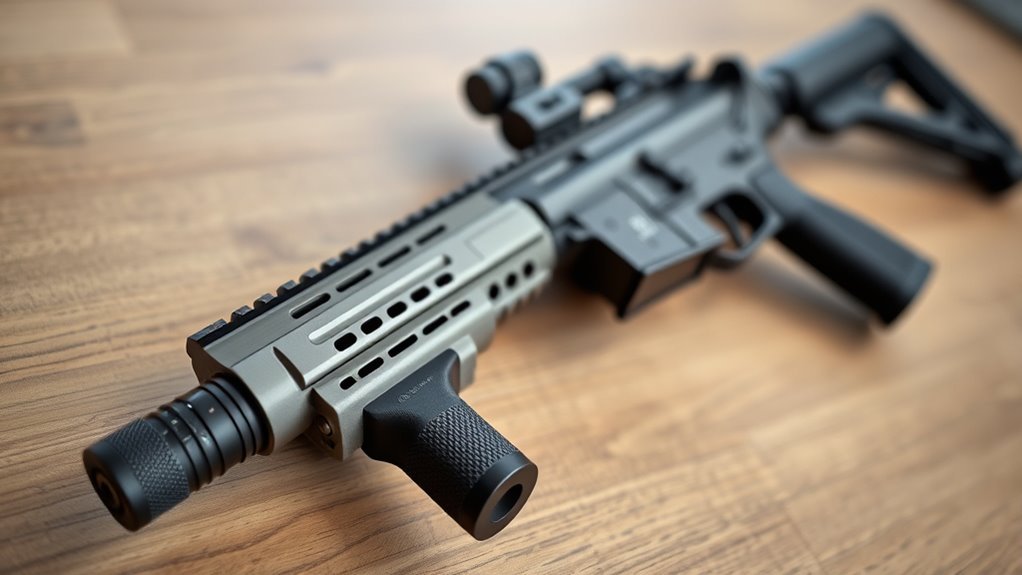
Although an AR pistol shares the same design as an AR-15 rifle, it features a shorter barrel under 16 inches and lacks a stock, which legally classifies it as a pistol. When you handle an AR pistol, you’ll notice it uses the same modularity and operation as an AR-15 rifle but with a short barrel and no rifle stock for shoulder firing.
Instead of a stock, you can often attach a stabilizing brace or pistol brace, which maintains its legal classification as a pistol under firearm regulation. The key difference lies in barrel length and whether a rifle stock or stabilizing brace is present.
Understanding these distinctions helps you stay compliant with laws while enjoying the versatility of an AR pistol.
How to Choose the Right Caliber and Barrel Length for Your AR Pistol
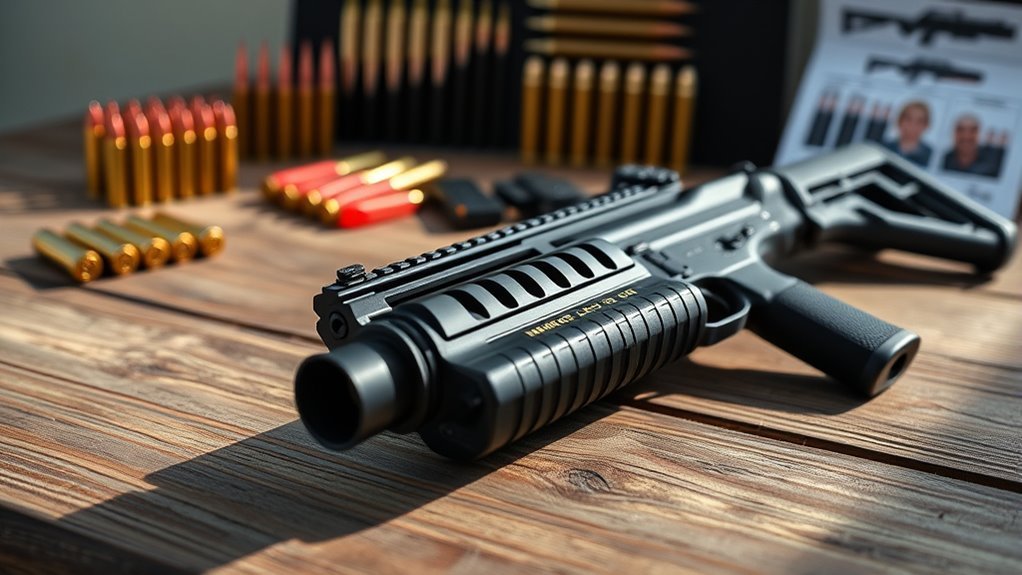
Now that you understand what sets an AR pistol apart from an AR-15 rifle, the next step is choosing the right caliber and barrel length to match your needs. Your caliber selection greatly impacts AR pistol performance.
The popular 5.56 NATO offers high velocity and flat trajectories, while the 300 Blackout excels in suppressor compatibility and subsonic loads. Barrel length influences velocity, ballistic efficiency, and recoil management.
Short barrels (7.5–8.5 inches) favor maneuverability and close-quarters use, typical of short-barreled rifles, but sacrifice some velocity and accuracy. Longer barrels (10.5–11.5 inches) improve ballistic efficiency and suppressor performance, though they reduce compactness.
Matching your caliber with the right barrel length ensures you get ideal velocity, manageable recoil, and overall performance tailored to your intended use. It’s all about finding the balance that fits what you want to do with your AR pistol.
Frequently Asked Questions
What Is the Difference Between an AR-15 and an AR Pistol?
You’ll notice an AR-15 has a longer barrel and a stock, while an AR pistol has a shorter barrel and a pistol brace. Changing these parts affects how the law classifies and regulates them.
ARe AR Pistols Legal to Carry?
You can carry AR pistols legally in many places, but the rules dance like shifting shadows—changing with state laws and features like braces or grips. Always double-check your local laws before you step out armed and ready.
What Is the Point of an AR Pistol?
The point of an AR pistol is to give you a compact, lightweight firearm that’s easy to maneuver, offers rifle-like performance, and stays legal without extra paperwork, perfect for home defense, tactical use, or recreational shooting.
What Is the Difference Between a Glock and an AR?
Think of a Glock as your trusty pocket knife—compact and reliable—while an AR is a Swiss Army knife, versatile and customizable. You’ll notice Glocks are handguns, ARs come in various forms with different calibers and setups.
Conclusion
Choosing an AR pistol means embracing a compact, versatile companion that fits your lifestyle without the bulk of a traditional rifle. You’re opting for something nimble and approachable, perfect for close-quarters or quick handling.
While it may carry a smaller frame, it doesn’t compromise on capability. By selecting the right caliber and barrel length, you’re making a thoughtful choice that balances power and convenience.
An AR pistol offers confidence and control in every situation, whether at the range or for personal defense. Its design merges portability with performance, making it a smart pick for those who want the benefits of an AR platform without the size of a full rifle. In short, an AR pistol is your go-to for versatility, ease of use, and reliable power all wrapped into one compact package.