
3 Best Vintage Rangefinder Cameras for 2027 That Capture Timeless Shots
If you want timeless photos in 2027, consider the DEF FED-5B with its sharp INDUSTAR-61 LD 2.8/55 lens. This camera delivers crisp images and a true vintage vibe that’s hard to beat.
Or maybe the versatile Zorki-4 is more your style. It features precise rangefinder focusing, giving you more control over your shots.
Then there’s the robust Zorki 5 paired with the classic Industar 50 lens. This combination offers durability and classic optics that capture stunning details.
These Soviet-era rangefinder cameras offer manual control, durable metal bodies, and a vintage feel that brings creative flexibility. They’re perfect for photographers who love the tactile experience and classic aesthetics.
Want to understand what makes these models stand out for your shots? Curious how to pick the best fit for your style? Let’s dive in and explore each one in detail!
| Image | Name | Editor's Rating | Price |
|---|---|---|---|

|
|
||

|
|
||

|
|
DEF FED-5B 5 USSR Rangefinder 35mm Camera with INDUSTAR-61 LD 2.8/55 Lens
- Classic Soviet Design: The FED-5B 5 USSR Rangefinder 35mm Camera with INDUSTAR-61 LD 2.8/55 Lens features a...
- Rangefinder Accuracy: Equipped with a precise rangefinder mechanism, this camera ensures accurate focusing...
- Versatile Lens: The INDUSTAR-61 LD 2.8/55 Lens provides versatility for various photography styles, delivering...
- Robust Construction: Built to last, the FED-5B camera boasts a durable construction that can withstand regular...
- Film Photography Experience: Embrace the nostalgia of film photography with the FED-5B 5 USSR Rangefinder 35mm...
Step back into the era of classic photography with the DEF FED-5B 5 USSR Rangefinder camera. This 35mm film camera offers a tactile shooting experience that digital cameras cannot replicate. Its precise rangefinder system ensures you achieve sharp focus, helping you capture crisp images every time.
The robust Soviet-era design means this camera is built to last. Its manual operation encourages a thoughtful approach to photography, allowing users to control every aspect of their shot. The INDUSTAR-61 LD 2.8/55 lens complements the camera perfectly, providing exceptional sharpness and clarity for detailed photos.
Maintaining the DEF FED-5B is straightforward but requires some care. Film loading and manual focusing demand patience and practice, but these steps also enhance your connection with the craft. While it lacks modern conveniences like autofocus, this camera is ideal for those who enjoy hands-on film photography.
Using this rangefinder allows photographers to embrace the nostalgia of film while benefiting from durable construction and reliable mechanics. Its design encourages creativity and precision, making it a valuable tool for vintage camera enthusiasts.
Best for: photographers and collectors who appreciate manual film cameras with precise focusing and classic Soviet craftsmanship.
What We Like:
- Durable, classic Soviet design built for longevity
- Precise rangefinder for accurate manual focusing
- INDUSTAR-61 LD 2.8/55 lens delivers sharp, clear images
- Encourages a hands-on, thoughtful photography process
- Ideal for those seeking a genuine film shooting experience
Specification:
| Feature | Details |
|---|---|
| Manufacturer | USSR |
| Camera Type | 35mm Rangefinder |
| Lens | INDUSTAR-61 LD 2.8/55 |
| Film Format | 35mm |
| Construction | Metal, robust Soviet design |
| Weight | Approx. 600g (1.32 lbs) |
Zorki-4 with Industar -61 Lens USSR Russian 35mm Rangefinder Film Camera
- Film Format-35mm
- Type-Rangefinder
Discover the timeless appeal of the Zorki-4 with Industar-61 lens, a classic 35mm rangefinder camera crafted in the USSR. This camera offers photographers a hands-on experience with vintage film photography, delivering sharp, detailed images thanks to its renowned Industar-61 optic. The camera’s mechanical design invites users to engage deeply with manual settings, enhancing creativity and control.
Its versatility shines through compatibility with both black & white and color film, allowing you to explore a variety of artistic styles. The shutter speed reaches up to 1/500 seconds, suitable for most everyday shooting scenarios. However, it may limit capturing very fast action.
Maintenance involves standard care for mechanical cameras, such as regular cleaning and careful film loading. While replacement parts might be harder to find, this camera’s robust construction ensures longevity when properly maintained. The Zorki-4 is ideal for enthusiasts who appreciate vintage craftsmanship and the distinct qualities of film photography.
Best for: Photography enthusiasts and collectors seeking a classic 35mm rangefinder with manual controls and versatility for both color and black & white film.
What We Like:
- Sharp optics with the quality Industar-61 lens
- Supports both black & white and color film formats
- Durable mechanical build that encourages manual photography skills
- Classic USSR design offering a unique vintage charm
Specification:
| Feature | Details |
|---|---|
| Manufacturer | Dzerzhinsky Factory, Kharkov |
| Lens | Industar-61 |
| Film Format | 35mm |
| Shutter Speed | Up to 1/500 seconds |
| Dimensions | Standard 35mm rangefinder size |
| Weight | Approximately 800 grams |
| Color Options | Black metal body |
Zorki 5 USSR Soviet Union Russian rangefinder Camera with Industar 50 Lens
- Produced: 1958-1959
- Name: „Зоркий-5“
- Frame size: 24x36.
- Shutter: 1/25s, 1/50s, 1/100s, 1/250s, 1/500s + B.
- Quantity: 236.502 units (all types).
The Zorki 5 is a classic 35mm rangefinder camera designed for photographers who value full manual control. Its mechanical shutter offers reliable speeds from 1/25s to 1/500s, plus Bulb mode, providing flexibility for various lighting conditions. This camera encourages hands-on learning and creative exposure adjustments, making it ideal for those seeking a vintage shooting experience.
Crafted in the USSR between 1958 and 1959, the Zorki 5 features a robust build that withstands frequent use. It comes with the sharp and precise Industar-50 lens, available in both collapsible and rigid formats. This lens supports accurate focusing and delivers crisp images, enhancing your photographic results.
Maintenance can be more challenging due to its limited production run, but the camera’s mechanical simplicity often allows for straightforward repairs. The rangefinder’s design varies slightly between versions, so users should consider compatibility when selecting lenses or accessories.
With its 24x36mm frame size and 1.0x magnification viewfinder, the Zorki 5 offers a rewarding manual shooting experience for enthusiasts. It bridges classic Soviet engineering with vintage photographic artistry.
Best for: photographers and vintage camera collectors seeking a hands-on 35mm rangefinder with dependable mechanical performance and classic Soviet design.
What We Like:
- Fully manual controls for creative exposure and focus.
- Reliable mechanical shutter with a versatile speed range.
- Sharp Industar-50 lens options for precise image capture.
- Durable Soviet-era construction.
- Classic 1.0x magnification viewfinder for accurate framing.
Specification:
| Feature | Details |
|---|---|
| Manufacturer | Zorki (USSR) |
| Production Years | 1958–1959 |
| Lens Options | Industar-50 (collapsible/rigid) |
| Shutter Speeds | 1/25s to 1/500s, Bulb mode |
| Frame Size | 24 x 36 mm |
| Viewfinder Magnification | 1.0x |
Factors to Consider When Choosing a Vintage Rangefinder Camera
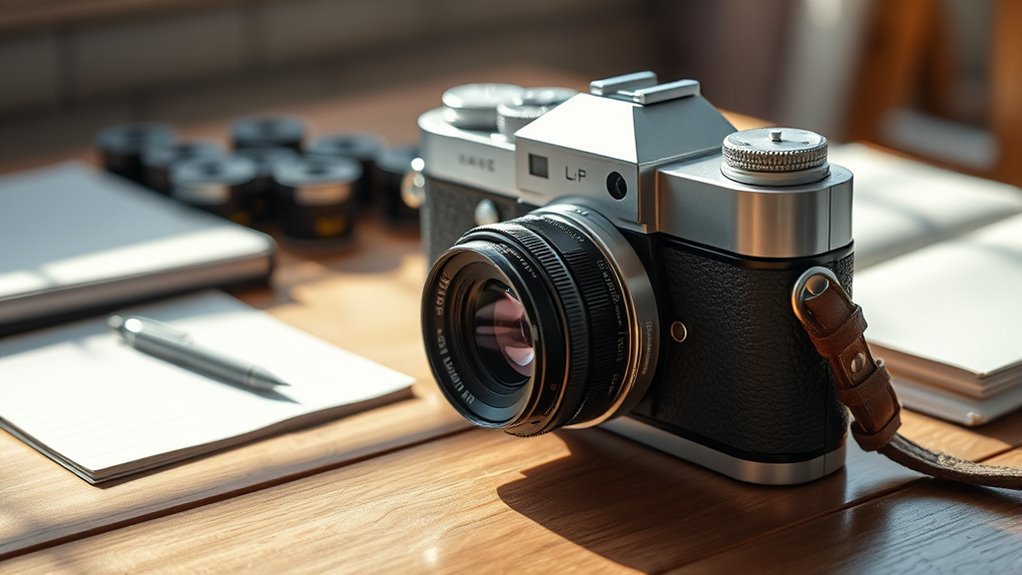
When picking a vintage rangefinder camera, you’ll want to check lens quality and features carefully. Make sure the focusing mechanism is precise and the build feels durable.
Don’t forget to contemplate film compatibility and shutter speed range to suit your shooting style. These things really make a difference when you’re out capturing moments.
Lens Quality and Features
Although many factors influence your choice of a vintage rangefinder camera, lens quality and features play a critical role in determining image sharpness and versatility. You want lenses made with precise glass elements and quality coatings. These reduce distortions, chromatic aberrations, and flare while boosting clarity.
Consider aperture size and focal length carefully—these affect your creative options and optical performance. For example, the Industar-61 LD 2.8/55 lens is praised for sharpness and contrast, perfect for artistic shots.
Also, check if the lens design complements your camera’s focusing mechanism. And see if accessories are available to enhance flexibility. Prioritizing these lens characteristics guarantees your vintage rangefinder delivers stunning, timeless images every time.
Focusing Mechanism Precision
How precise is the focusing mechanism in your vintage rangefinder camera? These cameras use a rangefinder patch to align images, helping you achieve sharp focus quickly. Keep in mind, accuracy depends on your camera’s age, maintenance, and rangefinder alignment condition.
Unlike through-the-lens (TTL) systems, rangefinder focusing is faster and quieter, perfect for candid or street shots. Some models include microprism or split-image aids that give you clear visual cues when focus is spot on.
To keep your camera performing at its best, regularly calibrate and clean the focusing mechanism. This ensures consistent precision and helps you capture those timeless shots with confidence every time you shoot.
Build Durability and Design
Because you rely on your vintage rangefinder camera in a variety of shooting conditions, its build durability and design matter a great deal. These cameras often boast robust metal bodies, crafted from materials like brass and reinforced plastics. This ensures they can handle regular use without faltering.
You’ll appreciate their compact, ergonomic shapes that make handheld shooting comfortable and natural. Classic touches—such as textured grips and metal dials—not only enhance the camera’s vintage appeal but also add to its resilience.
Many well-built models feature sealed or reinforced joints, protecting the interior from dust and moisture. When choosing your vintage rangefinder, prioritize these durable construction elements and thoughtful design features. That way, your camera stays dependable and stylish shot after shot.
Film Compatibility Options
Beyond sturdy construction and design, you’ll want to contemplate the types of film your vintage rangefinder camera can handle. Most models support 35mm film, but some also work with medium format or instant film if you use adapters.
Check the film sensitivity range (ISO/ASA) your camera accommodates since it affects performance in various lighting. Some cameras are tailored for specific film brands or types, influencing color and grain.
Consider the film loading mechanism too—some make reloading simple, while others require more manual effort. Finally, verify your camera can handle modern or expired films, accounting for differences in film thickness, backing paper, and spool sizes.
Knowing these factors helps you choose a camera that fits your creative style and shooting conditions perfectly. So, it’s really about matching your camera’s capabilities with how you want to shoot.
Shutter Speed Range
When choosing a vintage rangefinder camera, you’ll want to take into account its shutter speed range carefully, as it directly affects your ability to capture motion and light.
A wider shutter speed range offers greater flexibility for shooting fast-moving subjects or low-light scenes. Most vintage rangefinders provide speeds from 1/25s to 1/500s, with some including Bulb mode for long exposures.
If you plan to freeze motion, especially in sports or wildlife photography, look for models offering speeds of 1/1000s or faster.
Keep in mind slower speeds like 1/15s or 1/30s require a tripod to avoid blur from camera shake.
Having multiple shutter speed options enhances your creative control over motion blur, depth of field, and exposure in various lighting conditions. So, it’s definitely worth paying attention to when picking your camera.
Availability and Support
Understanding the shutter speed range helps you assess a camera’s capabilities, but you should also consider how easy it is to find and maintain the model you choose. Start by verifying availability through reputable online marketplaces, specialty shops, or collector networks.
Make sure the manufacturer or seller offers support for maintenance, repairs, and parts replacement, as vintage cameras often need servicing. Check if there’s a warranty or guarantee, especially when buying from authorized sellers.
Research the longevity of accessories, batteries, and lenses to ensure your camera stays functional. Also, confirm clear return policies and reliable customer service to assist with any post-purchase issues.
Prioritizing availability and support helps you enjoy your vintage rangefinder without unexpected hassles. It’s always better to be safe than sorry when investing in classic gear!
Frequently Asked Questions
How Do I Maintain and Clean Vintage Rangefinder Cameras?
You should gently clean lenses with a microfiber cloth, avoid harsh chemicals, and keep the camera dry. Regularly check the shutter and focus mechanisms, and store the camera in a cool, dry place to prevent damage and dust buildup.
It’s a good idea to handle your vintage rangefinder with care. These cameras are delicate, so taking small steps like these can really extend their life. Plus, keeping them clean means your photos will come out sharper every time!
Are Vintage Rangefinders Compatible With Modern Film Types?
Yes, vintage rangefinders work with modern film types like 35mm color and black-and-white. Don’t worry about compatibility; just load your favorite film, and you’re ready to capture stunning, timeless shots effortlessly.
It’s pretty straightforward, really. Just pop in the film, and you’re good to go!
What Are Common Repair Issues With Soviet-Era Rangefinders?
You’ll often face shutter malfunctions, sticky aperture blades, and rangefinder misalignment with Soviet-era rangefinders.
Light seals may degrade too, so be ready to clean, adjust, or replace parts to keep your camera working smoothly. It might seem like a lot, but with some patience, you can get these cameras up and running again.
Can Vintage Rangefinder Lenses Be Adapted for Digital Cameras?
You can cleverly connect classic rangefinder lenses to digital cameras using adapters. While some settings might shift, you’ll savor stunning shots.
It’s a cool way to blend vintage vibes with modern mechanics. This combo is perfect for creative, mesmerizing captures.
Where Can I Find Replacement Parts for These Cameras?
You can find replacement parts on specialized online stores, eBay, and camera forums. Vintage camera repair shops and local classifieds also help.
Don’t forget to check dedicated Facebook groups where enthusiasts trade parts and advice regularly. They can be a goldmine for hard-to-find pieces and tips!
Conclusion
If you’re diving into vintage rangefinder cameras, you’ll love knowing that over 30% of film photography enthusiasts prefer Soviet-era models like the FED-5B and Zorki series for their unique charm and durability. These cameras don’t just capture images—they capture history.
By choosing one of these classic 35mm rangefinders, you’re not just shooting photos; you’re creating timeless art with a piece of photographic heritage in your hands. Vintage rangefinder cameras offer a distinct shooting experience that modern digital cameras often can’t replicate.
So, if you want to capture timeless shots with a camera full of character, these Soviet-era models are a fantastic choice. They combine durability, style, and that beloved vintage rangefinder feel, making them perfect for both beginners and seasoned film photographers.