How to Properly Shoot a Pistol in 3 Simple Steps
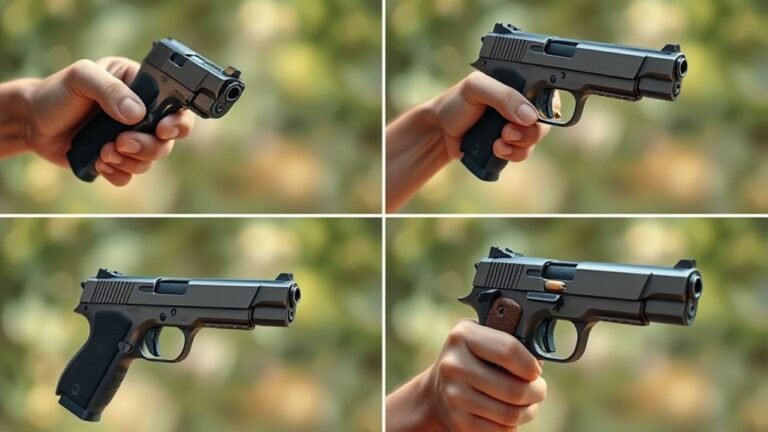
To properly shoot a pistol, start by drawing smoothly with a firm but relaxed grip. Keep your elbows back and the front sight visible to maintain control and accuracy.
Next, bring the pistol up steadily to eye level. Align the front sight within the rear notch while keeping your head and neck in a neutral position. This helps you stay consistent and focused on your target.
Finally, squeeze the trigger smoothly. Feel for the reset so you’re ready for the next shot.
Mastering these basics will build a strong foundation for better accuracy and control as you keep practicing.
Key Takeaways
- Grip the pistol firmly but not too tight. Keep your elbows back for a smooth, controlled draw.
- Now, extend your arms fully. Keep your neck and shoulders neutral, and line up the front and rear sights precisely.
- Focus on a clear, sharp sight picture. At the same time, keep some peripheral awareness of the front sight while aiming.
- When you’re ready, squeeze the trigger smoothly and steadily. Don’t disturb your sight alignment until the shot breaks.
- After the shot, reset the trigger fully. Keep consistent pressure for reliable, accurate follow-up shots.
Draw and Grip the Pistol Smoothly

When you draw your pistol, do it smoothly and confidently without hesitation. Start by gripping the pistol firmly but not too tight, making sure you have full control.
Keep your elbows back as you draw from the holster. This helps maintain ergonomic movement and steady control.
Maintaining elbows back during your draw ensures ergonomic motion and steady, confident control.
If your holster is positioned higher, use your support hand’s thumb to push the pistol out smoothly. Throughout the draw, keep your awareness sharp by keeping the front sight post visible and aligned.
Bring the pistol to face level with a full, smooth arm extension while keeping your neck and shoulders neutral. This controlled method guarantees your draw and grip are efficient, giving you the best chance to respond quickly and accurately.
Align Your Sights for Accurate Aim and Present the Pistol With a Steady Grip
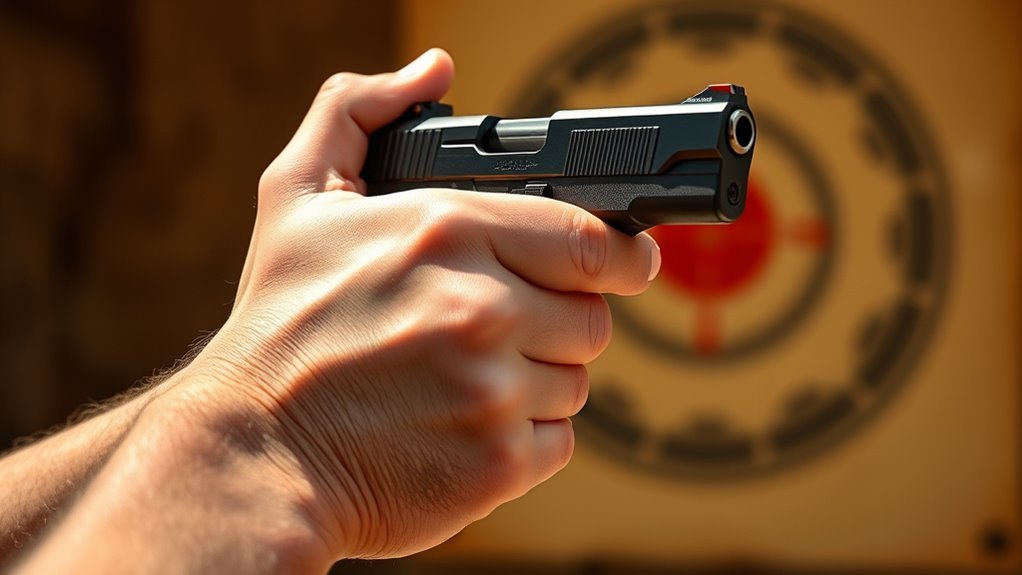
Although it takes practice to master, aligning your sights precisely is essential for accurate shooting. Focus on lining up the front sight post perfectly within the rear sight notch, maintaining a clear and sharp sight picture.
Keep your head erect with a neutral neck position as you bring the pistol smoothly to your face. During presentation, push the pistol out with your support hand’s thumb, ensuring a steady grip throughout.
Maintain peripheral awareness of the front sight during the draw and presentation to keep your aim true. A steady grip and consistent sight alignment work together to improve your accuracy.
Squeeze the Trigger and Reset for Consistent Shots

To achieve consistent shots, you need to squeeze the trigger smoothly and steadily until you hear or feel the click that signals the shot has broken. Maintain steady pressure to avoid disturbing your sight picture.
After each shot, fully release the trigger until you reach the reset point—a slight bump you can feel. From there, apply steady pressure again without slack or excessive movement.
Practicing trigger reset enhances shot consistency and reliability. It might take some time to get used to, but it really pays off in the long run.
| Action | Sensation | Purpose |
|---|---|---|
| Squeeze trigger | Smooth, steady pull | Break the shot cleanly |
| Trigger reset | Slight bump felt | Prepare for next shot |
| Reapply pressure | Controlled pressure | Maintain consistent accuracy |
Frequently Asked Questions
What Type of Ammunition Is Best for Beginner Shooters?
You’ll want to use .22 LR ammunition as a beginner. It’s low recoil, affordable, and easy to handle, helping you build confidence and accuracy without being overwhelmed by noise or kickback during your first shooting experiences.
How Often Should I Clean My Pistol for Optimal Performance?
You should clean your pistol after every range session or at least every 300-500 rounds to guarantee peak performance. Regular cleaning prevents buildup, reduces malfunctions, and keeps your firearm reliable and safe to use.
What Safety Gear Should I Wear When Shooting?
Safety gear is your trusty shield: always wear eye protection to guard against sparks and ear protection to block loud blasts. Don’t forget closed-toe shoes and a hat to keep you safe and focused on your shot.
How Do Environmental Conditions Affect Shooting Accuracy?
Environmental conditions like wind, rain, and lighting directly affect your shooting accuracy. You’ll need to adjust your aim and timing accordingly, stay aware of visibility changes, and practice in various conditions to improve your consistency and precision.
Can Shooting Improve Hand-Eye Coordination Over Time?
You can improve hand-eye coordination by shooting; studies show experienced shooters increase reaction times by 20%. Practicing regularly sharpens your focus, timing, and precision, making your coordination more instinctive and reliable under pressure.
Conclusion
Now that you’ve learned the basics, don’t worry if your first shots aren’t perfect. Remember, even skilled marksmen started with shaky hands and missed targets.
With each smooth draw, steady aim, and controlled trigger squeeze, your confidence will grow. Imagine the satisfying click and the bullet hitting your mark.
Keep practicing these simple steps, and soon you’ll handle your pistol with precision and calm. Turning hesitation into skill takes time, but with patience and consistent practice, shooting a pistol properly becomes second nature. So stay focused, follow the steps, and watch your accuracy improve every time you shoot.