What Muscles Does Pistol Squat Work?
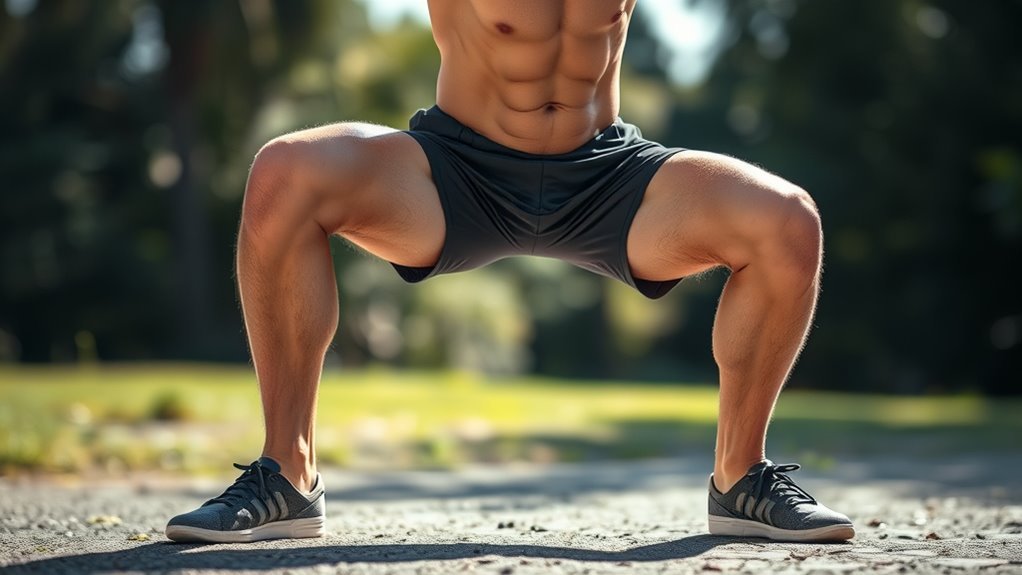
When you do pistol squats, you work your entire lower body and core muscles. This single-leg exercise targets key muscles like your quadriceps, gluteus maximus, hamstrings, calves, and core, making it a powerful move for strength and stability.
Your quadriceps extend the knee, while your gluteus maximus helps stabilize and extend the hip. Meanwhile, your hamstrings control the movement, and your calves keep your ankle stable during the squat.
Your core muscles engage to maintain posture and balance on one leg. This exercise also challenges your coordination and neuromuscular control, boosting both functional strength and stability.
Keep going, and you’ll discover how pistol squats build balance and core power, making them a great addition to any lower body workout.
Key Takeaways
- Pistol squats primarily target the quadriceps, especially the vastus medialis, for knee extension.
- The gluteus maximus engages to extend and stabilize the hip during the movement.
- Hamstrings assist in controlling both the descent and ascent phases of the pistol squat.
- Calf muscles stabilize the ankle to maintain balance throughout the exercise.
- Core muscles activate to stabilize the spine and improve balance during the single-leg squat.
It’s a great move for building strength and balance all at once!
What Muscles Do Pistol Squats Work?

While pistol squats demand balance and control, they primarily work your quadriceps, especially the vastus medialis, as you extend your knee. Your gluteus maximus plays an essential role too, extending the hip and providing hip stabilization throughout the movement.
Pistol squats focus on your quadriceps and gluteus maximus, enhancing knee extension and hip stability.
The hamstrings assist by controlling both the descent and ascent phases, supporting hip extension. Your calves, especially the gastrocnemius and soleus, contribute notably to ankle stabilization, helping you maintain balance.
Additionally, your core muscles engage to stabilize the spine and keep proper posture, ensuring the entire movement stays controlled. These muscle groups work together efficiently, allowing you to perform pistol squats with strength and stability.
Understanding how these muscles interact can help you target specific areas and improve your overall performance. It’s pretty cool how everything works in sync, right?
How Pistol Squats Build Balance and Core Strength

Because pistol squats challenge you to balance on one leg, they demand strong engagement from your core muscles, including the abdominals and obliques, to keep you stable throughout the movement. Your spinal muscles also activate to maintain proper posture and support core stability.
This unilateral exercise heightens your proprioception, enhancing your body’s awareness of position and movement. As you perform pistol squats, your neuromuscular control improves, allowing better coordination between your stability muscles and limbs.
This increased balance and core strength translates into improved functional movement and athletic performance. By regularly practicing pistol squats, you train your body to maintain control under challenging conditions, building a strong, stable core that supports better posture and overall balance.
Frequently Asked Questions
How Effective Are Pistol Squats?
Pistol squats are highly effective because they challenge your strength, balance, and coordination all at once. You’ll activate multiple muscle groups intensely and improve joint mobility, but make sure to progress gradually to avoid injury.
Is a Pistol Squat the Hardest Squat?
Yes, you’ll find pistol squats are among the hardest squats because they demand incredible balance, strength, and mobility on one leg. They challenge your stabilizers more than traditional squats, making them tough but rewarding to master.
How Strong Are You if You Can Do a Pistol Squat?
If you can do a pistol squat, you’re incredibly strong. You’ve built exceptional single-leg strength, balance, and coordination, showing advanced lower-body power and control that surpasses many standard strength exercises. You’re definitely athletic and resilient.
How Advanced Are Pistol Squats?
Only about 10% of people can perform a pistol squat correctly, so you’re tackling an advanced move. It demands exceptional strength, balance, and mobility, and mastering it often takes months or even years of dedicated practice.
Conclusion
Now that you know pistol squats sculpt your quads, glutes, hamstrings, and even challenge your core, it’s clear they’re more than just a leg exercise. They demand balance and focus, turning your body into a powerhouse of strength and stability.
So, why settle for ordinary squats when you can master the pistol squat and transform your workout into an art form? After all, every great journey begins with a single, powerful step.
Pistol squats not only build muscle but also enhance coordination and mobility. Incorporating them into your routine can take your leg day to the next level. If you want stronger legs, better balance, and improved core strength, the pistol squat is definitely worth mastering.