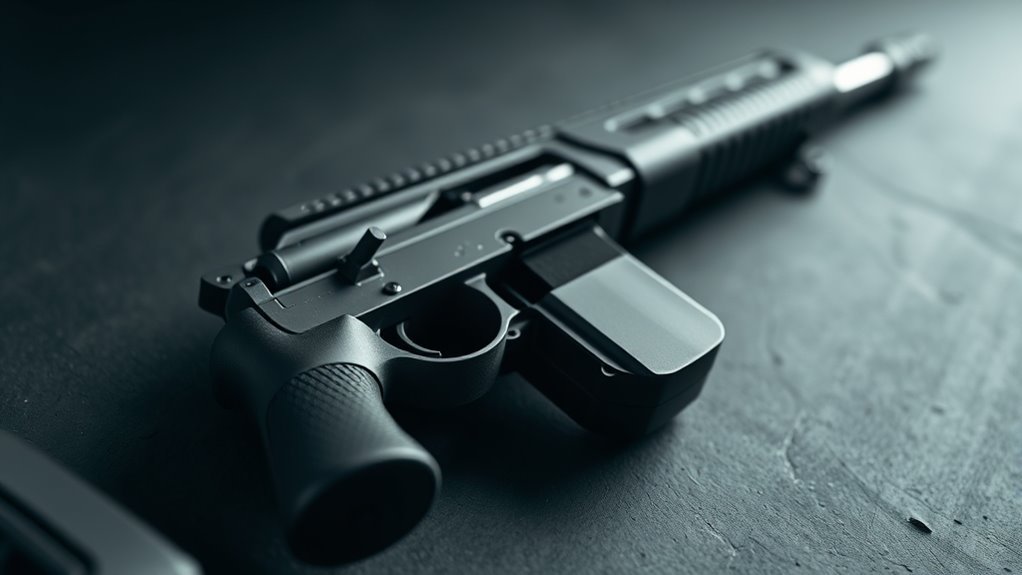
How Does a Bullpup Rifle Work?
When you use a bullpup rifle, its action and magazine sit behind the trigger. This unique setup lets you carry a full-length barrel in a much shorter weapon.
So, you get the accuracy of a long barrel but with a more compact design.
This design makes the rifle easier to handle in tight spaces. You’ll also notice the trigger feels different because of the linkage connecting it to the firing mechanism.
Reloading takes some getting used to, too.
If you want to understand how these features affect your shooting experience, there’s more to explore.
Bullpup rifles blend compactness with precision, changing how you hold, aim, and reload.
Curious to learn more? Let’s dive deeper!
Design and Mechanism of Bullpup Rifles
While traditional rifles place the action and magazine in front of the trigger, bullpup rifles position these components behind it. This setup lets you handle a full-length barrel within a much shorter weapon.
The bullpup design shortens the overall length without reducing barrel length. So, you still get great bullet trajectory and ballistic performance.
The firing mechanism connects the trigger to the action through a linkage, which can affect how the trigger feels when you pull it. Many bullpup rifles also have ambidextrous ejection systems. These direct spent casings away from your face, so both left- and right-handed users can use them comfortably.
Benefits and Challenges of the Bullpup Configuration
Because bullpup rifles place key components behind the trigger, they offer a compact design that enhances maneuverability in tight spaces. This weapon configuration reduces overall length while keeping barrel length, improving balance and reducing fatigue.
However, the magazine placement and ejection port position can challenge you, especially if you’re a left-handed shooter. While bullpups maintain accuracy, their unique ergonomic design needs adjustment.
| Benefit | Challenge | Impact on User |
|---|---|---|
| Compact overall length | Ejection port placement | Difficult for lefties |
| Improved maneuverability | Reloading complexity | Slower magazine changes |
| Better balance | Ergonomic differences | Takes practice |
| Maintained accuracy | Sight alignment issues | Requires adaptation |
| Reduced fatigue | Maintenance difficulty | More careful cleaning |
Conclusion
When you pick up a bullpup rifle, you’re holding a compact powerhouse that fits like a glove, balancing firepower and agility. Its design tucks the action behind the trigger, turning length into lean efficiency.
Though it may take some getting used to, mastering this sleek beast feels like wielding a coiled spring—ready to discharge precision and speed in tight spaces.
Embrace the bullpup, and you’ll dance effortlessly through the chaos of the battlefield. The bullpup rifle’s unique layout allows for a shorter overall length without sacrificing barrel length, making it incredibly maneuverable.
This makes it perfect for close-quarters combat, where agility and quick response times matter most. Understanding how a bullpup rifle works reveals why it’s favored for tactical scenarios—combining compact design with powerful performance, it’s a game-changer in modern firearms.