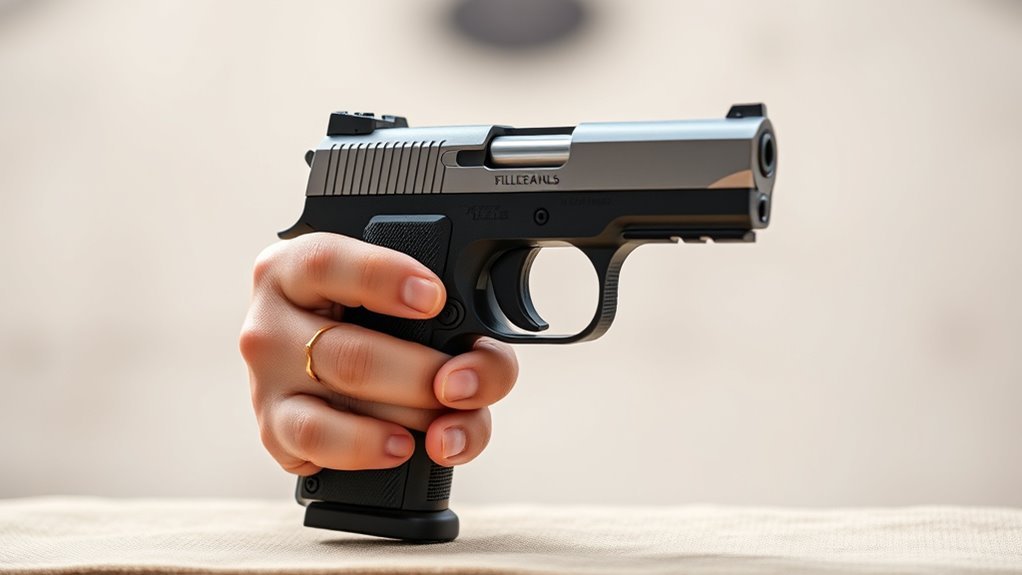
How to Dry Fire a Pistol Safely Without Damage
You can dry fire your pistol safely by first confirming it’s completely unloaded and pointed in a safe direction. Always double-check to make sure there’s no live ammunition in the chamber or magazine before you begin dry firing practice. This simple step is crucial to prevent any accidental discharge.
Next, check your firearm’s manual to guarantee it’s okay to dry fire. Many modern pistols allow dry firing without damage, but some older or rimfire guns might not handle it well. Using high-quality snap caps or dummy rounds is a great way to protect the firing pin, especially if you have a rimfire pistol.
Keep your dry fire sessions moderate to avoid unnecessary wear on your firearm. It’s also a good idea to inspect your gun regularly for any signs of damage or wear.
Follow these steps, and you’ll enhance your skills without risking harm—plus, there’s more helpful info ahead to guide you.
Understanding Dry Fire Safety and Firearm Compatibility
Before you begin dry firing your pistol, you need to understand safety and suitability to avoid damage or accidents. Dry fire safety starts with confirming your firearm is unloaded and pointed safely, whether at home or the shooting range.
Most modern centerfire pistols tolerate thousands of dry fire cycles without firearm damage if you follow proper safety measures. However, rimfire guns require snap caps or dummy rounds to protect the chamber from firing pin impacts.
Always check your firearm guidelines before practicing to ensure compatibility with dry fire training. Using training tools like snap caps cushions the firing pin, preventing harm.
Best Practices and Tools for Damage-Free Dry Fire Training
When you want to protect your pistol during dry fire training, using high-quality snap caps or dummy rounds is essential. They cushion the firing pin and prevent damage.
Before any dry fire practice, always check your pistol’s specific guidelines in the manufacturer’s manual. It helps ensure safe training at home.
Always consult your pistol’s manual before dry fire practice to ensure safe and effective training at home.
Maintain strict firearm safety by keeping the gun pointed in a safe direction and always confirming it’s unloaded.
Try to limit dry fire sessions to avoid excessive wear. Also, make it a habit to regularly inspect your firearm, especially focusing on firing pins and internal parts.
Incorporate snap caps or dummy rounds to enhance trigger control and improve your shooting skills without risking damage.
Consistent firearm maintenance combined with these best practices mirrors range safety principles. This guarantees your pistol stays reliable during damage-free dry fire practice.
Conclusion
Dry firing your pistol can be a powerful tool in honing your skills, but it’s important to treat it like walking a tightrope—balance and caution are key. By understanding your firearm’s compatibility and using the right tools, you’ll avoid damage and keep your practice safe.
Stick to best practices, and you’ll turn dry fire sessions into steady steps toward mastery without risking your firearm’s health. Always check if your pistol is safe for dry firing, and consider using snap caps or dummy rounds to protect the firing pin.
Remember, safe dry firing helps improve your trigger control, sight alignment, and overall shooting proficiency. So take your time, follow these tips, and make dry firing a consistent part of your training routine without fear of damaging your firearm.