How to Wear a Rifle Sling Step by Step
To wear a rifle sling properly, start by choosing one that fits your firearm and shooting style. This step is crucial because the right sling enhances your comfort and control when handling your rifle.
Whether you prefer a two-point sling or a single-point sling, make sure it suits your needs and the type of shooting you do.
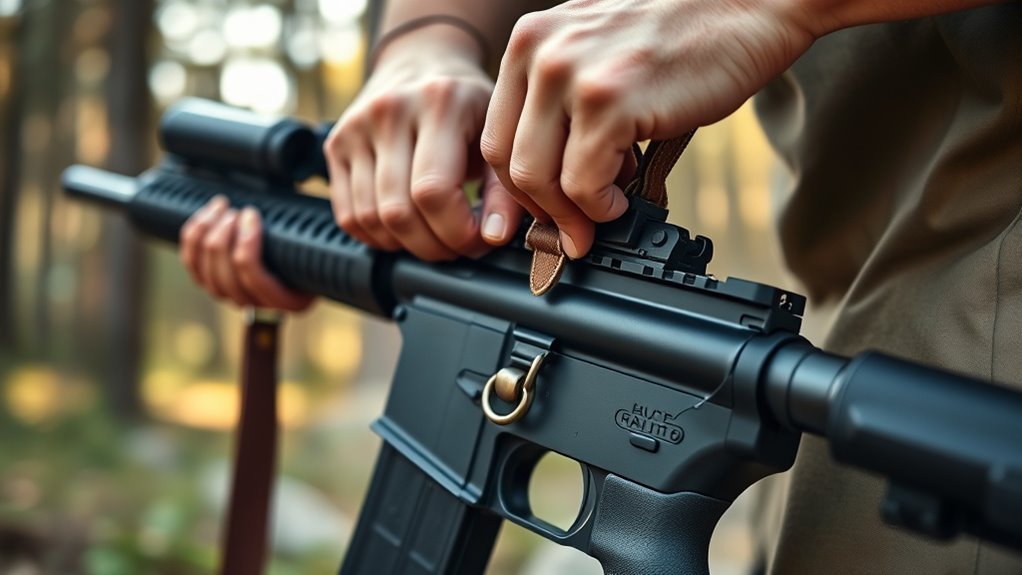
Attach a two-point sling to both the front and rear mounts of your rifle, or securely clip a single-point sling near the receiver.
Adjust the sling length so it feels comfortable over your shoulder, allowing natural movement without any restriction.
This way, the sling supports your rifle firmly as you move through different shooting positions.
Once everything is set, you’ll notice how fine-tuning the sling improves both stability and comfort during use.
It really makes a difference when you’re out in the field or on the range, giving you better control and less fatigue.
Selecting and Attaching the Right Sling
When selecting and attaching the right sling, you’ll want to pick one that matches your firearm and shooting style, whether that’s a two-point or single-point sling. Start by choosing a sling compatible with your rifle and preferences.
Choose a sling that fits your firearm and shooting style for optimal comfort and functionality.
For two-point slings, connect the front and rear sling attachment points on the stock and handguard or rail system. Single-point slings clip near the receiver at a rear attachment point. Make sure to secure all hardware tightly to avoid slippage.
Adjust the sling length so it fits comfortably from your shoulder to your support side hand. This way, it allows natural movement without feeling restrictive.
Once attached, test the sling by moving through various shooting positions. This helps confirm it stays secure and supports your stability without hindering your range of motion.
Adjusting and Wearing the Sling for Optimal Stability
After selecting and securely attaching your sling, focus on adjusting its length to fit comfortably around your shoulder. You want the sling to be snug enough to stabilize the rifle but not so tight it restricts movement or causes discomfort.
Start by positioning the sling at the mounting point, then wrap the sling around your shoulder. Adjust the length until it supports the rifle without excessive slack or tightness.
This balance helps keep the rifle steady while allowing quick access and smooth shifts between carrying and shooting. Make sure to regularly check and readjust the sling during your session to guarantee stability.
Proper adjustment and wearing assure your sling functions as intended, improving control and comfort in the field. It’s all about finding that sweet spot where you feel secure yet free to move easily.
Conclusion
Now that you know how to select, attach, and adjust your rifle sling for maximum stability, you’re ready to improve your shooting experience.
Did you know that shooters who use a properly fitted sling increase their accuracy by up to 30%? That’s a huge difference that can boost your confidence and performance in the field.
So take the time to get your sling right—it’s a small step with a big impact. Wearing a rifle sling correctly not only enhances stability but also reduces fatigue during long sessions.
By mastering how to wear a rifle sling step by step, you’ll enjoy better control and precision every time you shoot. Trust me, investing a little effort into your sling setup will pay off with improved accuracy and comfort in the field.