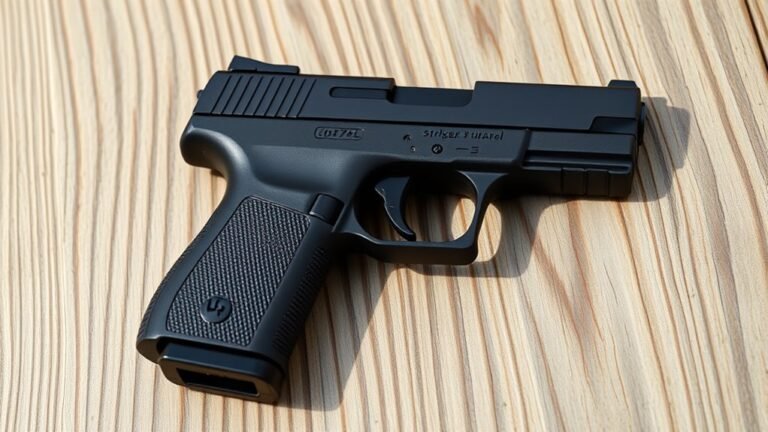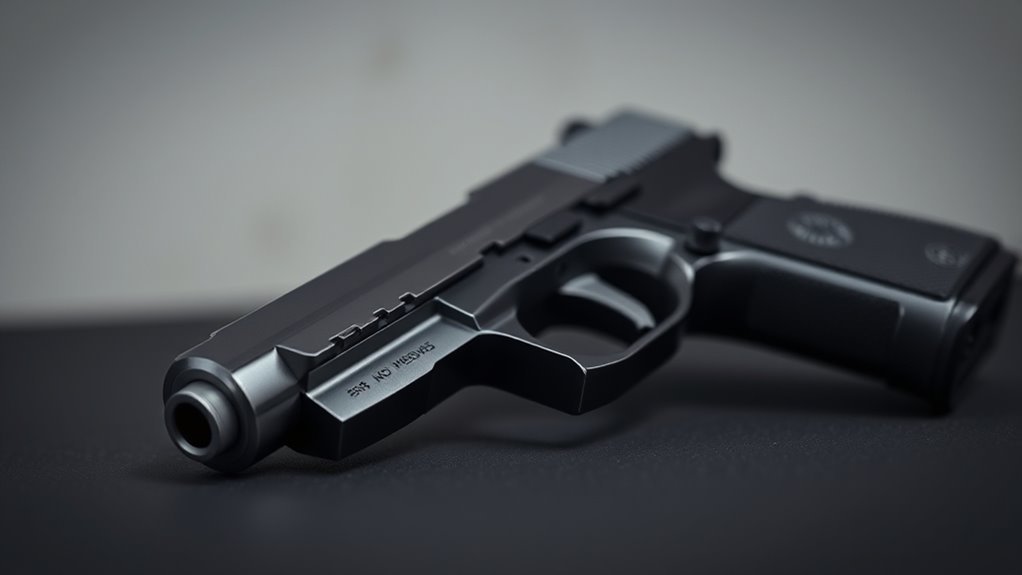
How Does an Air Pistol Work?
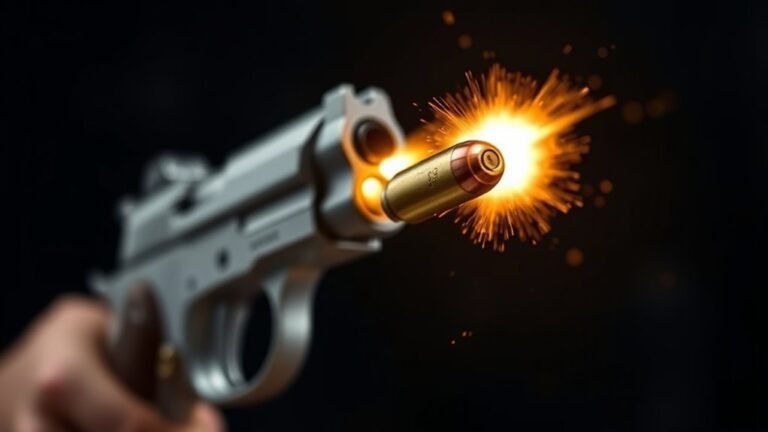
When you pull the trigger on an air pistol, it releases compressed air or gas, like CO₂, from a high-pressure reservoir. This burst of air propels the pellet or BB down the barrel with controlled force, ensuring accuracy.
Before firing, you often cock the pistol to prep the internal valve and reservoir for consistent shots.
Different power systems—spring piston, CO₂ cartridges, or pre-charged pneumatics—drive this process.
Keep exploring to uncover how these mechanisms work in detail. It’s pretty fascinating how each system uses air pressure to send projectiles flying accurately and safely.
Key Takeaways
- Pulling the trigger releases compressed gas, propelling the pellet or BB down the barrel. It’s a quick action that sends the projectile flying.
- A reservoir stores high-pressure air or gas, which supplies consistent force for each shot. This helps keep your shooting steady and reliable.
- Cocking the pistol gets the valve and reservoir ready for a controlled gas release. It’s like preparing the gun to fire smoothly.
- Power mechanisms include spring piston, CO₂ cartridges, PCP, and multi-pump systems. Each one works to deliver the right amount of force.
- These mechanisms ensure reliable, controlled propulsion and consistent shooting performance. So, you can count on your air pistol to perform well every time.
How Air Pistols Use Compressed Air to Shoot
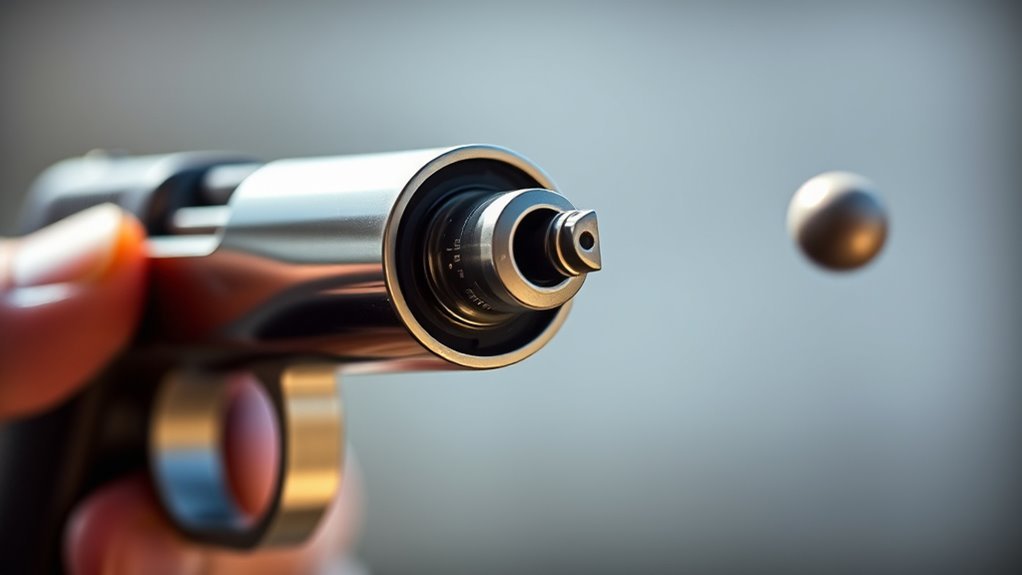
When you pull the trigger on an air pistol, compressed air or gas like CO₂ quickly releases from a chamber. This propels the BB or pellet down the barrel.
Inside the pistol, there’s a reservoir that stores this compressed air under high pressure until you’re ready to shoot. Pulling the trigger opens a valve that controls the release of gas.
This lets out a precise burst to propel your shot. In CO₂ models, a small cartridge supplies the gas, while PCP pistols use an externally filled high-pressure tank.
Before firing, you might need to cock the pistol. This prepares the valve and reservoir for the next release.
This system makes sure each shot uses a controlled amount of pressure. That way, you get consistent force and accuracy every time.
The Main Power Mechanisms Behind Air Pistols
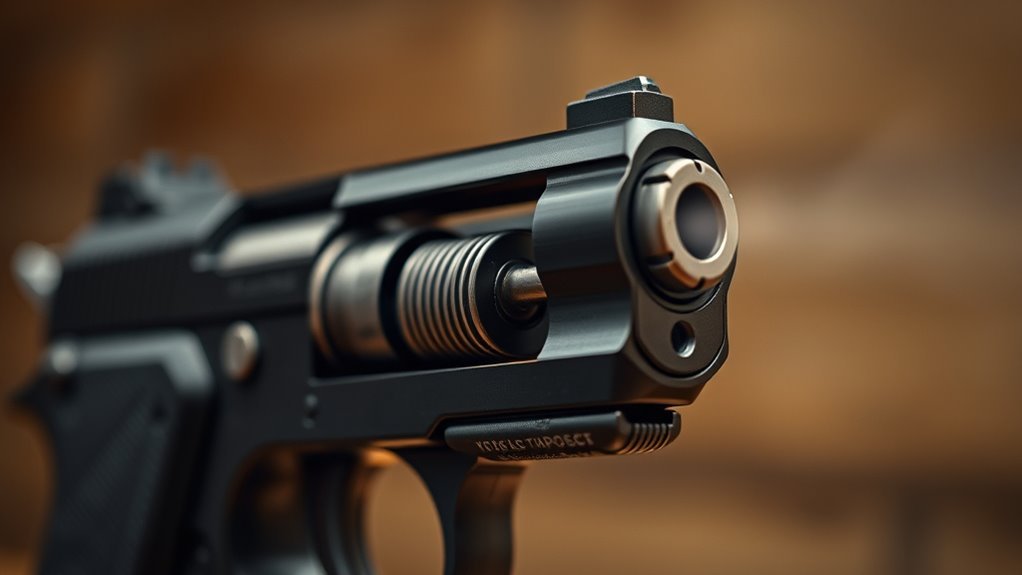
Although air pistols come in various styles, they all rely on specific power mechanisms to launch their projectiles. One common mechanism is the spring piston system, where cocking compresses a spring or gas piston, storing energy that’s released to propel the pellet.
CO₂ cartridges act as another power source, using compressed air that’s rapidly released when you pull the trigger. Pre-charged pneumatic (PCP) pistols store high-pressure air in a reservoir, allowing multiple shots with consistent propulsion without repeated pumping.
Some pistols use multi-pump designs, where you manually pump air into a chamber to control power. Understanding these mechanisms helps you appreciate how air pistols efficiently convert stored energy into controlled propulsion, making them reliable and powerful tools for shooting.
Frequently Asked Questions
Do Airguns Require a Gun License?
Whether you need a gun license for airguns depends on where you live. Some places don’t require one for low-powered models, but others do. Always check your local laws before buying or using an air pistol.
Will an Air Pistol Stop an Intruder?
You might hope an air pistol stops an intruder, but it’s more like a whisper than a roar—its impact won’t reliably stop danger. You should choose stronger protection to keep yourself truly safe.
How Long Does a CO2 Cartridge Last in an Air Pistol?
A CO2 cartridge usually lasts you about 30 to 60 shots in an air pistol. Cold weather, powerful settings, and poor maintenance can reduce that, so keep your pistol and seals in good shape for best performance.
Does an Airgun Count as a Firearm?
Whether an airgun counts as a firearm depends on where you live, how powerful it is, and local laws. You might consider it a firearm, or you might treat it as a sport or recreational device instead.
Conclusion
Now that you know how air pistols use compressed air and their main power mechanisms, you can really appreciate the clever engineering behind each shot. It’s pretty fascinating how something so compact can pack such a punch.
Remember, “practice makes perfect,” so the more you understand and handle your air pistol, the better you’ll get at aiming and shooting safely. Whether you’re into sport or just target practice, getting comfortable with your air pistol is key.
Mastering these basics will help you enjoy your air pistol with confidence and precision every time you pull the trigger. Understanding the mechanics and practicing regularly not only improves your aim but also ensures you stay safe. So keep practicing, stay curious, and have fun exploring the world of air pistols!