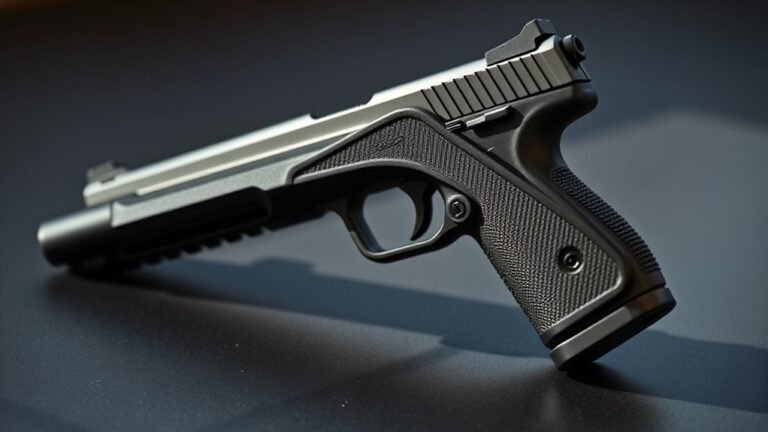
What Is a Blowback Pistol and How Does It Work?
A blowback pistol operates using the simple physics of cartridge gases pushing the slide backward without any locking mechanism. When you fire, the expanding gases push the slide rearward, ejecting the spent case and chambering a new round.
This basic blowback action is what makes these pistols unique and easy to understand.
It relies on the slide’s weight and recoil spring to control recoil and guarantee smooth cycling. Because of this design, blowback pistols typically use low-pressure cartridges to keep things safe and reliable.
If you’re curious about why this design favors simplicity and certain ammo types, keep reading to explore the ins and outs of blowback pistols.
Key Takeaways
– A blowback pistol operates by the slide moving rearward from cartridge gas pressure without any mechanical locking. The slide’s mass and recoil spring delay opening, allowing safe ejection and chambering of rounds.
It uses low-pressure cartridges like .22 LR or .380 ACP for reliable, safe blowback operation. The design is simple, cost-effective, and avoids complex locking mechanisms by relying on slide weight and spring tension.
Blowback pistols are limited to low-pressure rounds, as higher pressures require heavier slides and stronger springs. So, they work best with lighter cartridges to keep everything running smoothly.
What Is a Blowback Pistol and How Does It Work?
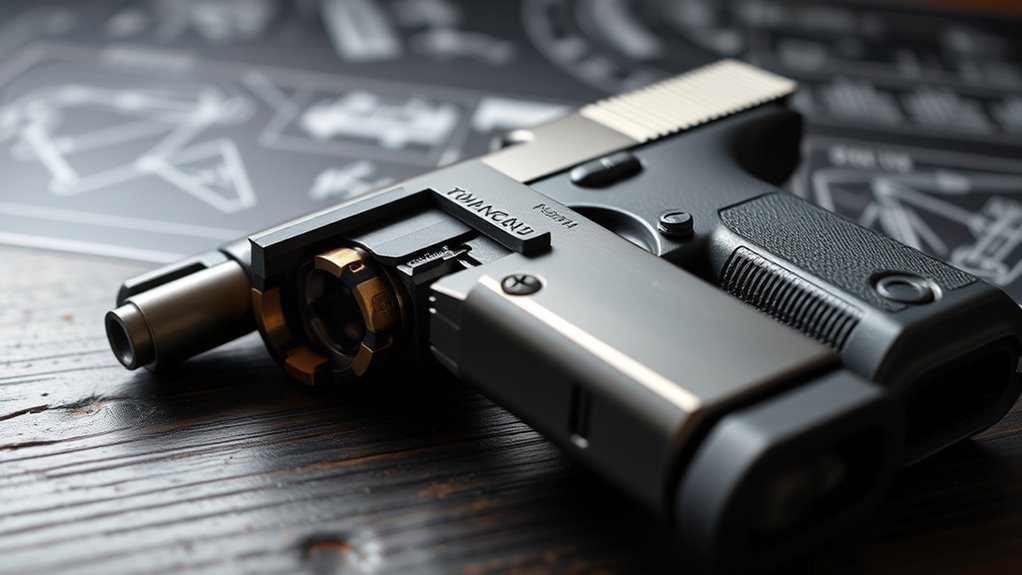
How does a blowback pistol function without a locked breech? In blowback operation, the slide moves rearward solely due to the rearward force generated by the cartridge’s expanding gases. You won’t find any mechanical locking; instead, the slide or bolt relies on its own mass and the recoil spring to delay opening.
When you fire, the cartridge pressure pushes the slide back against the recoil spring, ejecting the spent case and chambering a new round. The recoil spring then pushes the slide forward again, readying the pistol for the next shot.
Because the slide moves freely, the system depends heavily on the slide’s weight and spring tension to manage recoil safely without a locked breech mechanism. It’s a simple but clever way to keep things moving smoothly without extra locking parts.
Why Blowback Pistols Use Low-Pressure Cartridges and Simple Designs
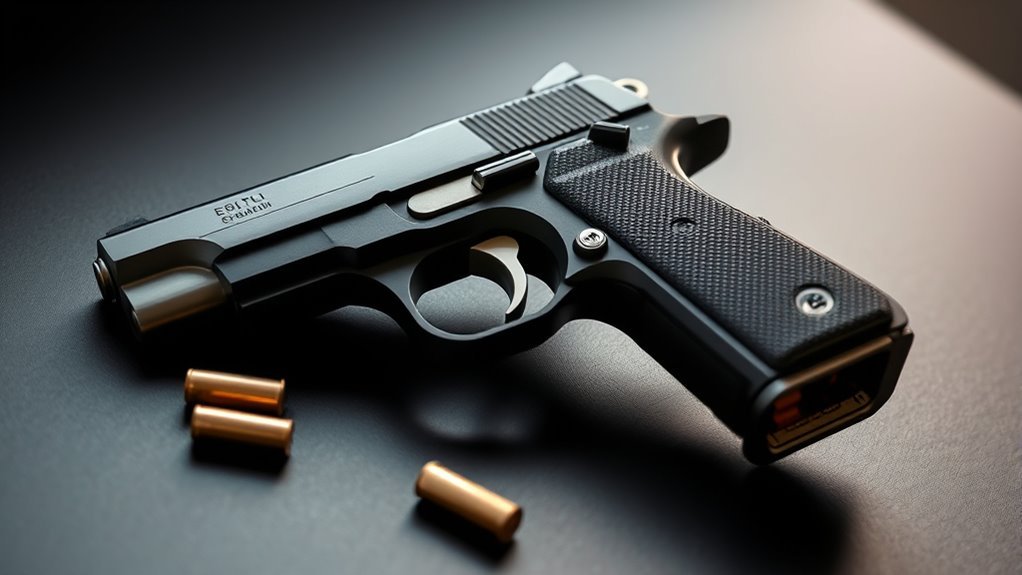
Because blowback pistols rely on the slide’s mass and spring tension to control recoil, they use low-pressure cartridges like .22 LR, .32 ACP, and .380 ACP. These low-pressure cartridges keep the simple blowback design effective by ensuring the cartridge case acts as a piston without causing excessive pressure.
If the pressure rises too high, the slide might open prematurely, risking firearm failure. Using low-pressure cartridges lets the slide stay lighter and the spring forces manageable, which simplifies the design and reduces weight.
Higher-pressure rounds would demand heavier slides and stronger springs, complicating recoil action and increasing manufacturing costs. So, blowback pistols maintain reliability and affordability by sticking to low-pressure cartridges and a straightforward, robust design that balances pressure with slide and spring forces.
Frequently Asked Questions
Which Is Better, Blowback or Non-Blowback?
You’ll find non-blowback pistols better for handling powerful cartridges and durability, while blowback models suit lighter rounds and stay budget-friendly. Choose based on your caliber needs, shooting frequency, and how much recoil you can manage.
Is a Glock a Blowback Pistol?
No, a Glock isn’t a blowback pistol. You’ll find it uses a locked-breech recoil system with a tilting barrel, managing high-pressure rounds differently than blowback designs that rely on slide mass and spring tension.
What Is the Most Accurate Blowback Air Pistol?
If you want pinpoint accuracy, the Umarex Smith & Wesson M&P45 or Weihrauch HW45 stand out. Their precision-machined parts and stable grips give you consistent shots, just like a sharpshooter relying on a trusted rifle.
Are Blowback Guns Reliable?
Yes, blowback guns are reliable if you stick to low-pressure cartridges, maintain them well, and use the right recoil spring. High-pressure ammo causes issues, but with proper care, they perform consistently and dependably for their purpose.
Conclusion
So, you’ve learned that blowback pistols rely on simple designs and low-pressure cartridges to keep things running smoothly. Ironically, their “blowback” isn’t some dramatic explosion but a controlled push that’s surprisingly gentle.
You might expect complex mechanics, but nope—just straightforward physics doing the heavy lifting. Next time you hear “blowback,” don’t imagine chaos; think of it as the pistol’s polite way of saying, “I’ve got this.”
In essence, a blowback pistol works by using the energy from firing to push the slide back, ejecting the spent cartridge and chambering a new one. This mechanism keeps things reliable without the need for complicated parts or high-pressure rounds.
So, when we talk about a blowback pistol, remember it’s all about simplicity, efficiency, and clever use of physics. It’s a smart design that proves sometimes less really is more!