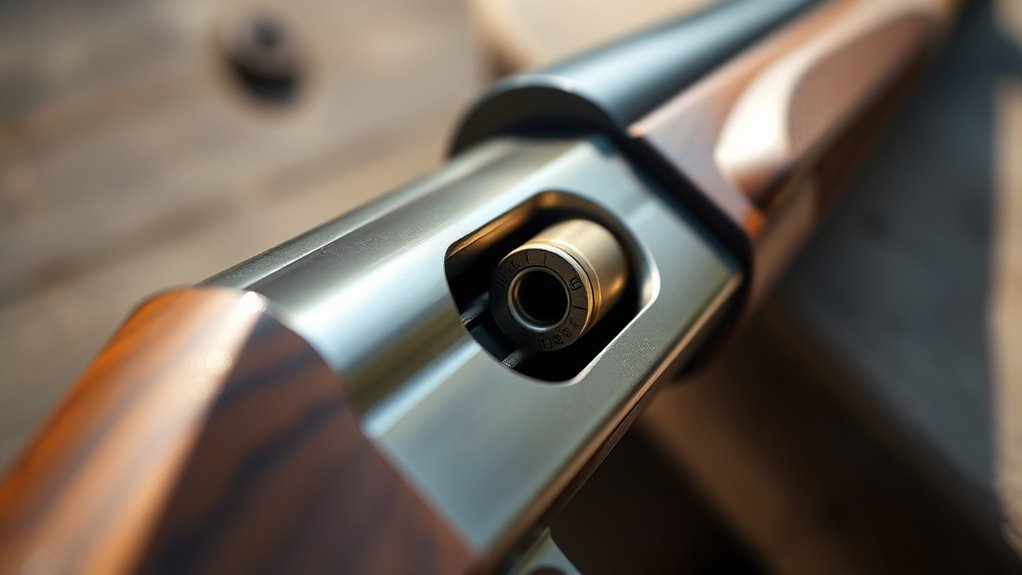
How Does a Long Rifle Work?
When you pull the trigger on a long rifle, the firing mechanism strikes the primer. This action ignites the propellant, which sends the bullet down the barrel. It’s a quick but powerful chain reaction that starts the bullet’s journey.
Inside the barrel, rifling plays a key role. It spins the bullet, helping it stay stable and accurate as it flies toward the target. This spin is what makes long rifles so precise.
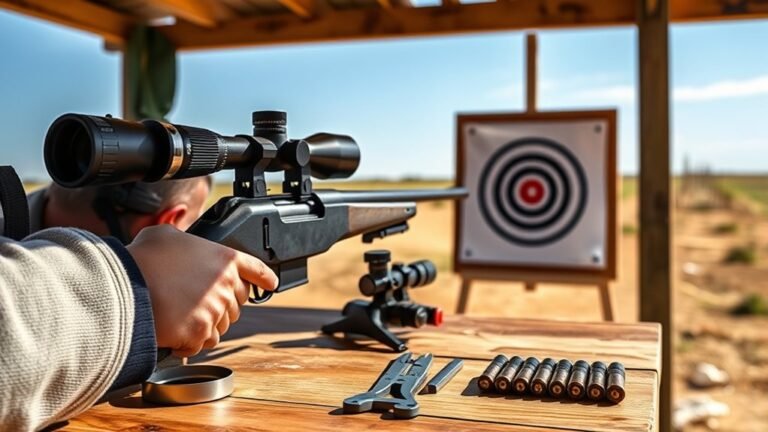
Your stock is there to help you steady the rifle. It also lets you aim carefully using the sights. All these parts work together seamlessly to deliver sharp, reliable shots.
Keep exploring, and you’ll see how each component is essential for performance.
Mechanism and Components of a Long Rifle
Although a long rifle may seem complex, its key components work together seamlessly to guarantee accurate firing. You’ll find the barrel at its core, guiding the bullet with rifling—spiral grooves that stabilize its flight.
The stock supports your hold, aligning your aim through the sights for precision. When you operate the bolt-action firing mechanism, pulling the trigger releases the firing pin to strike the primer.
This ignition sparks the propellant, creating gas pressure that propels the bullet through the barrel. Each part’s role is essential: the firing mechanism ensures controlled ignition, while the stock and sights maintain accuracy.
Understanding these components helps you appreciate how the long rifle transforms your action into a precise, reliable shot every time.
The Role of Rifling in Accuracy and Stability
When you fire a long rifle, rifling inside the barrel spins the bullet, giving it the stability it needs to fly straight. Rifling consists of helical grooves cut into the barrel’s interior, with lands—the raised areas between grooves—gripping the bullet to impart this essential spin.
This spin creates gyroscopic stability, which stops the bullet from tumbling or yawing mid-flight. The twist rate of the rifling, like 1:7 or 1:12, is carefully designed to match specific bullet types and weights, optimizing accuracy.
Conclusion
So, now that you know how a long rifle works, you can impress your friends by explaining how those spirals inside the barrel magically turn a bullet into a precision missile.
Who knew that twisting metal could make such a difference?
Next time you see a long rifle, just remember: it’s not just a fancy stick—it’s a clever dance of parts working together to send bullets on a spin. This spin stabilizes the bullet in flight, improving accuracy and range.
It’s a perfect example of how physics and engineering combine in a long rifle to make shooting both effective and precise. Understanding how a long rifle works not only gives you cool knowledge but also shows how science plays a vital role in everyday tools.
So, the next time you think about a long rifle, remember—it’s all about the rifling inside the barrel, the bullet’s spin, and the incredible physics that make it a precise weapon.