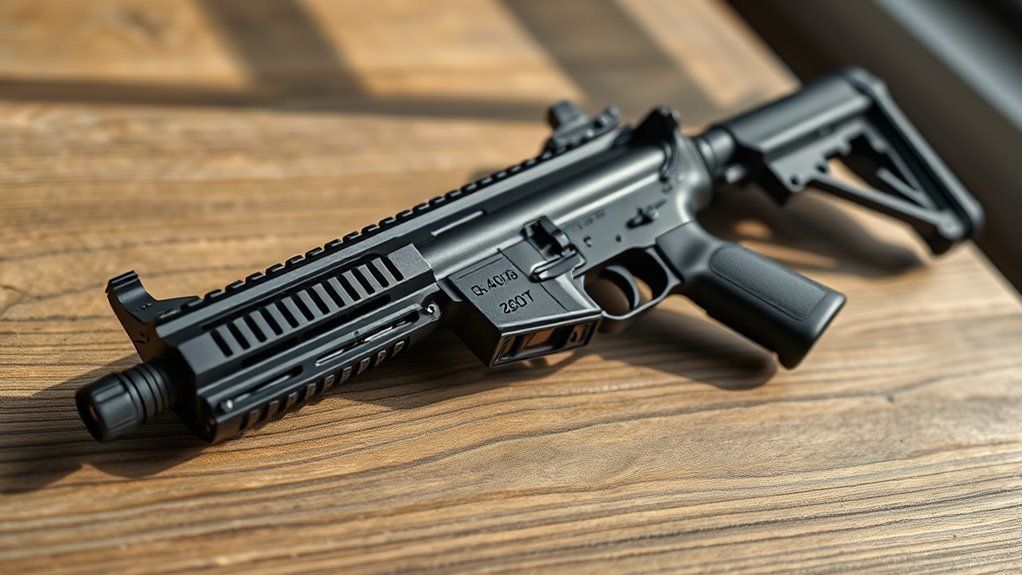
What Is Considered an AR Pistol?
An AR pistol is a compact firearm that looks a lot like a rifle but with some important differences. For starters, it has a barrel shorter than 16 inches and doesn’t have a traditional shoulder stock. Instead, it uses a stabilizing brace, which helps keep the overall length usually above 26 inches to meet legal requirements.
This makes an AR pistol unique compared to rifles or short-barreled rifles (SBRs). If you were to attach a stock to it, the firearm would be reclassified as an SBR, which means you’d have to go through a registration process.
Also, there are some specific accessory rules you need to follow, like avoiding vertical foregrips, to stay compliant with the law.
Keep reading to get a clearer picture of what sets an AR pistol apart and understand all the legal details you need to know. It’s important to know these differences whether you’re a new owner or just curious about firearm classifications.
Key Takeaways
- An AR pistol has a barrel shorter than 16 inches and doesn’t have a traditional shoulder stock.
- Instead, it uses a stabilizing brace or a pistol buffer tube.
- The overall length, including the brace, is usually at least 26 inches to stay legal.
- But if you add a shoulder stock to an AR pistol, it gets reclassified as a short-barreled rifle (SBR).
- Also, vertical foregrips aren’t allowed on AR pistols, though angled foregrips are totally fine.
How an AR Pistol Differs From Rifles and SBRs
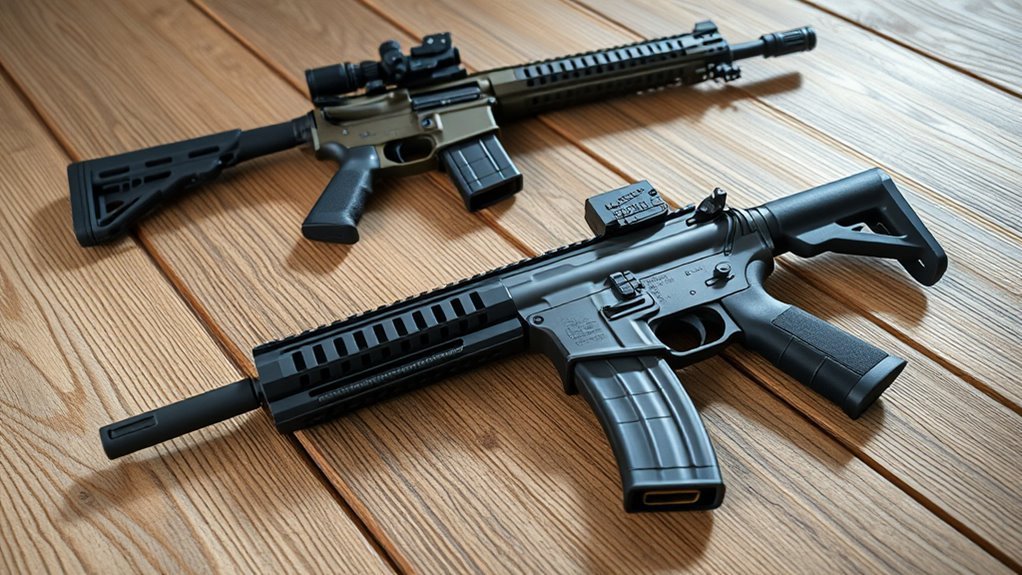
Although AR pistols share many components with rifles, they differ primarily in barrel length and the absence of a shoulder stock. An AR pistol features a barrel shorter than 16 inches and lacks a shoulder stock, which sets it apart in legal classification.
When building or buying one, you’ll notice the overall length is compact, making it distinct from rifles. On the other hand, a short-barreled rifle (SBR) has a similar barrel length but includes a stock, changing its legal status.
The ATF treats SBRs differently, requiring registration and a tax stamp. So, if you add a stock to your AR pistol, it becomes an SBR under firearm regulation.
Understanding these differences guarantees you stay compliant while choosing the right firearm for your needs.
Legal Requirements and Functional Features of AR Pistols
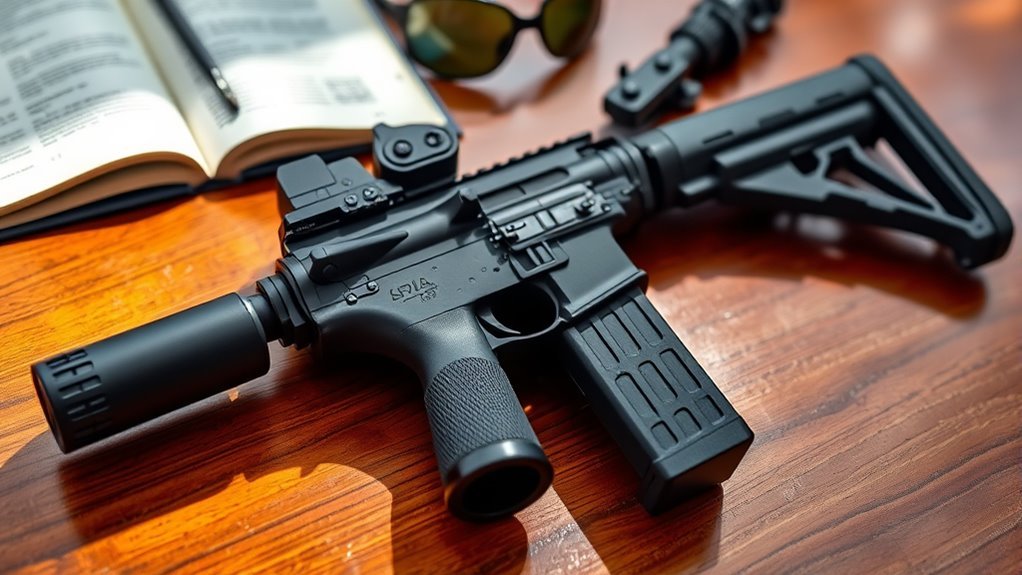
Understanding the legal requirements and functional features of AR pistols guarantees you stay within federal law while customizing or using one.
An AR pistol has a barrel length under 16 inches and lacks a traditional stock. Instead, it uses a stabilizing brace or pistol buffer tube for proper firearm classification.
An AR pistol features a barrel under 16 inches and replaces the stock with a stabilizing brace.
The overall length, including the brace, generally must be at least 26 inches to comply with ATF regulations. Attaching a shoulder stock after assembly can reclassify your AR pistol as a short-barreled rifle, triggering strict registration requirements.
You can’t use vertical foregrips on an AR pistol, but angled foregrips and other accessories are allowed if they meet legal limits. Knowing these details ensures your AR pistol remains legal and functional under federal law.
Frequently Asked Questions
How Many Inches Is Considered an AR Pistol?
An AR pistol has a barrel shorter than 16 inches, usually between 7.5 and 11 inches. You’ll want to guarantee the overall length stays under 26 inches, and it can’t have a fixed stock.
What Is Considered a Pistol in AR?
Imagine you build an AR with a 10.5-inch barrel and no shoulder stock—that’s considered a pistol. You’ll fire it like a handgun, using a pistol grip and sometimes a stabilizing brace instead of a traditional stock.
What’s the Difference Between an AR-15 and an AR Pistol?
The difference between an AR-15 and an AR pistol is mainly the barrel length and stock. You’ll notice the AR pistol has a shorter barrel and uses a stabilizing brace instead of a traditional shoulder stock like the AR-15 rifle.
What Is the Criteria for an AR-15 Pistol?
You know what they say: measure twice, cut once. To classify an AR-15 pistol, you need a barrel under 16 inches, overall length under 26 inches, a pistol brace, and no shoulder stock or vertical foregrip.
Conclusion
So, you see, an AR pistol isn’t just a smaller rifle or a compact SBR—it’s a unique category with specific legal rules and features. Coincidentally, what makes it different also keeps it within the law, like its shorter barrel and lack of a stock.
When you understand these details, you’ll realize that owning an AR pistol means maneuvering both design and regulations carefully. It’s about ensuring you stay compliant while enjoying its distinct advantages.
In short, an AR pistol is defined by its legal status and physical characteristics, such as barrel length and the absence of a traditional stock. Knowing these factors helps you appreciate why it’s not just a rifle variant but a separate class altogether. So, if you’re considering an AR pistol, remember it’s all about balancing its unique design with the specific laws that govern it. This awareness keeps you both informed and responsible as an owner.