What Makes a Rifle a Pistol?
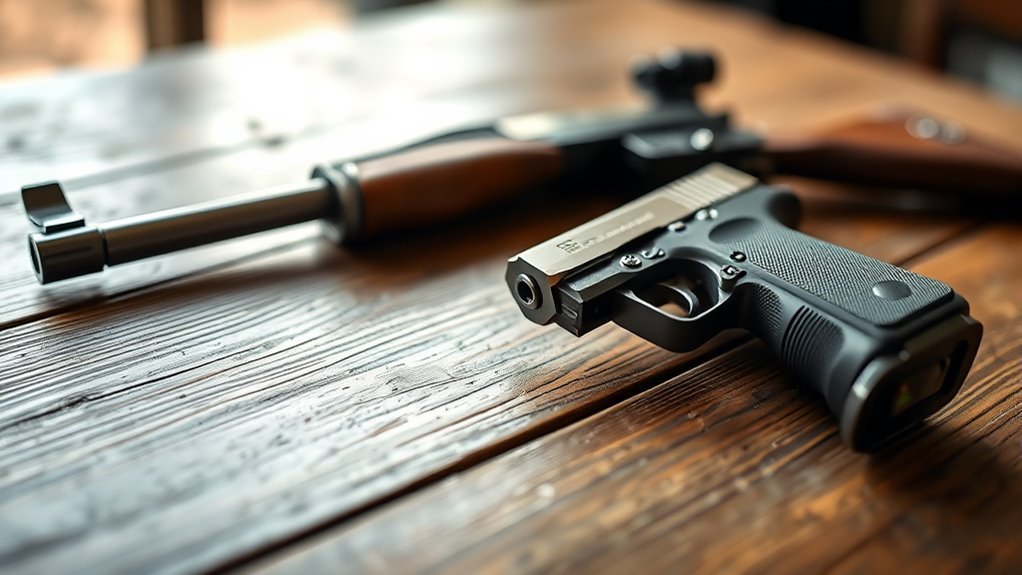
You can tell a rifle from a pistol mainly by barrel length and stock design. If it has a barrel under 16 inches and lacks a traditional shoulder stock, it’s likely a pistol.
Using a stabilizing brace instead of a shoulder stock keeps it classified as a pistol, even with a short barrel.
Overall length under 26 inches also matters. Understanding these details helps you grasp how firearms are legally defined and why it matters.
Knowing the difference between a rifle and a pistol isn’t just about the look—it’s about how the law sees them. These features impact your rights and options when it comes to owning and using firearms.
So, it’s good to know what makes a rifle a pistol and why those small details count.
Key Takeaways
- A pistol has a barrel shorter than 16 inches, while a rifle’s barrel is 16 inches or longer.
- Pistols lack a traditional shoulder stock, using a buffer tube or stabilizing brace instead. Adding a shoulder stock to a pistol converts it legally into a rifle.
- Overall length under 26 inches classifies the firearm as a pistol; longer length qualifies as a rifle.
- Stabilizing braces resemble stocks but do not change the firearm’s classification from pistol to rifle.
So basically, the key differences come down to barrel length, the presence of a shoulder stock, and the overall length of the firearm. The stabilizing brace keeps things a bit tricky, but it doesn’t turn a pistol into a rifle by itself.
What Makes an AR Pistol Different From an AR Rifle?
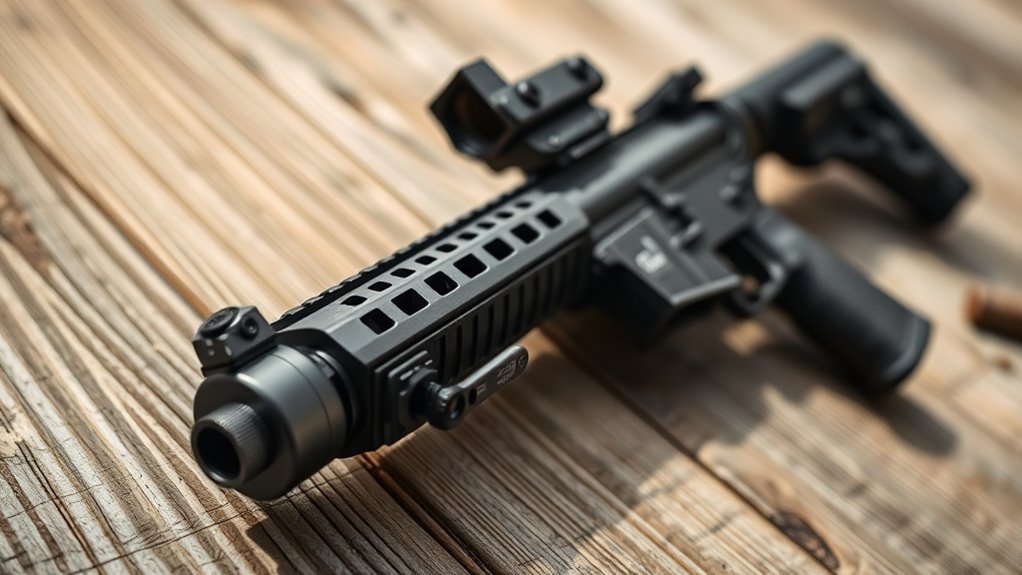
Although AR pistols and AR rifles share many design features, what sets them apart primarily comes down to barrel length and the presence of a shoulder stock. An AR pistol features a short barrel—less than 16 inches—and lacks a traditional shoulder stock, often using a pistol buffer tube or stabilizing brace instead.
This design keeps the overall length under 26 inches, distinguishing it from an AR rifle. In contrast, an AR rifle has a barrel 16 inches or longer and includes a fixed or adjustable shoulder stock, contributing to a longer overall length.
These differences are essential for the legal classification of the firearm. Understanding how barrel length, shoulder stock, and overall length define an AR pistol versus an AR rifle helps clarify their distinct roles and regulations.
Why Barrel Length and Stock Design Matter for AR Pistol and Rifle Laws
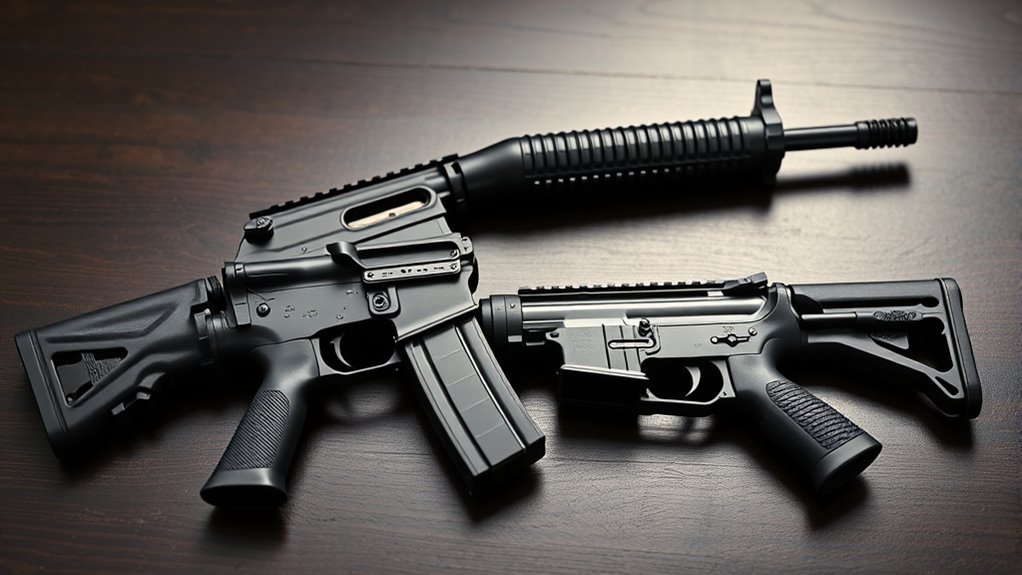
Because barrel length and stock design directly affect a firearm’s classification, they play a crucial role in AR pistol and rifle laws.
Barrel length and stock design are key factors in determining firearm classification and legal status.
To keep that legal line clear, your AR pistol has to have a barrel shorter than 16 inches and can’t have a shoulder stock. Adding a shoulder stock changes the overall length and instantly makes it a rifle, which means it falls under NFA regulations.
Now, a stabilizing brace might look like a stock, but it doesn’t turn your AR pistol into a rifle under current laws.
Knowing how barrel length and stock design impact classification helps you stay on the right side of the law. If you keep your AR pistol with a short barrel and no shoulder stock, it stays a pistol. But once you add that shoulder stock, you’re dealing with a rifle, and that comes with different legal rules.
Frequently Asked Questions
What Qualifies a Rifle as a Pistol?
You qualify a rifle as a pistol by ensuring it’s designed for one-handed firing, has a barrel under 16 inches, an overall length under 26 inches, and uses a stabilizing brace instead of a shoulder stock, meeting legal requirements.
What Qualifies a Gun as a Rifle?
You qualify a gun as a rifle if it’s designed to fire from your shoulder with a stock, has a rifled barrel at least 16 inches long, and is meant for two-handed, stable use to improve accuracy at distance.
What Makes AR-15 a Pistol?
Think of your AR-15 pistol as a sleek hawk, compact and swift. It’s a pistol because you’ve trimmed its barrel below 16 inches and swapped its shoulder stock for a brace, letting you wield it one-handed and agile.
What Makes a Gun a Pistol or a Rifle?
You determine if a gun’s a pistol or rifle by how you hold and fire it. If you shoot it one-handed without a stock, it’s a pistol; if you shoulder it with a longer barrel and stock, it’s a rifle.
Conclusion
So, what really sets an AR pistol apart from an AR rifle? It all boils down to barrel length and stock design, which shape how each is classified under the law.
You might wonder why these details matter so much—well, they determine how you can legally own and use your firearm. Understanding these differences helps you stay informed and compliant.
Knowing whether your AR is a pistol or a rifle affects everything from where you can carry it to what kind of permits you might need. So, paying attention to barrel length and stock type isn’t just technical—it’s essential for safe and lawful firearm ownership. Keeping these factors in mind ensures your AR pistol or AR rifle experience stays within legal boundaries and enhances your overall safety.