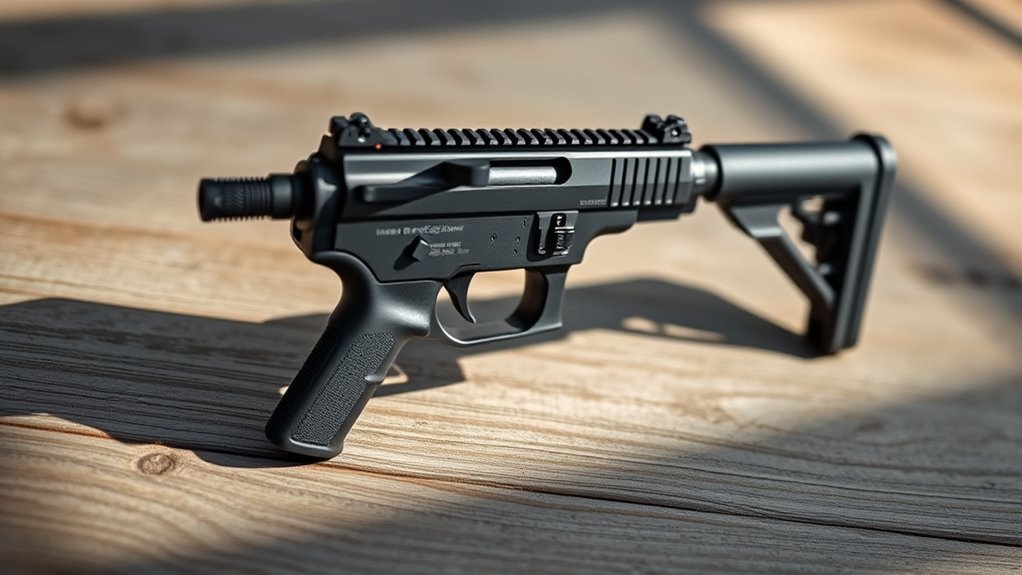
What’s an AR Pistol?
You’re handling an AR pistol when you use a compact, stockless firearm built on the AR-15 platform with a barrel shorter than 16 inches. This type of gun is designed for those who want the power and versatility of an AR-15 but in a smaller, more maneuverable package.
Instead of a traditional stock, it features a stabilizing brace, which makes it easier to handle, especially in tight spaces.
Though it shares many parts with AR rifles, its shorter barrel and lack of stock change how it handles and is legally classified. The stabilizing brace helps improve control without turning the firearm into a rifle under the law.
Keep exploring if you want to understand its unique features and legal nuances. It’s a fascinating piece of firearm design with some important considerations.
Key Takeaways
- An AR-15 pistol is a compact firearm with a shorter barrel, typically 7.5 to 10.5 inches, and no traditional stock. It uses the same AR-15 platform components but features a pistol buffer tube or stabilizing brace for control.
- The shorter barrel and lack of stock enhance maneuverability and make it suitable for confined spaces. Basically, it’s easier to handle in tight spots compared to a full rifle.
- Legally, it’s classified as a pistol because of the barrel length and no stock, which is different from AR rifles that have 16-inch barrels. Keep in mind, if you add a stock, it changes the classification.
- Adding a stock converts it into a short-barreled rifle (SBR). That means you’d need to register it with the ATF and get a tax stamp before you can legally own it.
Definition and Construction of AR-15 Pistols
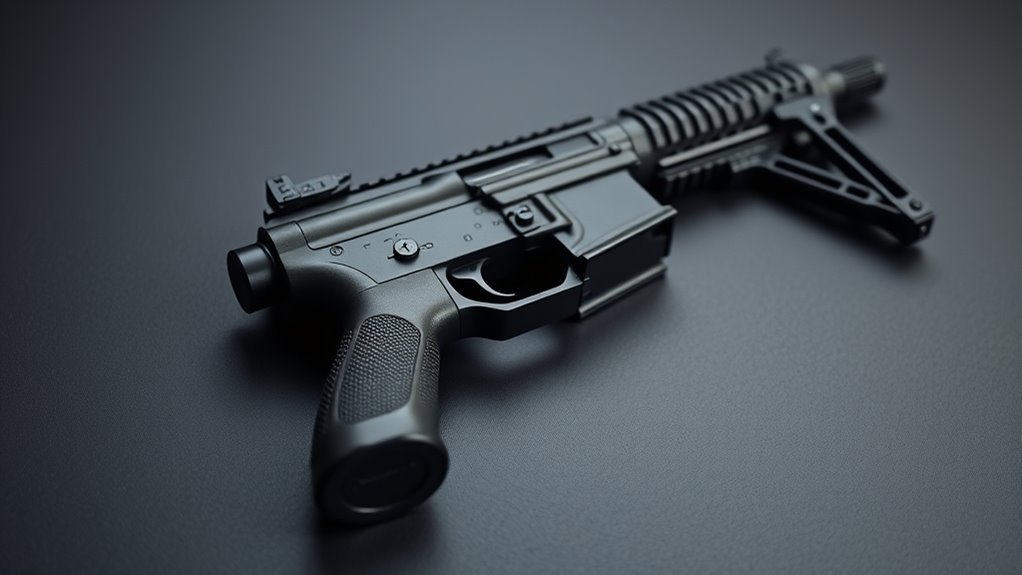
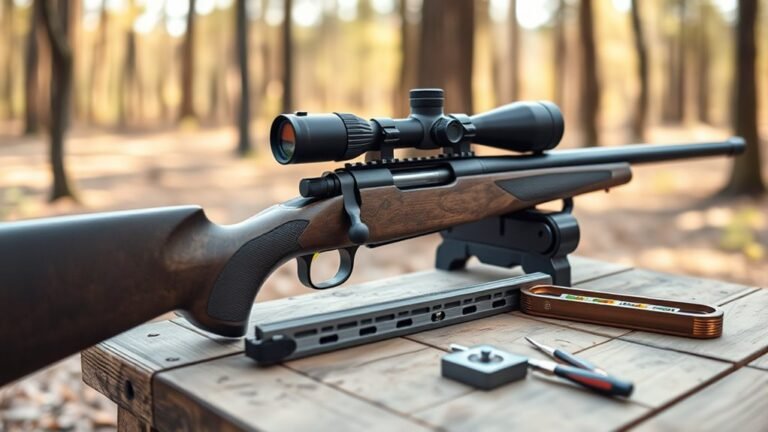
Although it looks similar to a standard AR-15 rifle, an AR-15 pistol is defined by its shorter barrel—usually between 7.5 and 10.5 inches—and the absence of a traditional stock. Built on the AR-15 platform, it uses the same upper and lower receivers as rifles but features design differences that place it in the pistol classification.
Instead of a stock, you’ll find a pistol buffer tube or a stabilizing brace, enhancing control without making it a rifle. The shorter barrel impacts the firearm’s construction, making it more compact and maneuverable.
Despite its size, AR-15 pistols support extensive firearm customization. You can add optics, lights, and foregrips, ensuring your build fits your needs perfectly.
Functional and Legal Differences Between AR-15 Pistols, Rifles, and SBRs
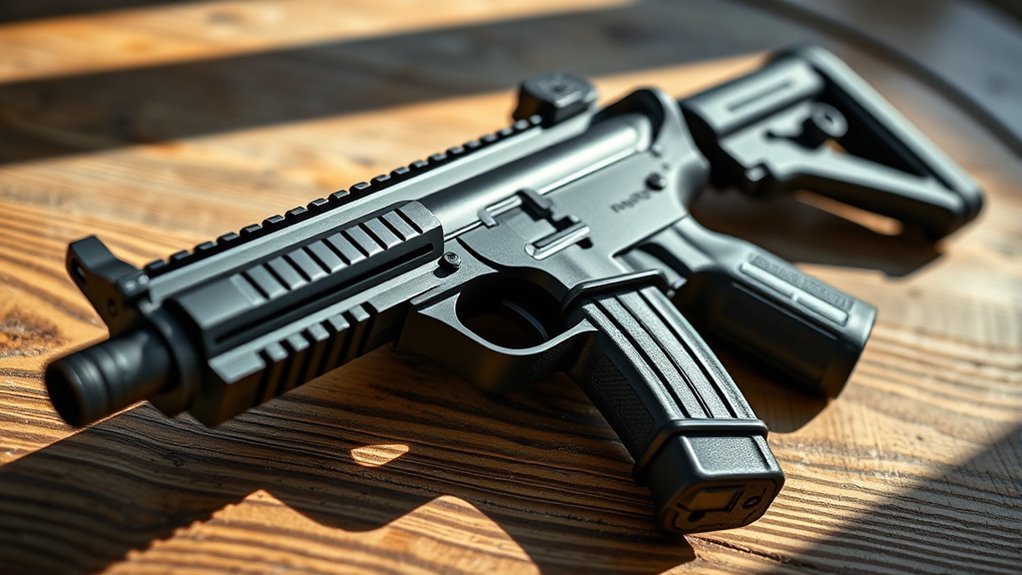
When you compare AR-15 pistols, rifles, and short-barreled rifles (SBRs), the key differences hinge on barrel length, presence of a stock, and legal classification. An AR pistol features a short barrel under 16 inches and lacks a stock, which classifies it legally as a pistol under federal law.
In contrast, an AR rifle has a barrel length of 16 inches or more and includes a stock, meeting rifle criteria by the ATF. If you add a stock to an AR pistol with a short barrel, it becomes an SBR, requiring ATF registration and a tax stamp.
The stabilizing brace on AR pistols complicates classification, as the ATF may view it as a shoulder stock, affecting legal status. Plus, overall length and state laws also impact ownership and use. So, it’s not just about the gun itself but also how it’s configured and where you live.
Frequently Asked Questions
What Is the Point of an AR Pistol?
The point of an AR pistol is to give you a compact, easy-to-handle firearm with rifle-like performance. You’ll enjoy better maneuverability in tight spaces and avoid extra legal hassles compared to short-barreled rifles.
Are AR-15 Pistols Illegal Now?
No, AR-15 pistols aren’t illegal now. Courts blocked the ATF’s 2021 rule trying to reclassify them as short-barreled rifles in 2024, but you still need to follow state laws and avoid prohibited modifications.
What Is Considered an AR Pistol?
You consider an AR pistol any firearm with an AR-15 style receiver, no shoulder stock, and a barrel under 16 inches. It usually has a stabilizing brace and meets specific legal size requirements to be classified as a pistol.
What Is the Difference Between an AR and an AR Pistol?
You’ll notice an AR pistol lacks a stock and has a shorter barrel than an AR rifle. This makes it legally a pistol, designed for maneuverability, while an AR rifle has a stock and longer barrel for stability.
Conclusion
Think of an AR pistol as a compact sailboat—small but powerful, designed to navigate tight waters where larger vessels can’t. You’re holding a firearm that blends the AR-15’s strength with the agility of a pistol, symbolizing freedom within limits.
Knowing its legal and functional differences keeps you steering clear of trouble, making sure you harness its potential responsibly. Just like that sailboat, it’s all about mastering control in a compact form.
In short, an AR pistol offers the firepower and versatility of an AR-15 in a smaller, more maneuverable package. Understanding what an AR pistol is and how it differs from other firearms is key to using it safely and legally. When you respect these guidelines, you get the best of both worlds—power and portability without compromising on responsibility.