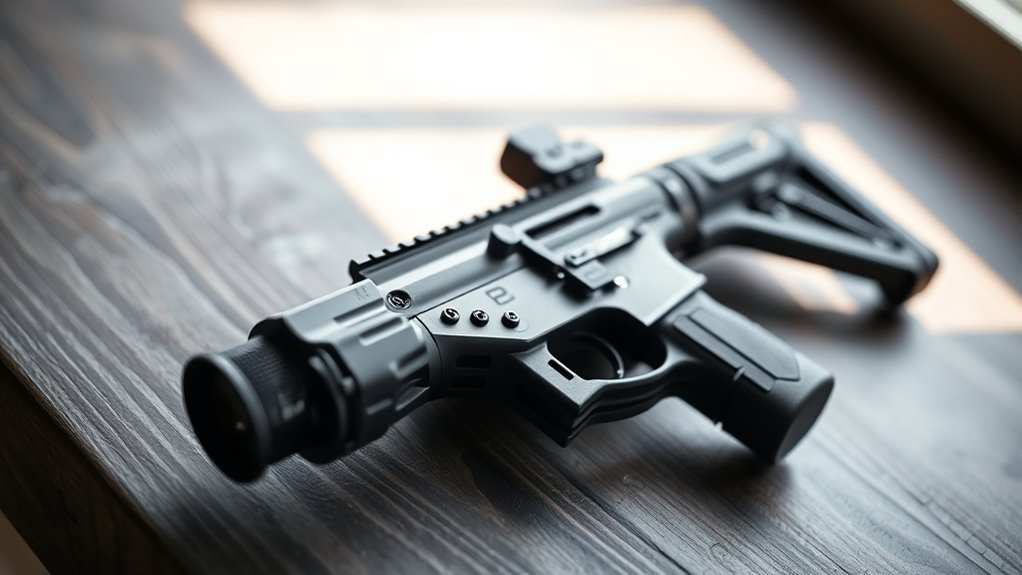
What Is Considered an AR Pistol?
An AR pistol is a compact firearm with a barrel shorter than 16 inches and no shoulder stock. It’s designed to stay legal under federal law by using a stabilizing brace instead of a stock.
You won’t find a stock here because adding one would turn it into a short-barreled rifle, which has much stricter regulations. This design makes the AR pistol easier to handle and allows for quick maneuverability.
If you keep going, you’ll uncover the key differences that set AR pistols apart from rifles.
Understanding these differences helps you see why AR pistols are popular for close-quarters use and personal defense.
Key Takeaways
- An AR pistol has a barrel length under 16 inches and lacks a shoulder stock. It uses a stabilizing brace or pistol buffer tube instead of a stock.
- The overall length meets federal requirements for pistol classification. Adding a shoulder stock converts it into a short-barreled rifle (SBR), which then requires special registration.
- AR pistols are designed for compact handling and legal use as pistols under federal law. So, they’re a popular choice if you want something smaller but still powerful.
What Makes an AR Pistol Legal?
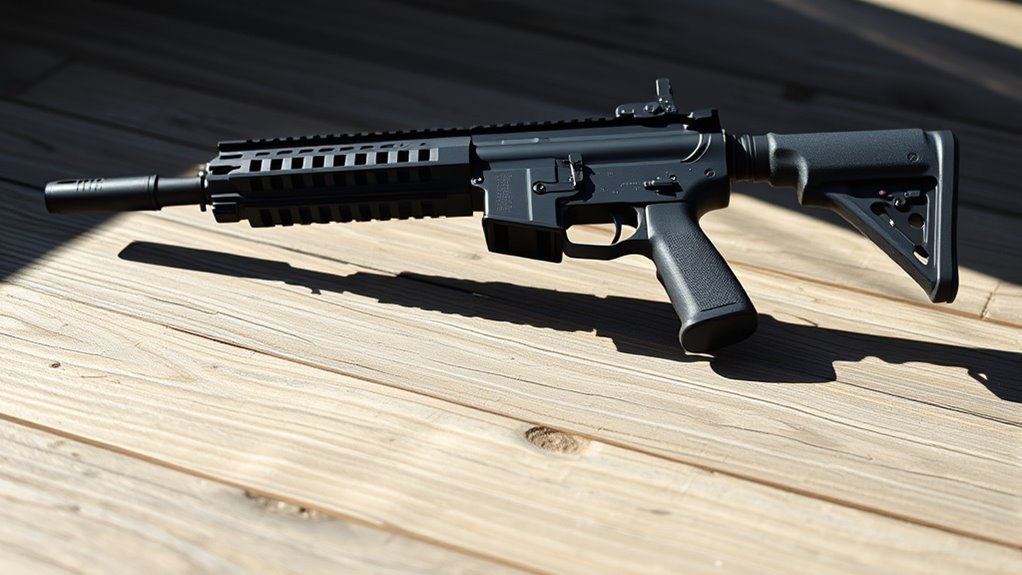
What exactly makes an AR pistol legal? To be compliant, your AR pistol must have a barrel length under 16 inches and meet overall length requirements.
Significantly, it cannot have a shoulder stock; instead, it should use a stabilizing brace or a pistol buffer tube. This setup keeps the firearm classification as a pistol, not a short-barreled rifle.
An AR pistol must use a stabilizing brace, not a shoulder stock, to remain legally classified as a pistol.
If you add a shoulder stock after assembly, the ATF considers it an unlawful conversion to an SBR, which requires special approval. So, as long as your AR pistol stays under the legal barrel length, has no shoulder stock, and uses a stabilizing brace, you can own and operate it without extra registration.
Understanding these specifics guarantees your AR pistol remains legal and compliant with federal regulations.
How ARe AR Pistols Different From Rifles?
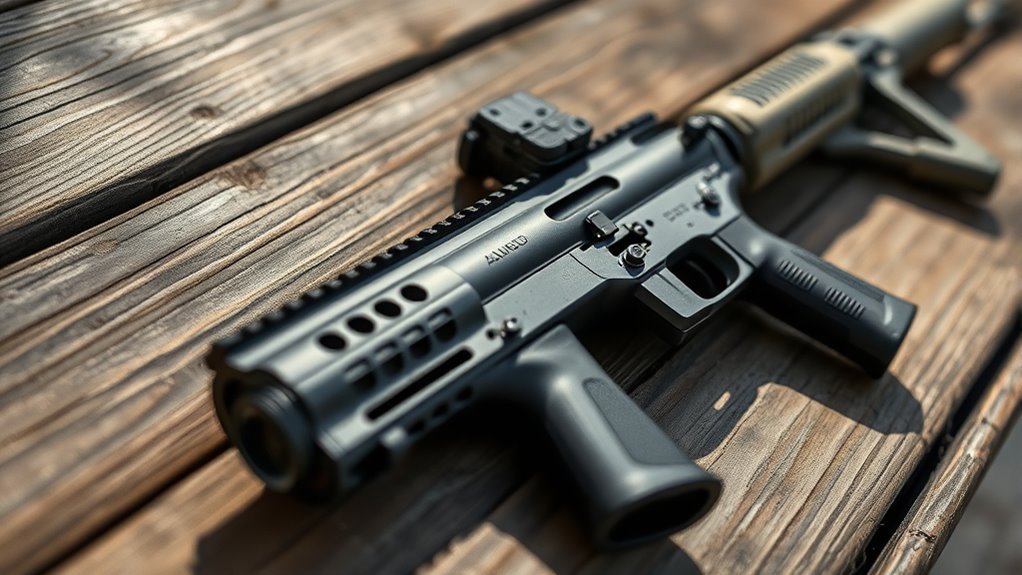
How do AR pistols differ from rifles in form and function? An AR pistol features a barrel length shorter than 16 inches and an overall length under 26 inches, making it more compact than a typical rifle.
Unlike rifles, which have a stock designed for shoulder support, an AR pistol lacks a stock but often uses a stabilizing brace to aid handling. This difference in design affects firearm classification and legal regulation.
If you add a stock to an AR pistol, it becomes a short-barreled rifle, which requires registration due to stricter laws. In contrast, AR rifles have longer barrels—16 inches or more—and a stock intended for shoulder firing.
This gives rifles greater stability but less maneuverability compared to AR pistols. So, the main differences come down to size, design, and how the firearm is used and regulated.
Frequently Asked Questions
How Many Inches Is Considered an AR Pistol?
An AR pistol has a barrel length under 16 inches, typically between 7.5 and 11 inches. Its overall length is usually less than 26 inches, and it doesn’t have a stock but may use a stabilizing brace.
What Is Considered a Pistol in AR?
You consider an AR pistol one with a barrel under 16 inches, overall length less than 26 inches, and no shoulder stock. Instead, it uses a stabilizing brace or pistol buffer tube for support.
What’s the Difference Between an AR-15 and an AR Pistol?
You handle an AR-15 with a stock, you shoulder it; you handle an AR pistol without a stock, you brace it. You fire the AR-15 as a rifle, and you fire the AR pistol as a pistol.
What Is the Criteria for an AR-15 Pistol?
You need a barrel under 16 inches, overall length below 26 inches, no shoulder stock, and only a stabilizing brace. Avoid vertical foregrips or SBR features, and verify it meets federal regulations to qualify as an AR-15 pistol.
Conclusion
When you hold an AR pistol, you’re gripping a compact powerhouse, legal and fierce like a thunderbolt in your hands. Unlike rifles, it’s designed for agility, not long-range precision—a wild stallion tamed for swift action.
Knowing what makes it legal isn’t just about rules; it’s about respecting its unique form and function. So, embrace the AR pistol’s distinct spirit, and carry it with the confidence of someone who understands its true nature.
Understanding what is considered an AR pistol helps you appreciate its design and legal boundaries. These firearms combine the firepower of an AR platform with a shorter barrel and no stock, making them distinct from rifles. When you know the specifics, you can use and carry your AR pistol responsibly, maximizing both its effectiveness and compliance with the law. So, respect the AR pistol’s unique status and own it with pride and knowledge.