How Much Does a Pistol Weigh?
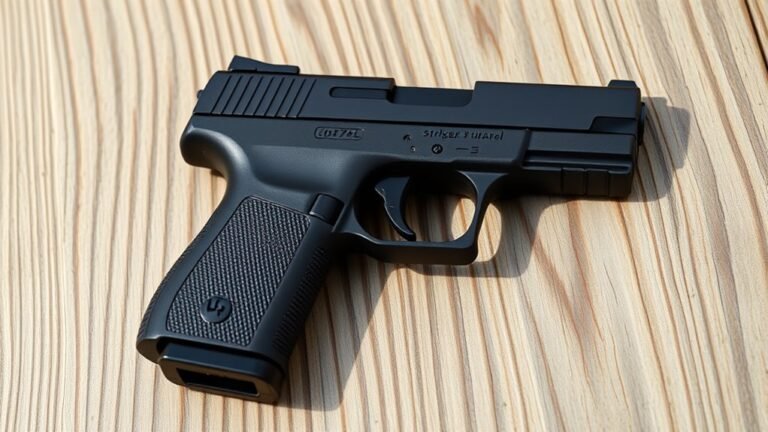
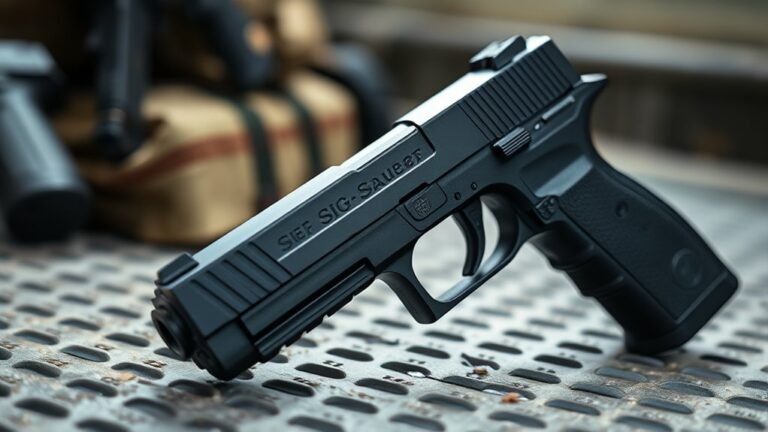
A pistol’s weight can vary a lot depending on its size, materials, and features. You’ll find lightweight pistols under 12 ounces, typically micro-compacts with polymer frames. These are great for easy carry and everyday use.
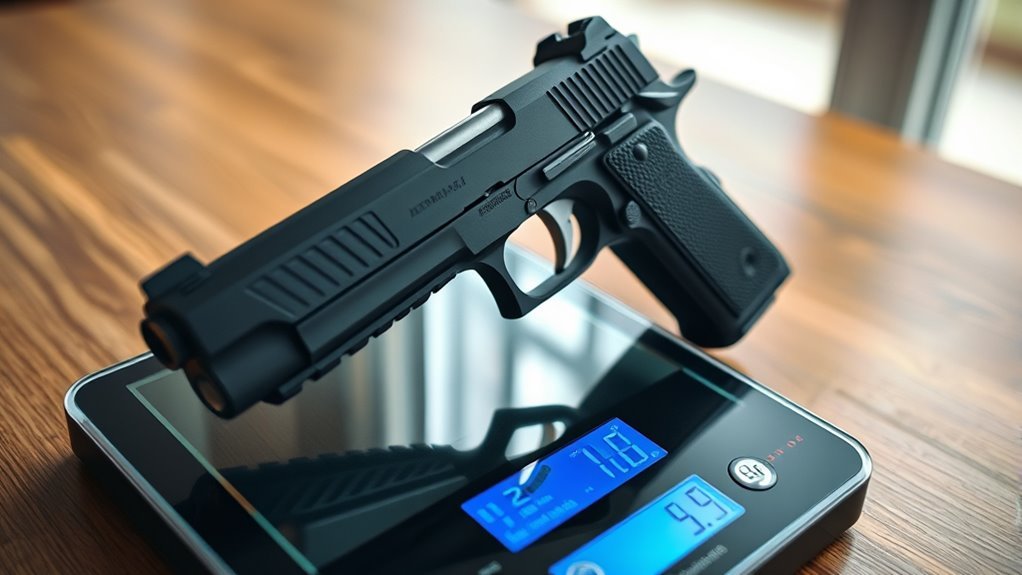
Full-size pistols generally weigh over 2 pounds. They often use metal frames that help absorb recoil and improve control. Accessories and design choices also add to the overall weight.
Understanding these factors helps you pick a pistol that feels right in your hand and shoots comfortably. There’s more to think about when it comes to how weight affects handling and recoil. So, finding the right balance is key for your shooting experience.
Factors Influencing Pistol Weight
Although pistol weights vary widely, several key factors determine how heavy your firearm will be. The material and frame material play a major role; all-metal frames add weight, while polymer frames keep it lighter.
Pistol weight is largely influenced by frame material, with metal adding heft and polymer offering a lighter feel.
Size matters, too — full-size pistols usually weigh over 2 pounds loaded, whereas micro-compacts can be under 12 ounces unloaded. Caliber and capacity influence weight since larger calibers and bigger magazines increase mass.
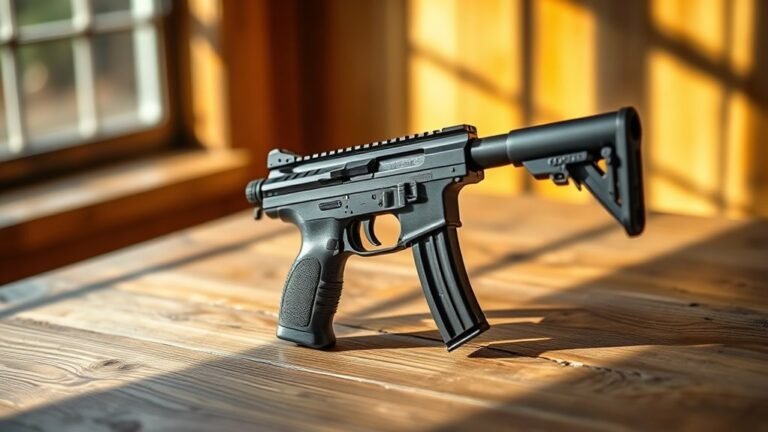
Design features like extended barrels, larger magazines, and added sights also contribute to overall weight. Don’t overlook accessories; lights, lasers, and custom grips can considerably affect how heavy your pistol feels.
Interestingly, frame material affects magnetism, which might be a consideration if you use magnetic holsters or mounts. Understanding these factors helps you choose a pistol that fits your needs precisely.
Effects of Weight on Handling and Recoil
The weight of your pistol directly impacts how it handles and how much recoil you feel when shooting. Heavier firearms absorb more recoil energy, reducing felt recoil and improving control. This makes managing recoil smoother and enhances your overall shooting experience.
In contrast, lighter pistols generate more recoil and muzzle rise, which can disrupt your balance and make handling less comfortable. Proper weight distribution also plays an essential role; a well-balanced pistol allows for better recoil management and steadier aim.
Adding weight, like steel grips or a heavier frame, can markedly improve control by dampening recoil. Ultimately, understanding how weight affects handling and recoil helps you choose a firearm that suits your preferences and shooting style. This leads to greater accuracy and comfort on the range.
Conclusion
When you hold a pistol, its weight becomes part of your rhythm—like the steady beat of a drum guiding your every move. A lighter grip lets you sway quickly, while a heavier frame grounds you, absorbing the sharp kick of recoil.
Understanding this balance helps you find that perfect feel, where control and comfort dance together, making every shot as natural as a breath. Trust your hands to tell you what’s right.
So, how much does a pistol weigh? It varies, but knowing the weight is key to mastering your shooting experience. Finding the right pistol weight helps you handle recoil better and improves accuracy. Whether you prefer something light for speed or heavier for stability, the pistol’s weight is a crucial part of your shooting rhythm.