How to Do a Pistol Squat in 5 Easy Steps
To do a pistol squat in five easy steps, start by improving your ankle and hip mobility. This will help you maintain better balance throughout the movement.
Don’t worry if you’re not strong enough yet—using support tools like chairs or rails can make a big difference as you build strength.
When you’re ready, lower down slowly with good form. Keep your core tight and make sure your knee stays aligned over your toes. This helps prevent injury and keeps the movement efficient.
Pause briefly at the bottom to stabilize and really engage your muscles.
Then, push through your heel to stand back up with control.
Keep practicing, and you’ll discover helpful tips that make your pistol squat technique even better.
Key Takeaways
- Improve ankle and hip mobility with stretches and one-legged balance exercises for better squat depth and stability. These will help you move more freely and keep your balance.
- Use a chair or rail for support to maintain balance and gradually shift weight onto the working leg. It’s all about building confidence step by step.
- Lower down slowly with a tight core, upright chest, and knees tracking over toes to ensure proper form. Take your time and focus on control.
- Pause for 1-2 seconds at the bottom to increase muscle activation, control, and balance. This little hold makes a big difference.
- Push through the heel to stand, engaging glutes and hamstrings while maintaining a strong, stable core. Keep that strength locked in as you rise up.
Master Mobility and Balance for Your Pistol Squat
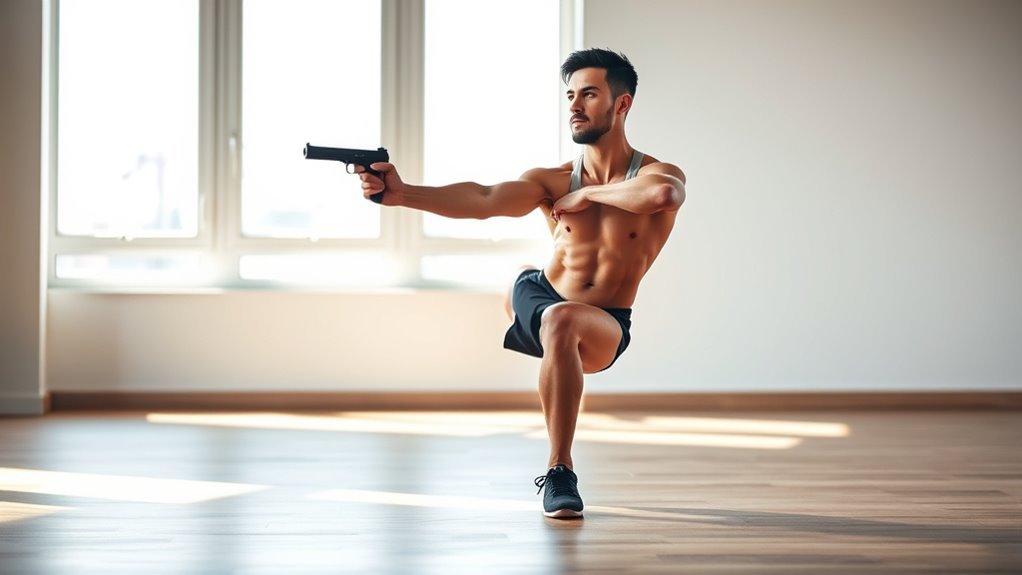
Although the pistol squat demands strength, you must first master mobility and balance to perform it safely and effectively.
Mastering mobility and balance is essential before building the strength needed for a safe and effective pistol squat.
Start by improving your ankle mobility with exercises like heel lifts and calf stretches. These help you achieve a deeper, steadier squat position.
Next, work on your balance by practicing one-legged stands. Use a wall or rail for support as you build stability.
Incorporate deep hip and hamstring stretches, such as pike and seated forward folds, to increase your flexibility and range of motion.
Consistently integrating these mobility drills and balance exercises into your routine will accelerate your progress.
Build Strength Using Support Tools Like Chairs or Rails
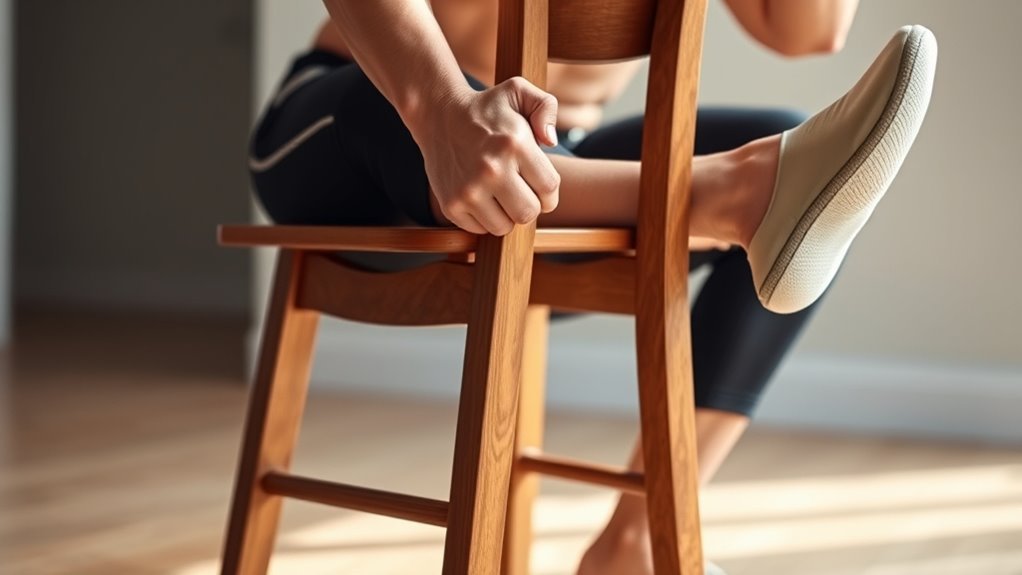
When you’re ready to build strength for the pistol squat, start by using support tools like chairs or rails to help maintain balance and reduce the risk of falling. Hold onto a sturdy chair or rail as you perform the movement, allowing these support tools to assist with the initial concentric phase.
Gradually shift more weight onto your working leg as your strength improves. To make the movement easier, elevate your supporting foot on a bench or stool, which also helps you focus on proper form and balance.
As you become more confident, reduce your reliance on the support tools, aiming to use just your fingertips or minimal contact. Consistently incorporating these aids will build the strength and stability needed before progressing to unsupported pistol squats.
Lower Down Slowly With Proper Pistol Squat Form
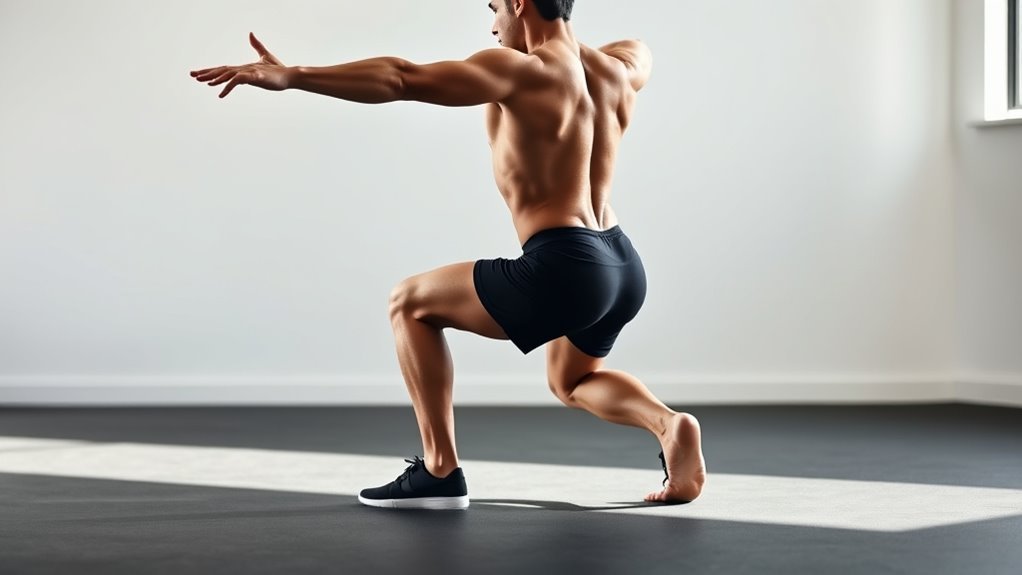
To master the pistol squat, lower down slowly and with control. This helps you maintain balance and keeps your muscles engaged throughout the movement.
When you lower down, keep your core tight and chest upright to avoid leaning forward. Focus on bending your hip, knee, and ankle simultaneously. Make sure your knee tracks over your toes without collapsing inward.
Use your arms for balance by extending them forward or to the sides as needed to help steady yourself. Practicing proper form during the descent not only protects your joints but also builds strength effectively.
Pause at the Bottom to Gain Control and Strength
Lowering down slowly sets you up for the next step: pausing at the bottom of the pistol squat. When you pause, you build strength from a dead stop, which means you’re not relying on momentum to get back up.
Hold that pause for 1-2 seconds to boost muscle activation in your glutes, quads, and stabilizers. This brief pause also improves your control and balance by forcing you to stay stable without bouncing or using a rebound.
It’s a great way to spot any weaknesses or instability in your movement. Over time, gradually increase how long you pause to develop better strength and more precise control throughout the entire pistol squat.
Push Through Your Heel to Stand Up in the Pistol Squat
As you rise from the bottom of the pistol squat, press firmly through your heel to engage your glutes and hamstrings effectively. Focus on keeping your weight centered over your heel and avoid shifting forward onto your toes as you stand up.
This guarantees you activate the right muscles and maintain proper form. Keep a strong, stable core to support your balance and stop your heel from lifting off the ground.
Use your back leg and arm to help with balance, but remember, the power to rise comes from driving through the heel of your supporting leg. Practice slow, controlled reps to build strength and improve your ability to consistently push through your heel while staying balanced throughout the movement.
Frequently Asked Questions
How Do I Perform a Pistol Squat Step-By-Step?
You start by balancing on one leg, extend the other forward, then slowly lower yourself by hinging at the hips. Keep control, chest up, and push through your heel to rise back up smoothly and steadily.
How to Do a Squat Step by Step?
Think of squatting as gently lowering yourself onto an invisible throne. You’ll keep feet steady, chest proud, and core tight. Bend knees and hips smoothly, then rise by pushing through your heels, staying balanced all the way.
How to Get Strong Enough to Do a Pistol Squat?
You’ll get strong enough by building single-leg strength with shrimp squats and step-ups, improving ankle and hip mobility, and practicing supported pistol variations. Stay consistent, increase difficulty gradually, and focus on proper form to prevent injury.
How Long Does It Take to Train to Do a Pistol Squat?
Rome wasn’t built in a day, and neither is your pistol squat. You’ll likely need 4 to 12 weeks of consistent training, depending on your strength and mobility, but patience and persistence will get you there.
Conclusion
By mastering your mobility and balance, you’re already ahead—did you know that improving balance can reduce fall risk by up to 50%? Using support tools like chairs helps you build strength safely.
Lowering down slowly and pausing at the bottom boosts your control. Remember to push through your heel to stand up strong.
Follow these steps consistently, and you’ll nail your pistol squat with confidence and power in no time! Practicing pistol squats regularly improves leg strength, balance, and mobility. With patience and persistence, you’ll build the control and stability needed to perform this advanced move safely and effectively. So keep at it, and enjoy the benefits of a stronger, more balanced body!